How to tell what kind of clog you have
One fixture slow: a pop-up full of hair, a kitchen trap lined with grease, or a disposal jam usually affects only that spot. A plunger or a hand auger through the trap may help, and you should stop using chemical openers that can burn skin and pit fixtures.
Several fixtures affected: when a toilet gurgles as a sink drains, or a shower fills while the washer runs, the restriction sits farther down the branch or in the main. Note which fixtures connect and when the symptom appears, because that pattern tells us where to open the line. See clogged drains and slow tub drain causes for the patterns we test.
Sewage or repeated returns: waste, paper, or gray water coming back through a low drain is beyond a trap clog and needs professional cable work plus a check of the main. If the same drain clogs every few months, the pipe wall likely has scale, grease, or roots that snaking alone will not remove for long.
Why drains clog around Chelmsford
Chelmsford streets are lined with mature maples and oaks, and older neighborhoods still have clay or concrete sewer joints that roots can enter at the hub. Inside, many kitchens feed long runs to the main through a cool basement, so grease cools and coats the pipe well before the street. Bathrooms in capes and colonials often share a wet vent that was added during a remodel, so hair and soap slow the whole group at once.
Laundry adds lint, powder residue, and sudden pump surges that push a weak main over the edge. Homes with disposals see more line trouble when starchy foods and coffee grounds go down daily. Hard water from the regional supply leaves scale that narrows older galvanized or copper drain arms over time. The Lowell Regional Water Utility supplies much of Chelmsford, and mineral content plus older piping explains why two homes on the same street can have very different drain behavior.
Options honestly compared
Plunger and trap cleaning: best for a soft plug near the fixture, low risk when done by hand, and often enough for hair at the stopper. It will not fix grease packed ten feet down or roots at the street joint.
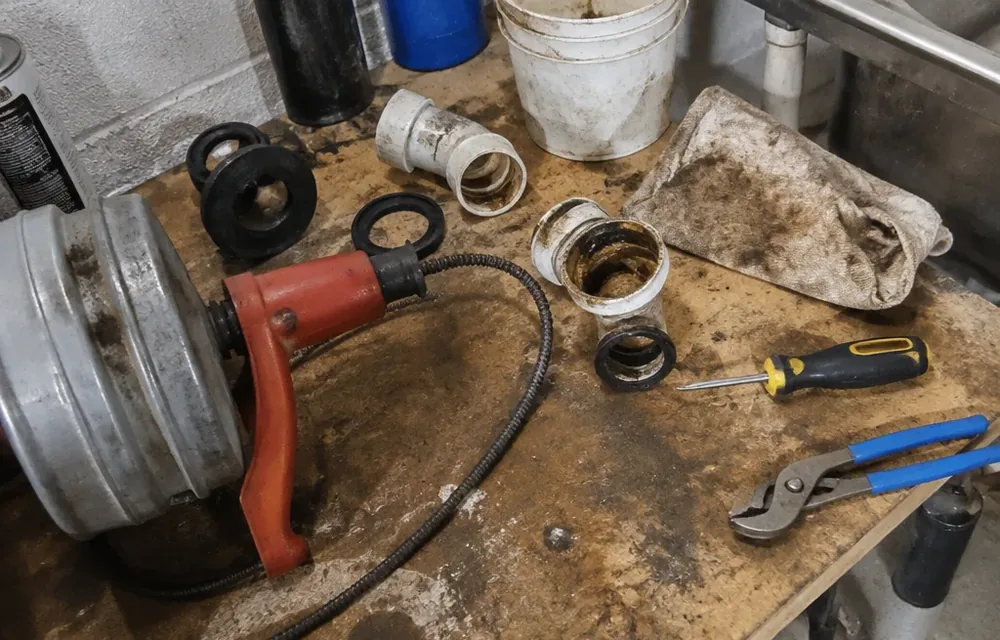
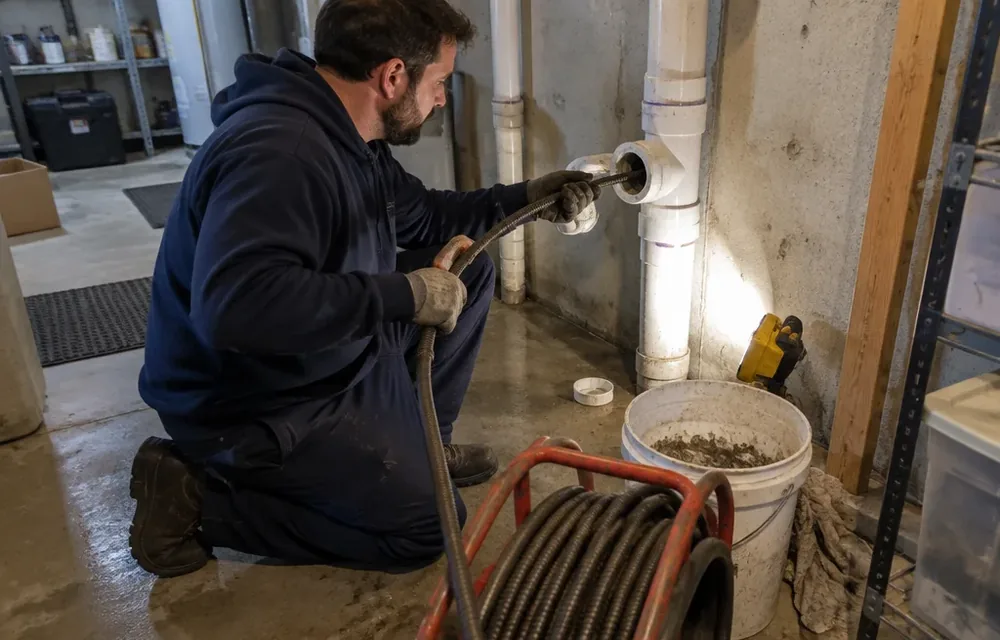
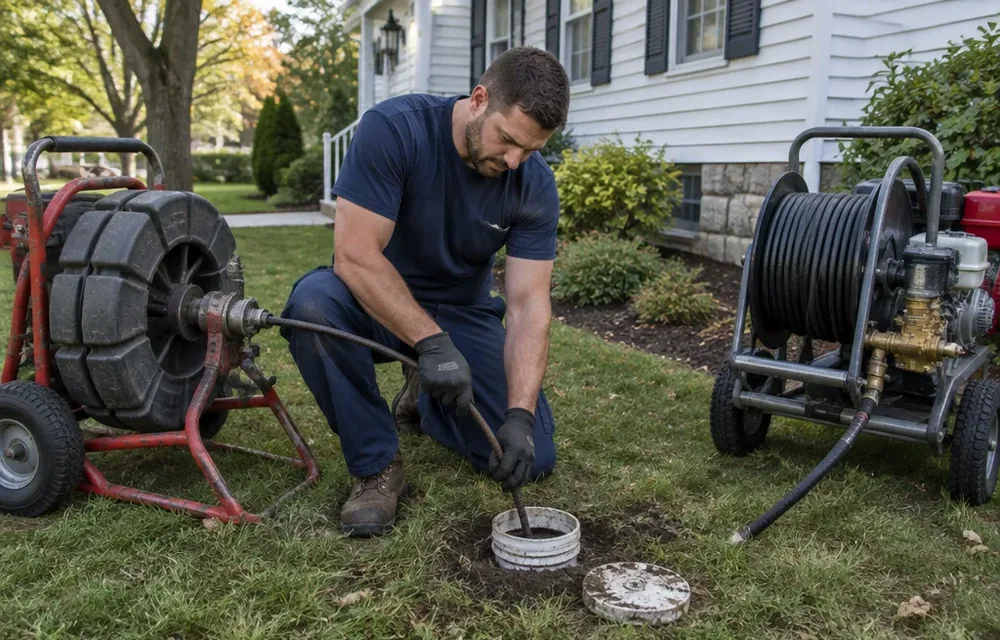
Cable snaking through a cleanout: our usual first step for branch and main clogs because it restores flow with controlled cutting heads and lets us feel the obstruction. It punches a path well but can leave residue on the wall that regrows, which is why we retest with full fixture flow.
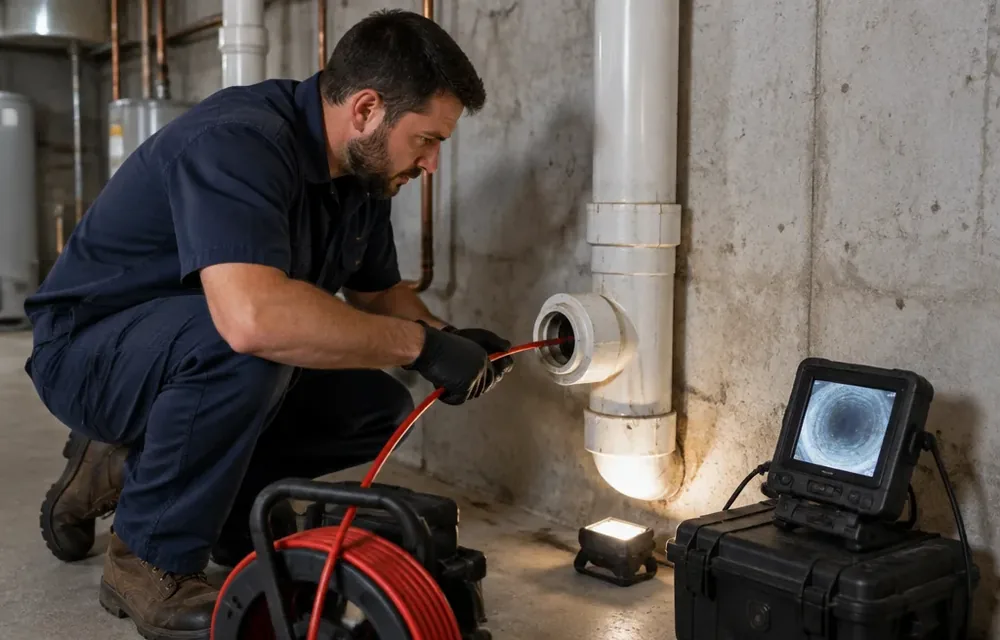
Hydro jetting and camera work: jetting scours grease and roots from the full bore once flow is open, and a camera confirms whether the line is intact, bellied, or offset. Jetting costs more in equipment and should follow a check that the pipe can take pressure. Read drain cleaning compared with hydro jetting and whether a sewer camera is worth it before you choose. Chemical openers are the weakest option because they rarely clear a full blockage and they endanger the next person who opens the trap.
What moves the cost
Access point: a ground-level exterior cleanout keeps labor simple, while pulling a toilet or opening a wall to reach the line adds time and patching. Basement height and stored items around the cleanout also affect setup.
Length, material, and blockage type: longer runs to the street, fragile clay or thin-wall pipe, and dense roots or hardened grease take more passes and gentler handling than a soft hair plug near the trap. Camera and jetting equipment add factors when they are needed to confirm or fully scour the line.
Return visits and permits: a line that needs staged work or a repair after the camera finds a break moves beyond cleaning into sewer line repair. Municipal cleanout or street-side work can involve coordination with the town. We explain these drivers before we feed cable, and our cost guide puts them in context.
When this is the wrong answer
Drain cleaning is the wrong answer when the pipe itself has failed, with a collapsed section, a severe belly holding water, or a joint offset that snags paper every week. Cleaning buys days in that case, while repair or replacement buys years. A camera result showing standing water or broken wall means it is time to talk repair, not another cable pass.
It is also the wrong fix for a dry trap odor, a vent blocked by leaves at the roof, or a septic tank that is due for pumping in outlying areas. If fixtures drain fine but sewer gas smell lingers, tell us and we will chase traps and vents rather than the drain bore.
Standards that apply in Massachusetts
Drain and vent work in Massachusetts follows 248 CMR, the Uniform State Plumbing Code, which sets trap, cleanout, slope, and vent rules that keep fixtures draining without siphoning traps. The Board of State Examiners of Plumbers and Gas Fitters governs who may open and alter sanitary piping, so main-line and concealed work should be handled by a license holder.
We protect traps and vents during clearing, refit cleanout caps properly, and leave you with a note of what the cable found and where. If the camera shows a structural defect, we explain permit and inspection steps through the local plumbing inspector before any excavation or replacement is planned.
Signs you need this
Slow drain that keeps returning
A tub or sink that clears for a week then slows again often has buildup on the pipe wall, not just a plug at the trap.
Gurgling or odor from another fixture
A toilet that bubbles when the washer drains points to vent or main-line restriction that needs testing, not more plunging.
Water backing up low in the house
Waste in a basement shower or floor drain means downstream blockage and water use should stop until the line is checked.
What happens on a visit
We ask which fixtures are slow, which gurgle, and where backup appears first. We run taps in sequence to confirm whether trouble is local or main-line.
We use the exterior or basement cleanout where possible to protect finishes. If no cleanout exists, we pull the nearest trap or toilet with drop cloths down.
We feed the right cable and head for the blockage type, working in short passes and pulling back debris rather than packing it farther downstream.
We run multiple fixtures together, flush toilets, and watch low drains to confirm full-bore flow. We repeat a pass if the cable still drags.
We show what came back, note pipe material and distance, and say plainly whether jetting, a camera look, or repair planning makes sense next.
When this is the wrong answer
Do not book drain cleaning for a dry trap smell, a roof vent blocked by leaves, or a septic tank that needs pumping, because the bore is not the problem. Do not keep cabling a line that the camera shows as broken, bellied, or badly offset. If gurgling drains persist with good flow, or waste returns in a low shower, ask for diagnosis first and we will point you to vent work, pumping, or sewer repair instead.
Related reading
Where it comes up
Related services
Frequently asked questions
Why does my drain keep clogging in the same spot?
Repeat clogs in one spot usually mean buildup or damage on the pipe wall rather than a fresh plug. Grease, soap scale, and roots narrow the bore so paper snags again within weeks. A cable pass restores flow, but a camera look shows whether jetting or a small repair will hold longer. We measure distance to the trouble so the fix targets the right section.
Is hydro jetting better than snaking?
Jetting scours the full pipe wall while snaking punches a path through the blockage. Snaking is the right first step to restore flow and feel the obstruction. Jetting fits grease-lined kitchen mains and root-haired joints once the line is open and sound enough for pressure. The camera decides, not habit. See drain cleaning compared with hydro jetting.
Are chemical drain openers safe to use?
Chemical openers rarely clear a full blockage and they create a hazard for anyone who opens the trap afterward. They can dull finishes, soften some plastics, and sit in the line without moving dense grease or roots. Mechanical clearing with a plunger, hand auger, or professional cable is safer and more reliable. Tell us if a product was used so we can handle the line safely.
What can I put down a kitchen drain?
Keep grease, coffee grounds, rice, pasta, and fibrous peels out of the kitchen drain even with a disposal in place. Wipe pans with a paper towel into the trash, run cold water during short disposal use, and use a sink strainer daily. These habits matter more in Chelmsford where long cool basement runs let grease set before the street. See garbage disposal cautions.
Can a homeowner do their own drain work in Massachusetts?
Homeowners can plunge fixtures and clear a pop-up or a removable trap by hand. Opening concealed drainage, altering vents, or using large powered cables in walls is work for a license holder under 248 CMR and the Board of State Examiners of Plumbers and Gas Fitters. If more than one fixture backs up or sewage appears, stop water use and call us rather than opening piping.
When should I get a sewer camera inspection?
Get a camera look when clogs return quickly, when waste backs up low in the house, or before buying an older home with clay or concrete joints. The video shows roots, bellies, offsets, and breaks with distance marks so repair planning is exact. It also proves a line is sound when cleaning alone will hold. Read whether a camera inspection is worth it.
Need drain cleaning in Chelmsford?
Call now and describe what is happening. A local specialist takes it from there.