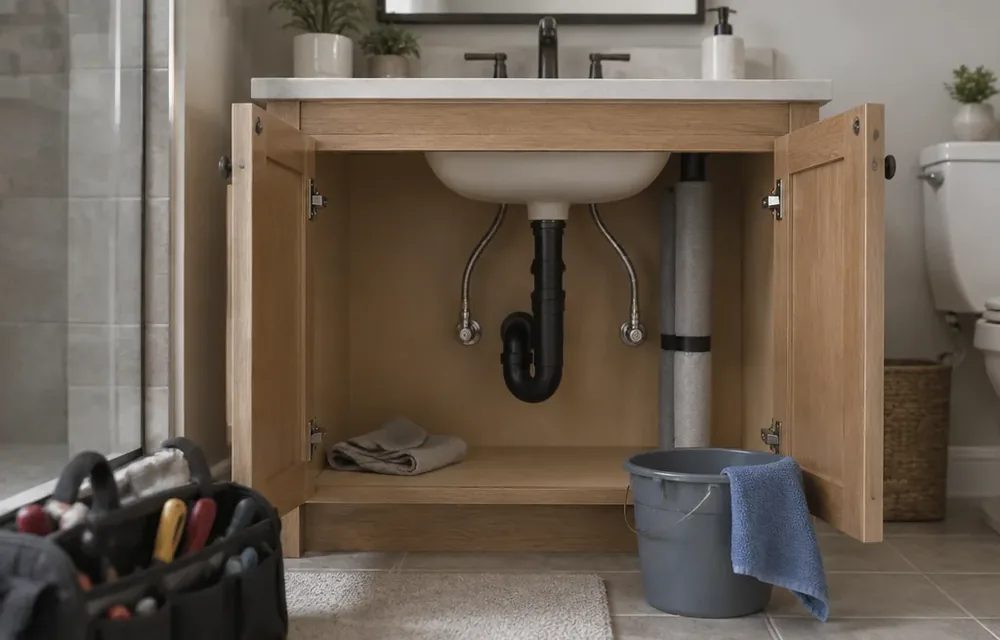
How does a pipe freeze inside a heated home?
Freeze mechanism: A pipe freeze forms when cold air cools a run faster than room heat can rewarm it, until still water turns to ice and chokes flow. Ice starts at the coldest wall of the pipe and grows inward, so a thin pencil of flow can persist for a while before the run closes fully. The closed section then traps pressure between ice and a closed valve, and that trapped pressure can split copper, PEX fittings, or weak joints.
Why heat alone does not always protect: Room thermostats read air in one hallway, not air inside a crawl space, garage wall, or closed vanity on an exterior wall. Wind washing through vents and gaps strips heat from runs that looked safe on a calm day. Night setbacks and empty rooms let edge spaces drift colder while the main living area still feels mild. Those gaps explain why a home can feel warm while a far bath runs to a trickle, so steady heat plus targeted protection matters more than a high thermostat alone.
Thaw harm after the block: Harm often appears during thaw rather than during the freeze itself, when water returns against a split that ice had plugged. A stain that grows as the day warms, a hiss inside a wall, or a meter that moves with fixtures off all point to a split opening. That delayed timing links freeze care directly to leak detection and burst pipe repair and to knowing your main shutoff from how to shut off the water main.
Where does cold find piping and how do you tell risky runs apart?
Risky run pattern: Risky runs share exposure, stillness, and weak rewarming from room air. Exterior walls, crawl spaces, attics, garage walls, and additions added after the original build top the list. Long dead legs to unused baths and hose bibb lines that were never drained also hold still water where ice starts first.
Telling exposure apart room by room: A bath on an exterior wall with piping in the outer bay cools faster than a bath stacked above a warm basement run. A kitchen sink on an outside wall with a closed cabinet traps cold around the trap while room heat stays outside the doors. A laundry or bath above an unheated garage loses heat downward through the floor while wind moves beneath. Walk your home in cold weather and note which fixtures slow first, because that order maps your weakest runs in the same way area notes for Westford and Lincoln describe similar cape and colonial edge spaces.
Use patterns that raise risk: Infrequent use lets water sit still through the coldest hours, which favors ice growth over moving flow. Closed vanities, shut registers in small baths, and tight drapes over baseboard all block rewarming where it is needed most. Garden hoses left attached can trap water back into the sillcock and the short interior run. Removing hoses in fall and keeping edge rooms gently warm helps more than occasional blasts of heat, a habit that fits winterize plumbing in Chelmsford planning.
What should you do in order through a cold snap?
Cold snap order: A calm cold snap order keeps heat steady, opens rewarming paths, and stages shutoff knowledge before trouble starts. Start before nightfall so edge spaces carry warmth into the coldest hours. Keep the plan simple enough for anyone home to follow.
Steady heat and open paths: Hold a steady temperature day and night rather than deep setbacks that let edge bays drift cold. Open vanity doors on exterior walls so room air can reach traps and supplies, and keep registers and baseboard clear of rugs and storage. Let vulnerable faucets run to a thin steady pencil stream when guidance calls for it, with the drain clear and the stopper open. Those small moves keep water moving and heat reaching the run, and they pair with frozen pipe prevention and thawing advice for your layout.
Know shutoffs and watch flow: Confirm where the main shutoff sits and that it moves freely, plus which fixture valves serve edge baths and the washer. Note normal flow at those fixtures so a slowdown reads clearly at night. When flow slows, keep the faucet open slightly, warm the room air, and call for guidance rather than forcing valves. When flow stops or a split is suspected, close the affected valve or the main and call (978) 592-1168 for homes in Chelmsford and Carlisle.
Prevention choices compared side by side
Prevention comparison: Prevention choices differ in cost in effort, permanence, and whether they add heat, block cold, or keep water moving. No single habit covers every run, so the best plan layers two or three compatible moves. The table below keeps those layers distinct.
Block cold versus add rewarming: Sealing gaps and adding insulation around bays slows cold washing over runs, while opening vanities and holding steady heat improves rewarming from room air. Pipe sleeve alone slows heat loss yet cannot rewarm still water without room air reaching it. Heat cable and similar add on heat only fit where maker guidance and safe power allow, and they never replace shutoff knowledge. Choose compatible layers rather than stacking heat without air sealing, since that layered view matches winterize plumbing in Chelmsford planning.
Water movement and draining habits: A thin steady stream through a vulnerable run during the coldest hours trades a little water for flow that resists icing. Draining hose bibb lines and removing hoses before winter removes still water where control is limited. Resting unused baths without heat invites trouble, so keep edge rooms gently warm even when guests are away. Keep the meter and main behavior in mind from how to shut off the water main while you apply these habits.
| Choice | How it helps | Where it fits best | Limit to know |
|---|---|---|---|
| Steady heat without deep setback | Keeps edge bays above risk through night | Whole home during cold snap | Uses more fuel yet protects far runs |
| Open vanities and clear registers | Lets room air rewarm traps and supplies | Baths and sinks on exterior walls | Needs room heat to be effective |
| Seal gaps and insulate bays | Slows wind washing over runs | Crawl spaces, garage walls, rim areas | Sleeve alone cannot rewarm still water |
| Thin steady faucet stream | Keeps water moving past cold spots | Known vulnerable fixture overnight | Needs open drain and later shutoff check |
| Remove hoses and drain bibb lines | Removes trapped water near outside | Sillcocks and garden feeds in fall | Must be done before sustained cold |
Why freezes favor Chelmsford layouts and winters
Chelmsford freeze pattern: The Chelmsford freeze pattern follows capes with knee wall baths, colonials with additions, and ranch runs through garage walls and crawl spaces. Later remodels often route new piping through the coldest available bay rather than the warmest chase. Those hidden choices surface only when flow slows on a windy night.
Water and housing context: Much of Chelmsford draws town water through the Lowell Regional Water Utility system, which moves about four point six billion gallons per year for about one hundred thirty five thousand customers across Lowell, Dracut, Tyngsborough, and Chelmsford. Billerica Water Works serves nearby areas from its Treble Cove Rd plant. Reliable pressure means a thaw split can release steady flow once ice clears, so shutoff knowledge matters as much as prevention. Basements that hold the heater, boiler, and main in one room help when that main must be closed fast, a layout local notes for Lowell and Dunstable reflect in similar basement heavy stock.
Wind and thaw timing: Open crawl vents, gaps at hose bibb penetrations, and thin insulation at rim joists let wind strip heat faster than still cold alone. Harm often shows during morning thaw when ice releases and pressure meets a split. Check edge fixtures early on thaw mornings and look under sinks and along basement runs for new dampness. That morning watch pairs with leak detection and burst pipe repair when a split is found.
Limits of safe thawing and what to avoid
Thaw limits: Thaw limits begin where open flame, high heat, and electrical risk enter the picture. Room air warming, patience, and an open faucet to relieve pressure stay on the safe side. Torches, heat guns on high, and boiling water poured over joints do not, because they scorch finishes and shock pipes and traps.
What to avoid around ice: Avoid forcing a stuck valve with tools that can snap the stem and turn a freeze into a supply emergency. Avoid opening walls widely to chase a hiss without a shutoff plan and a bucket and towels staged. Avoid pouring chemical openers into a frozen drain, because they sit against ice and create a hazard for later work. Avoid leaving a thawing run unwatched once flow returns, since splits often show minutes later, cautions that align with what counts as an emergency triage.
Code and permit edge: Thawing itself is homeowner care, while cutting out a split section and rebuilding joints moves into license holder work with permit steps where the code applies. Plumbing work in Massachusetts falls under Two Forty Eight CMR, the Uniform State Plumbing Code, through the Board of State Examiners of Plumbers and Gas Fitters on mass dot gov. Confirm with your town inspector when opened piping is involved. Background on that boundary sits in homeowner plumbing rules.
When should you call about frozen or split pipes?
Freeze call judgment: Freeze call judgment rests on flow behavior, signs of splitting, and whether shutoffs hold. Slowed flow that persists, no flow from one fixture while others run, hissing inside a wall, or a meter that moves with fixtures off all point toward help. A split with active spread needs shutoff and help now.
What to report fast: Name the fixture, the wall or floor bay involved, whether flow slowed then stopped, and what changed as the day warmed. Share whether the main moves freely, which fixture valves stick, and whether heat stayed steady overnight. Note any hose left attached and any recent addition work near the run. That brief speeds triage for Chelmsford, Westford, and Acton.
How the visit proceeds: Call (978) 592-1168 and keep the affected faucet open slightly until advised otherwise, with the drain clear. Close the affected valve or the main when a split is suspected and keep clear of outlets near standing water. The visit will confirm safety, trace the freeze bay, and lay out repair and prevention layers with frozen pipe prevention and thawing in view.
Near you
When to call
Related guides
Frequently asked questions
How do I stop pipes from freezing in my home?
Hold steady heat day and night, open vanities on exterior walls, and keep registers clear so room air reaches runs. Remove hoses and drain bibb lines before sustained cold, and seal wind paths at rim and penetration gaps. Know your main shutoff location before trouble starts. Layering those habits lowers risk more than any single trick.
What should I do when flow slows to a trickle?
Keep the faucet open slightly with the drain clear, warm the room air, and open the vanity to let heat reach the trap and supplies. Avoid forcing stuck valves and avoid high heat on the pipe. Note which fixtures slow first and whether heat stayed steady. Call (978) 592-1168 when slow flow persists or stops.
Can I thaw a frozen pipe myself?
Room air warming with patience and an open faucet to relieve pressure stays on the safe side. Avoid torches, high heat guns, and boiling water that scorch finishes and shock joints. Do not open walls widely without a shutoff plan staged. When a split is suspected or flow will not return, close the valve or main and arrange help.
Why does harm show up during thaw?
Ice can plug a split and hide it until water returns with pressure behind it. Stains that grow as the day warms, hissing inside a wall, or a meter that moves with fixtures off all point to a split opening. Check edge fixtures on thaw mornings. Read how to shut off the water main so response stays fast.
When is a freeze a plumbing emergency?
A freeze is an emergency when a split releases water, flow stops across more than one fixture with cold spreading, or heat is out with pipes at risk. A single slow edge fixture with heat steady often fits prompt guidance and a daytime visit. When unsure, describe flow, heat, and shutoff behavior on the call for plain triage.
Still stuck?
Describe what you see when you call and a local specialist will guide the next step.