What a leak costs at area rates
Headline finding: At verified area rates, a one-drip-per-second faucet wastes about 93 dollars a year in Bedford and Reading but only 23 dollars in Woburn, while a running toilet wastes about 2,265 dollars a year in Bedford against 549 dollars in Woburn. A hidden one-gallon-per-hour leak lands between at 66 to 272 dollars a year depending on town. The spread comes from rates, not volumes: every town pays for the same wasted gallons at very different dollars per hundred cubic feet.
Why toilets dominate: A running toilet moves roughly 200 gallons daily, over twenty times a dripping faucet and more than eight times a one-gallon-per-hour hidden leak. That volume crosses billing tiers fast in ascending-block towns, so the marginal dollars climb beyond the averages shown here. Flapper and fill-valve fixes that take minutes erase the largest row in the table, which makes running toilets the highest-return repair in home plumbing.
How to use your row: Find your town, read the three leak sizes as yearly variable-cost estimates, and treat them as planning figures rather than bill predictions since fixed charges and tiers shape real bills. Streets on septic tanks skip the sewer half entirely, which the methodology prices separately. Confirm a suspected toilet with dye or an overnight meter read before ordering parts.
Rate sources behind each row
MWRA survey rows: Seven rows derive from the 2024 MWRA Advisory Board retail rate survey published February 2025, using each town combined annual bill at the standard 120 hundred cubic feet divided into an average dollars-per-HCF rate. Bedford at 2,785.33 dollars, Reading at 2,769.60, Stoneham at 2,304.00, Lexington at 2,201.20, Wilmington at 1,364.40, Burlington at 828.92, and Woburn at 674.24 anchor their rows. Vintage and basis appear in the table so no row masquerades as current-year pricing: those seven rows reflect 2024 bills, and any 2025 or 2026 rate increases would push them higher.
Lowell row: Lowell uses current marginal tiers from city ordinances effective July 2026: 3.44 dollars water plus 8.36 dollars sewer per hundred cubic feet at first-tier residential rates. Marginal math suits Lowell because its published tiers let leaks price at the rate the wasted units actually incur. The FY27 water increase of 5 percent and the FY26 sewer increase of 15 percent sit behind those tiers as published context.
North Chelmsford row: North Chelmsford Water District bills semiannually with a 90 dollar minimum covering the first 7,500 gallons, then 7.00, 8.50 and 10.00 dollars per thousand gallons in tiers effective July 1, 2025. A running toilet alone adds about 36,500 gallons per half-year, which pushes any household past the 22,500-gallon top-tier threshold, so the row prices leaks at the 10.00 dollar marginal rate. It covers district water only; sewered streets also pay the town sewer charge, which is not in this row.
Towns without verified rows: Chelmsford Water District, East Chelmsford, town sewer charges, Billerica and other town rates sit outside verified sources for this edition, and unpublished numbers stay out of the table. Readers there can run their own bills through the estimator tool with the same three volumes. Future editions add rows only from published schedules, never from modeled guesses.
The per-town table
Reading guide: Yearly variable-cost estimates at 748 gallons per hundred cubic feet: faucet drip at one per second near 3,000 gallons yearly, running toilet near 200 gallons daily, hidden leak at one gallon per hour near 8,760 gallons yearly. Source and basis column names each rate source and vintage. Fixed charges spread proportionally inside averages; marginal Lowell math excludes them.
Standout rows: Bedford and Reading top the table near 23 dollars per HCF, which turns a running toilet into a two-thousand-dollar yearly waste stream. Woburn anchors the bottom near 5.62 dollars with the same toilet near 549 dollars, and Burlington runs second-lowest. Lowell marginal math lands mid-table near 11.80 dollars combined, close to Wilmington average rates.
| Town | Source and basis | Drip yearly | Running toilet yearly | 1 gph leak yearly |
|---|---|---|---|---|
| Bedford | MWRA survey 2024, avg $23.21/HCF | $93 | $2,265 | $272 |
| Reading | MWRA survey 2024, avg $23.08/HCF | $93 | $2,252 | $270 |
| Stoneham | MWRA survey 2024, avg $19.20/HCF | $77 | $1,874 | $225 |
| Lexington | MWRA survey 2024, avg $18.34/HCF | $74 | $1,790 | $215 |
| Lowell | Lowell ordinances FY27, $11.80/HCF | $47 | $1,152 | $138 |
| Wilmington | MWRA survey 2024, avg $11.37/HCF | $46 | $1,109 | $133 |
| North Chelmsford (water only) | NCWD rates Jul 2025, top tier $10.00/1,000 gal; town sewer not included | $30 | $730 | $88 |
| Burlington | MWRA survey 2024, avg $6.91/HCF | $28 | $674 | $81 |
| Woburn | MWRA survey 2024, avg $5.62/HCF | $23 | $549 | $66 |
Methodology: volumes, rates, and limits
Leak volumes: Drip volume near 3,000 gallons yearly follows the standard one-drip-per-second planning figure, running toilet volume near 200 gallons daily follows the standard stuck-flapper planning figure, and hidden flow uses exactly one gallon per hour for 8,760 gallons yearly. Divided by 748 gallons per hundred cubic feet, those become about 4.0, 97.6, and 11.7 HCF yearly. Identical volumes apply in every town so rate differences drive every cost difference.
Rate application: Survey rows multiply the three volumes by each town average combined dollars per HCF from its 120-HCF annual bill, which folds fixed charges proportionally into the estimate. Lowell multiplies by first-tier marginal water plus sewer rates instead, excluding fixed charges. Ascending-block effects mean heavy toilet waste can cost above table figures where tiers climb, so tables read as planning floors in tiered towns rather than ceilings.
Coverage limits: Septic streets pay no sewer share, which roughly halves water-plus-sewer rows depending on the town split, and private-well streets pay energy rather than volumetric rates. Drought surcharges, restriction penalties, and FY27-plus rate changes postdate the survey vintage and sit outside these figures. The table prices water and sewer volume only, never the repair itself.
Drought context for 2026 bills
Dry year backdrop: The state placed the Northeast region, which includes Middlesex County, in a Level 3 Critical Drought in March 2026 and held it there in May, before a wet July eased it to a Level 1 Mild Drought by late summer. Local suppliers set their own outdoor watering levels under those declarations, so check your district notice for the level in force today. Restrictions target outdoor use rather than indoor leaks, but dry-year attention makes bill spikes more visible and leak fixes more valuable.
Why leaks hurt more in dry years: Utilities facing low revenue from restricted outdoor use sometimes adjust rates upward, which raises the price of every wasted indoor gallon in later years. Meanwhile hard ground around foundations hides leak sounds and wicking paths that wet years would reveal sooner. A toilet verified in September saves through whatever rate structure follows.
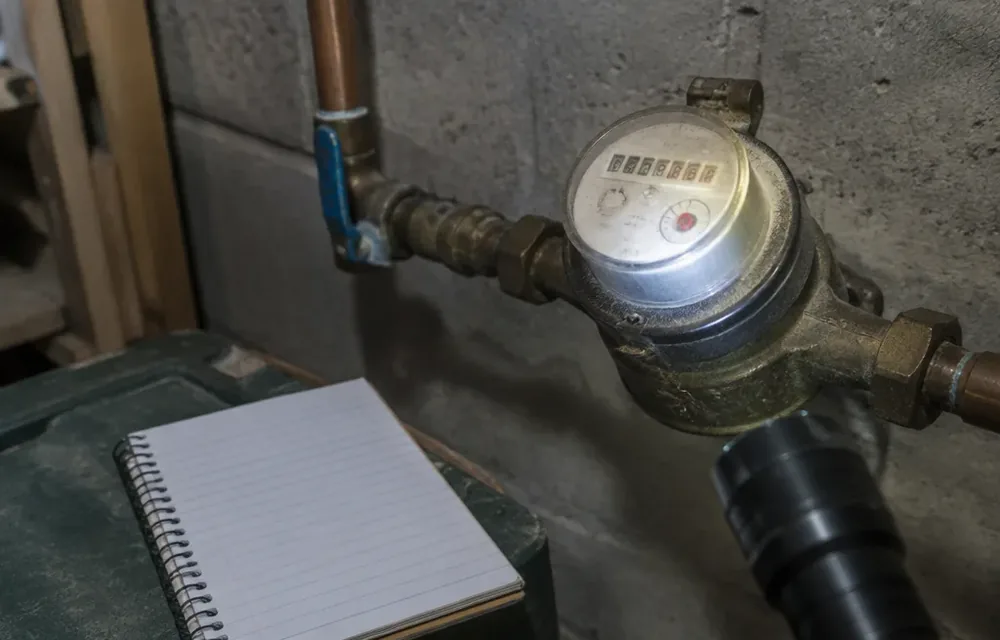
Restriction-safe verification: Overnight meter reads with no water use, dye tablets in toilet tanks, and one-fixture isolation tests use negligible water and break no restriction. Those three checks confirm drip, toilet, and hidden-leak suspects without outdoor watering. Keep readings dated for the bill dispute file where charges look wrong.
Fix each leak size in order
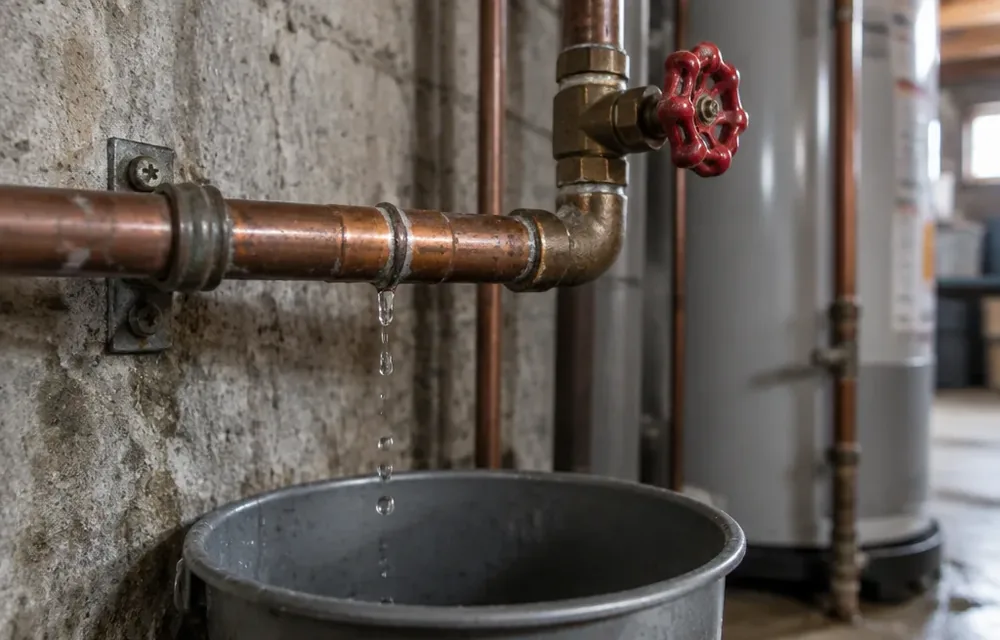
Drip fixes: A one-per-second drip usually traces to a worn cartridge, washer, or aerator scale rather than supply trouble. Cleaning aerators first separates fixture wear from restriction, then cartridge or washer renewal ends most drips. Fixture installation for faucets and toilets covers the swap where trim is obsolete or stops are frozen.
Running toilet fixes: Dye in the tank that reaches the bowl without flushing condemns the flapper, while tank overfill into the overflow tube condemns the fill valve setting. Matched flapper parts with correct chain slack plus fill height set to the mark resolve most runners without full rebuilds. Running toilet signs walk the same sequence with photos of each failure.
Hidden leak fixes: Overnight meter creep with fixtures off proves pressurized loss, and hot-side warmth mapping plus acoustic listening narrow slab zones before any opening. Irrigation branches and hose bibbs get isolated first as the cheapest suspects. Where the meter implicates buried supply, planning follows leak detection and burst pipe repair evidence rather than exploratory digging.
When should you call about a high bill in your town
Call signals: Call about bill-driven diagnosis when usage jumps without habit changes, when dye or meter reads confirm toilet or hidden loss, or when a running sound persists with fixtures off. Restriction-season spikes deserve verification before payment disputes, since indoor leaks hide behind outdoor assumptions. Septic owners with well pumps watch electric draw and pressure cycling instead of volumetric bills.
What to say on the call: Call (978) 592-1168 with your town, the bill change with dates, meter readings overnight, dye results, and fixture notes ready. Mention septic or well status where it applies, since billing logic differs entirely. That account lets the visit sequence flapper, fixture, and hidden-loss checks correctly across Chelmsford, Lowell, and Bedford.
Records that help most: Keep bills with meter reads, dated dye and overnight test notes, and prior repair invoices in one folder with your town row printed on top. Homes that bring all three get faster diagnoses and narrower proposals. Update the folder with each bill so the next spike reads against history rather than memory.
Near you
When to call
Related guides

Frequently asked questions
How much does a running toilet cost per month?
At area rates a 200-gallon-per-day runner wastes about 8.1 hundred cubic feet monthly, which prices near 46 dollars monthly in Woburn and near 189 dollars monthly in Bedford at table rates. Fixed charges and tiers move real bills around those planning figures. Dye-testing the flapper takes minutes and usually ends the waste.
Why did my water bill double with no habit change?
Silent toilet runners and hidden pressurized leaks double bills without any visible water, since both run around the clock. Overnight meter reads and tank dye separate the two suspects fast. Restriction seasons add confusion where irrigation assumptions mask indoor loss.
Do septic homes pay less for leaks?
Septic streets skip sewer volumetric charges, roughly halving water-plus-sewer rows depending on the town split, while well streets pay pumping energy instead. The table prices municipal water plus sewer only. Confirm septic or well status before applying any row.
Are these figures my actual bill impact?
Tables estimate variable-cost impact at stated volumes and vintages rather than predicting any bill, since fixed charges, tiers, and rate changes shape real totals. They rank towns and size repairs honestly without quoting your home. Your bill history plus meter reads set the true number.
Which leak should I fix first?
Running toilets first for sheer volume per minute of repair, then drips for trivial parts cost, then hidden loss for structural risk. That order matches dollars saved against effort spent in nearly every home. Verify each with dye or meter reads before buying parts.
Still stuck?
Describe what you see when you call and a local specialist will guide the next step.