What this setting needs
Grease lining the main
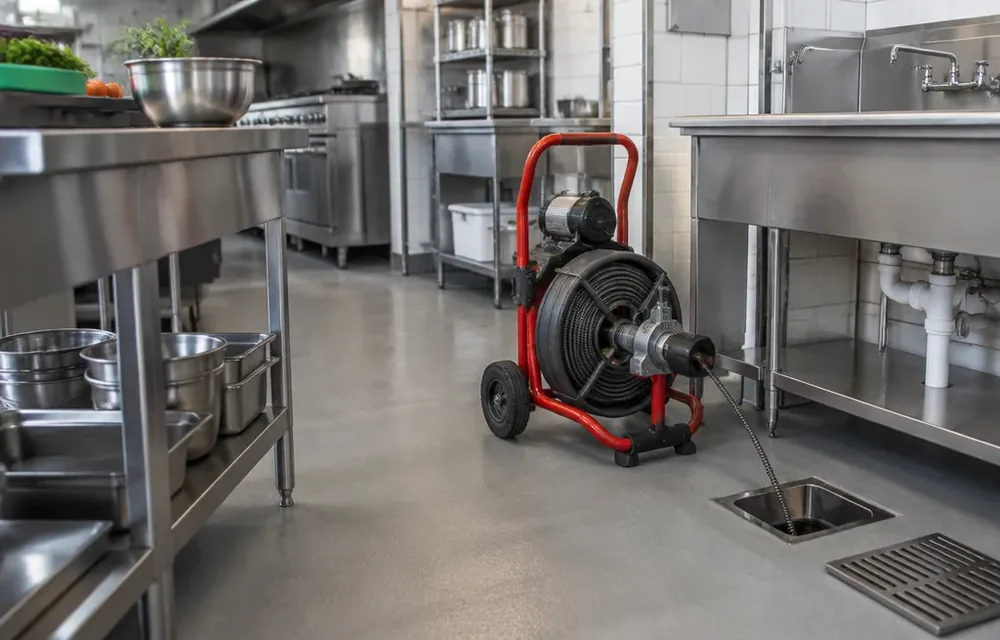
Fryer and dish loads coat cool runs with a soft layer that narrows the bore a little each week. That layer catches rice, noodles, and paper, so flow slows across the whole kitchen rather than at one sink.
Downtime tied to local health codes
Local health codes expect food areas to stay sanitary and usable, so a backed-up floor drain or mop sink can force reduced service until flow is restored. Planning cleaning before the line blocks protects the dinner period more than reacting after it.
Access during service hours
Kitchens need work staged around prep and rush, with cleanouts, floor sinks, and exterior access used to limit time inside food areas. Clear staging and controlled discharge keep floors usable while the line is open.
Restrooms and hand sinks
Public restrooms and hand sinks share venting and downstream piping with kitchen branches in many small buildings. A slow main shows first where use is heaviest, so testing includes both kitchen and restroom fixtures.
How grease slows a restaurant drain line
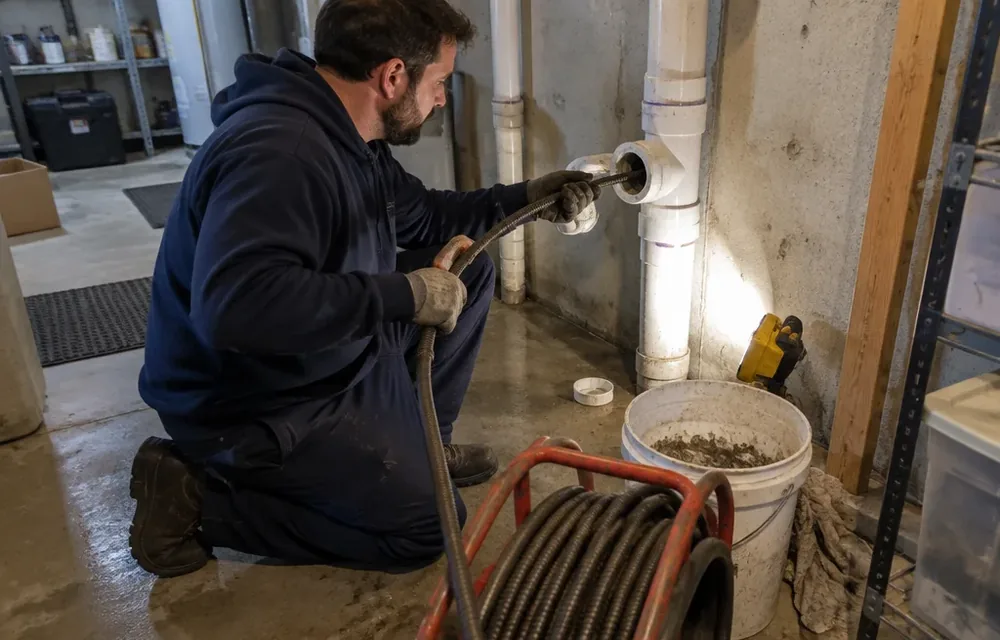
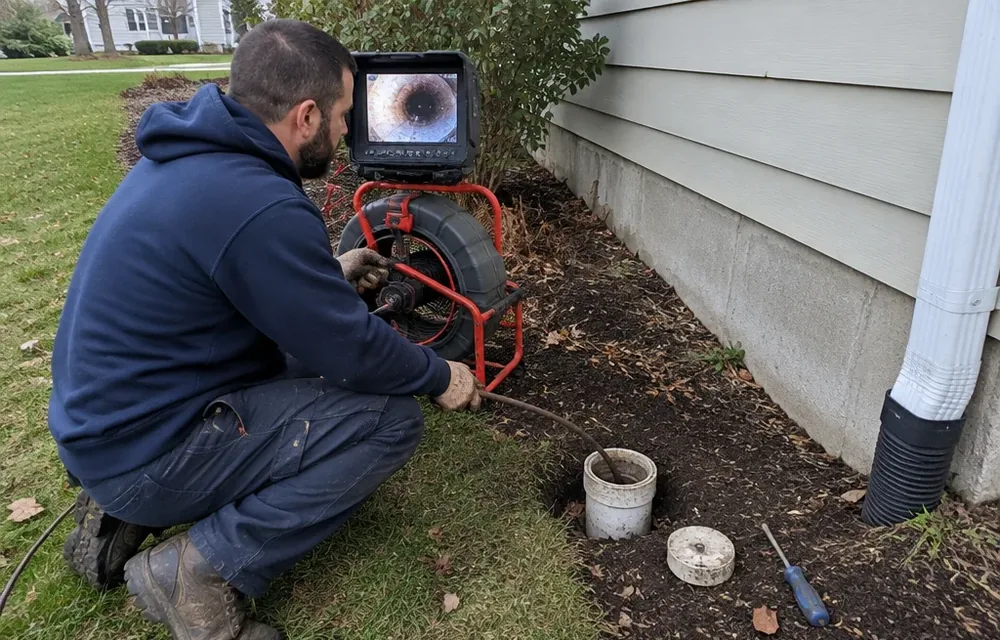
Buildup pattern: grease leaves the fixture hot and sets on cooler basement and slab runs well before the street, forming a soft coat that grabs starch and lint. Snaking punches a path through that coat, while scouring cleans the full circumference once flow is open. Camera video after a cable pass shows whether the bore is lined, scaled, or holding roots at a joint.
Signals to note: slow floor sinks during dishwashing, gurgling at a prep sink when the machine drains, and odor near a floor drain point to wall buildup rather than a single plug. Note which fixtures share trouble and how fast it returns after clearing, because that history decides between drain cleaning and hydro jetting. Timing matters more than plunging the same sink again.
Chelmsford building context: many food spaces sit in converted retail and older mixed-use blocks with long shared runs to the main and limited cleanout access. Cool basements and slab sections let grease set early, and mature street trees can add fine roots at older joints downstream. Mapping access and distance on the first visit makes later cleaning shorter.
What a kitchen visit covers with less disruption
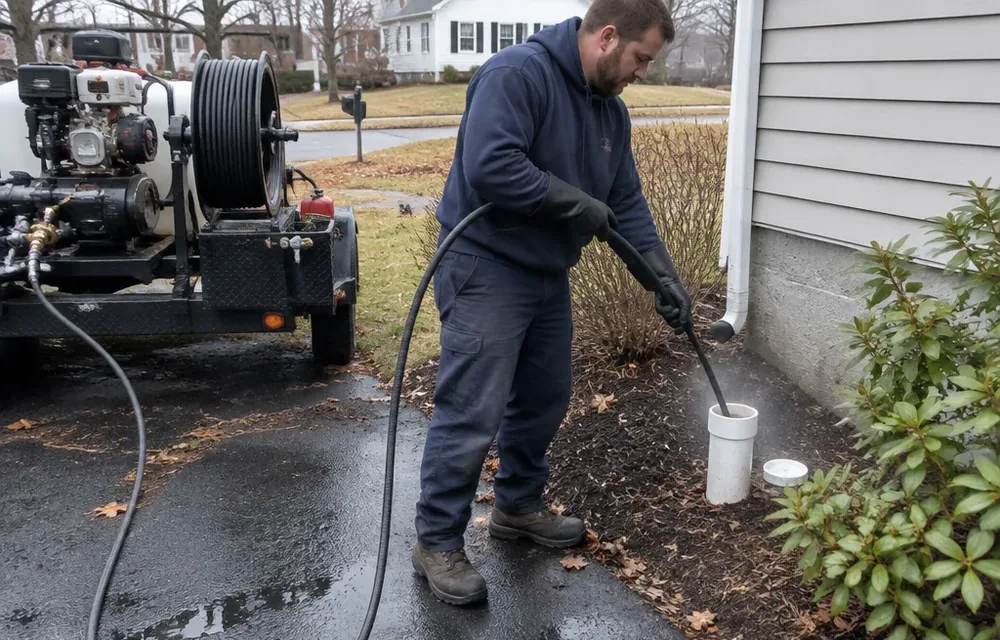
Staging first: work starts at the access point that keeps staff moving, often an exterior cleanout or a basement main rather than a line inside the cook area. Drop cloths, controlled hose runs, and contained discharge protect floors and storage. Staff can keep working in zones away from the open line while flow is restored.
Open then prove: the line is cabled to restore flow, then camera-checked to confirm the pipe can take pressure and to mark bellies, offsets, or breaks. Where the pipe is sound and lined with grease, jetting scours the bore in passes from downstream toward upstream. A return camera run proves a round bore and records any defect that cleaning uncovered for sewer line repair planning.
Habits that hold results: wiping pans to trash, fitting strainers, keeping rice, pasta, wipes, and coffee grounds out of sinks, and running full hot flow after dish loads slow the next coat. A simple log of slow dates and which fixtures were affected sets a cleaning interval from evidence. Kitchens in Lowell and Billerica with similar loads use the same routine.
Code and upkeep notes for food spaces
Plumbing code scope: work that opens or alters sanitary piping in Massachusetts falls under 248 CMR, the Uniform State Plumbing Code, with the Board of State Examiners of Plumbers and Gas Fitters governing who may alter those systems. Cleanouts are refit, traps and vents are left intact, and discharge is controlled so food areas stay clean.
Sanitation context: local health codes expect kitchens to remain sanitary, so standing water, sewer odor, and waste return are operational problems that can limit service until corrected. The plumbing task is to restore clean flow and prove it on camera, while the operator decides service levels with the local inspector. No chemical shortcut replaces mechanical clearing when grease has lined the bore.
Planning upkeep: lines that feed heavy fryer and dish loads benefit from scheduled cable and camera checks rather than waiting for a backup during service. Where video shows a belly, offset, or break, repair planning follows with permit and inspection steps through the town office. Our cost guide explains what shapes scope without listing figures here.
Related services
Frequently asked questions
How often should a restaurant line be jetted?
Timing rests on load and video rather than a fixed calendar. A kitchen with heavy fryer output and a long cool run may need scouring more often than a small cafe with short runs. Pre and post camera runs with distance marks show how fast grease returns and whether joints feed roots. That record sets the interval, and repair of bad joints extends it more than repeating pressure alone.
Can a restaurant stay open during drain work?
Often yes in zones away from the open line when staging keeps food areas clear. Work from an exterior or basement cleanout limits time inside the kitchen, with contained hoses and controlled discharge. Staff should keep water use low on the affected branch until flow is proven. Where waste has reached floors, that area stays closed for cleaning until local health codes allow normal use again.
What should staff stop putting down kitchen drains?
Staff should keep grease, starch, grounds, and wipes out of every drain, even with a disposal in place. Wipe pans to trash, use strainers in prep and floor sinks, and keep rice, pasta, fibrous peels, and coffee grounds out of the line. Run full hot flow after dish loads to carry film toward the main. These habits matter most on long Chelmsford runs where grease sets before the street and narrows the bore.
Does jetting fix a broken restaurant sewer?
No, jetting cleans a sound pipe and cannot repair a belly, offset, or break. Pressure scours grease and fine roots from intact walls, but it will not restore grade or close a joint gap. Camera video after scouring often reveals the defect that buildup hid, with distance marks for planning. That section then moves to sewer line repair with permit steps, while jetting remains useful prep.
Restaurants?
Call and describe the building. A local specialist takes it from there.