How does repipe cost take shape?
Scope shape: Repipe house cost takes shape from failure proof first and footage second. The visit starts by mapping pinholes, weeps, pressure loss, and discolored water to pipe eras and materials across the home, since mixed copper, galvanized, and old polybutylene-era runs fail on different schedules. Only that failure map plus fixture count, floor count, and finish levels can size partial renewal against whole-house work, which is why leak history matters more than square footage alone.
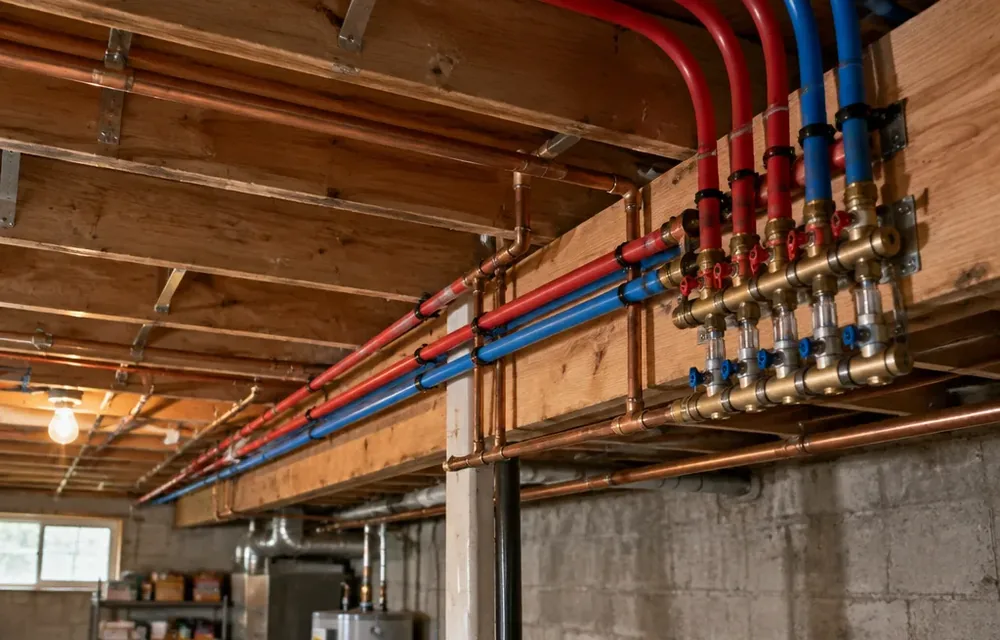
Material and routing work: Pipe material choice, manifold versus trunk-and-branch layout, shutoff and access panel placement, and fixture reconnections each add parts and labor beyond footage. Routing through open basements and attics keeps openings small, while fishing through finished walls and tile surrounds adds careful cutting with protection. Each bathroom group, kitchen, laundry, and hose bibb terminates the new system with valves and escutcheons that footage never shows.
Patching and proof closeout: Wall and ceiling patching coordination, finish protection through the work path, pressure testing of the new system, and fixture-by-fixture flow proof follow the pipe work. Permits with inspection run through the local inspector where supply piping is altered. That map-to-proof path is described before any opening in leak detection service notes, since finishes decide much of what owners remember about the project.
What drives repipe scope up or down?
Size, floors, and fixture count: Size, floors, and fixture count move repipe house cost together. A ranch with grouped baths on one level scopes far below a colonial with baths stacked across two floors plus laundry and kitchen at opposite ends. Each added fixture adds terminations, valves, and testing, while each added floor adds routing, opening, and patching. Tell dispatch the bath count, floor count, and which walls are tile or plaster, since finishes shape labor more than room dimensions.
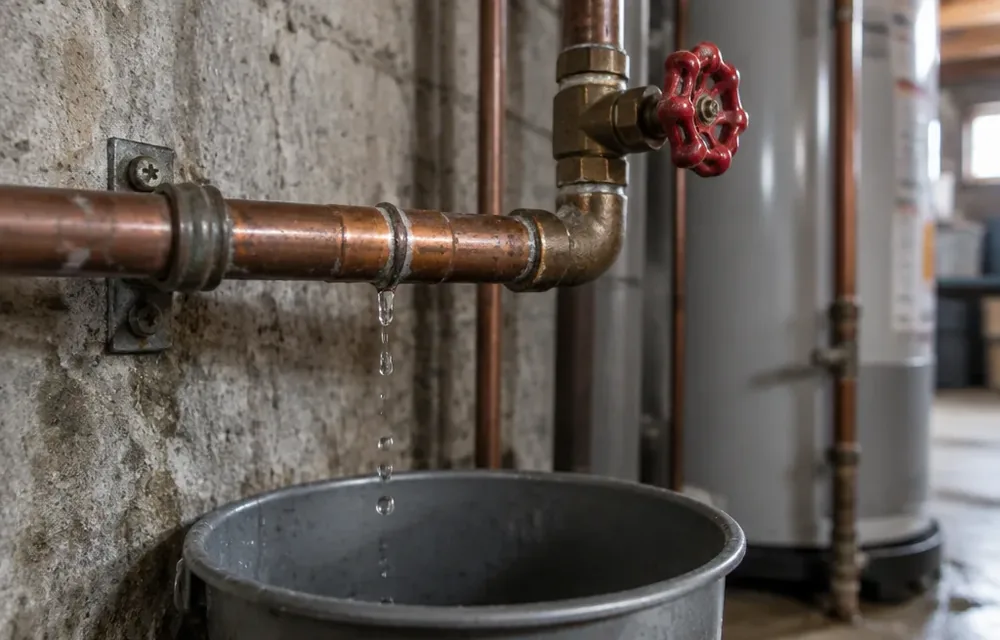
Existing materials and failure pattern: Galvanized runs with internal rust, copper with pinholes at mixed-metal transitions, and aging plastic with brittle fittings each argue different renewal extents. Isolated failures on an otherwise sound system fit targeted repiping of one era or branch, while pinholes appearing yearly across rooms mark systemic end of life. Water test findings on hardness and acidity join the decision, since aggressive water shortens whatever material replaces the old without water treatment and filtration corrections.
Access and occupancy: Open basements, attics, and crawl spaces with working room keep routing efficient, while slab construction, finished ceilings without access, and occupied rooms needing daily water restoration slow and stage the work. Phased repiping that keeps one bath live differs from whole-house shutdowns in planning if not in total footage. Note access realities and must-stay-live fixtures when describing the home.
Partial renewal versus whole-house repipe compared
Comparison frame: Partial renewal versus whole-house repipe differ in how much failure risk remains behind walls. Partial work renews the failing era or branch while leaving sound runs in place, while whole-house work replaces every supply run with matched material and new valves throughout. The right extent follows the failure map and material eras rather than rules of thumb, and repipe house cost follows that extent. The table below keeps the trade offs visible before walls open.
Read the rows: Use the table to match your leak history to the sounder extent. One bad branch with sound pipe elsewhere leans partial renewal, while yearly pinholes across rooms lean whole-house work. Mixed metals without separation and aggressive water lean treatment-paired renewal. Pair the rows with leak detection detail and keep a dated log of every leak spot, since that log is the strongest evidence for extent.
Scope notes by path: Partial renewal concentrates openings at one branch with shorter water shutdowns, while whole-house work stages across floors with phased restoration and longer testing. Permits, pressure proof, and patching coordination apply to both paths. Place each path beside the cost guide to see how fixtures, floors, and finishes stack rather than treating any row as a figure.
| Path | What it involves | Best fit | Scope note |
|---|---|---|---|
| Branch renewal | Replaces one failing run with new valves | Single-era failure with sound pipe elsewhere | Targeted openings, short shutdowns |
| Whole-house repipe | Renews every supply run and valve | Yearly pinholes across rooms and eras | Staged floors with phased restoration |
| Treatment-paired repipe | Adds filtration or conditioning with pipe | Aggressive water aging all materials | Quality corrections protect new pipe |
| Monitor with mapping | Dated leak log with periodic review | First isolated failure on young pipe | Watch schedule, revisit at next leak |
What should you do in order before booking a repipe?
Ordered steps: Ordered steps before booking a repipe start with evidence rather than estimates. Log every leak with date, location, material, and photo, test water for hardness and acidity, and note pressure behavior with gauge readings at hose bibbs. Only that file supports extent comparison between partial and whole-house paths with material reasoning attached. Bring the log, photos, and any prior invoices naming pipe materials to the survey visit.
Prepare the home facts: Count bathrooms, kitchens, laundry points, and hose bibbs, note floor levels with tile and plaster finishes, and photograph access points in basement, attic, and utility chases. Decide which bath must stay live during work and where protection matters most for floors and furnishings. Ask each bidder how openings get cut, who patches and paints, how water restores each night, and how pressure proof documents the result.
Sequence sanely around leaks: Address active leaks first with control and drying, then survey the system calmly rather than repiping under emergency timing. Avoid patch compounds as long-term answers on pressurized supply, since they hide deterioration that mapping needs to see. If water spreads active, shut the nearest valve and call (978) 592-1168, and review emergency plumber guidance and what counts as an emergency while you wait.
Why repipes cluster in Chelmsford area homes
Local pattern: Repipes cluster in Center colonials with hydronic-era galvanized branches patched with copper at transitions, in capes where additions extended original runs through cold chases, and in subdivision splits where builder-era materials age out together. Pinholes at mixed-metal joints without dielectric separation are the signature failure, and ceiling stains under stacked baths mark the second most common discovery path. Finished basements hide early weeps until framing shows them.
Water and era mix: Mineral-heavy town supply scales interiors while acidic stretches pit copper walls, so neighboring streets can age pipe differently on the same water source. Well-water pockets with iron and low pH attack from another direction entirely. Homes near Lowell with mill-era galvanized trinities, near Concord with tall colonial stacks, and near Billerica with subdivision-era branches each carry distinct era signatures that the failure map reads street by street.
What to tell dispatch: Mention leak dates with locations and materials, water test findings where known, fixture and floor counts, and finish types over pipe paths. Note pressure behavior and any discolored first-draw water with which fixtures show it. Those facts let the survey arrive with material options and access plans through leak detection methods rather than generic footage guesses.
Limits of averages and third party cost figures
Figure limits: Figure limits matter because no average can see your fixture count, floor count, material eras, finish levels, or water chemistry before the survey. A branch renewal in an open ranch and a whole-house repipe across finished colonial floors can share a label yet involve utterly different openings, patching, and testing. Per-fixture promises fail for the same reason, since routing, access, and finishes do not scale with fixture count. That is why failure mapping plus finish review on site outweigh any figure quoted without walking the home.
Third party context with care: One national cost guide reports residential plumbing around eighty nine dollars per hour plus parts, with a range around eighty four to ninety five dollars, as third party estimates for context. Those figures come from the ProMatcher Massachusetts cost report as statewide labor context, not our prices and not repipe totals, and your fixtures, floors, materials, and finishes move any real plan far from hourly averages. Sump installation around one thousand three hundred sixty three dollars appears in the same report for adjacent basement pump work. Use those reports to learn which drivers to ask about rather than as figures to hold any home to.
Wage versus billed scope: A national wage figure is not a project scope, and mixing the two misleads repipe planning badly. The May twenty twenty five national median wage for plumbers, pipefitters, and steamfitters was thirty dollars and sixty seven cents per hour according to the Bureau of Labor Statistics, and that wage sits inside a business with trucks, press and soldering gear, insurance, and dispatch. Billed scope also covers mapping, protection, pressure proof, patching coordination, and documentation. Keep that gap in mind when you read plumber hourly rates in Massachusetts and when you compare any online average to your home.
When should you call about repiping in Chelmsford?
Call signals: Call about repipe planning when pinholes recur across rooms and years, when pressure fades house-wide with discolored draws, when galvanized runs choke flow to upper baths, or when a remodel opens walls over tired pipe worth renewing while exposed. Single isolated leaks on young matched pipe instead fit targeted repair with mapping started. Remodel timing deserves a survey before finishes close, since open walls are the cheapest routing the home will ever offer.
What to say on the call: Call (978) 592-1168 with the leak log, material notes, fixture and floor counts, finish types, and water test findings ready. Describe pressure behavior and first-draw discoloration by fixture. That account lets the survey sequence mapping, material options, and phasing correctly across Chelmsford, Lowell, and Westford. Ask how openings, nightly restoration, patching, and pressure proof will be handled before any wall is cut.
Massachusetts rules: Supply repiping falls under 248 CMR with Board governance over who may alter potable piping, and permits with inspection run through the local inspector. Backflow protection, pressure regulation, and treatment drain routing follow code with the pipework. Only qualified hands repipe potable systems, as homeowner plumbing rules describe.
Near you
When to call
Related guides


Frequently asked questions
How much does it cost to repipe a house in Chelmsford?
Repipe house cost in Chelmsford has no set figure because fixture count, floor count, material eras, finish levels, and water chemistry shape each project. One national cost guide reports hourly labor context as third party estimates only, not repipe totals. The clearest path is a dated leak log with water tests, then extent proposals against that evidence.
Should I repipe everything or just the bad branch?
The failure map decides. Isolated failure on young matched pipe fits branch renewal with mapping started, while yearly pinholes across rooms and eras argue whole-house work. Mixed metals without separation and aggressive water push toward treatment-paired renewal. Keep logging every leak so extent rests on pattern, not worry.
What pipe material should a repipe use?
Material follows water chemistry, routing, and local practice rather than habit. Hardness, acidity, and iron findings shape the choice alongside access and finish constraints. Ask how each option handles your test numbers, how joints and valves spec out, and what maintenance each needs over its service life.
Can we live in the home during a repipe?
Staged repiping usually keeps water restoring each night with one bath held live, though full days run dry during cutovers. Protection, dust control, and nightly restoration belong in the written plan before work starts. Occupied phasing takes coordination but avoids moving out for most layouts.
Does remodeling change repipe timing?
Open walls during a remodel are the cheapest routing a repipe will ever get, with access, protection, and patching all simpler before finishes close. Survey tired pipe before the remodel seals it behind new tile. That timing pairs naturally with fixture and valve renewal in the same walls.
Still stuck?
Describe what you see when you call and a local specialist will guide the next step.