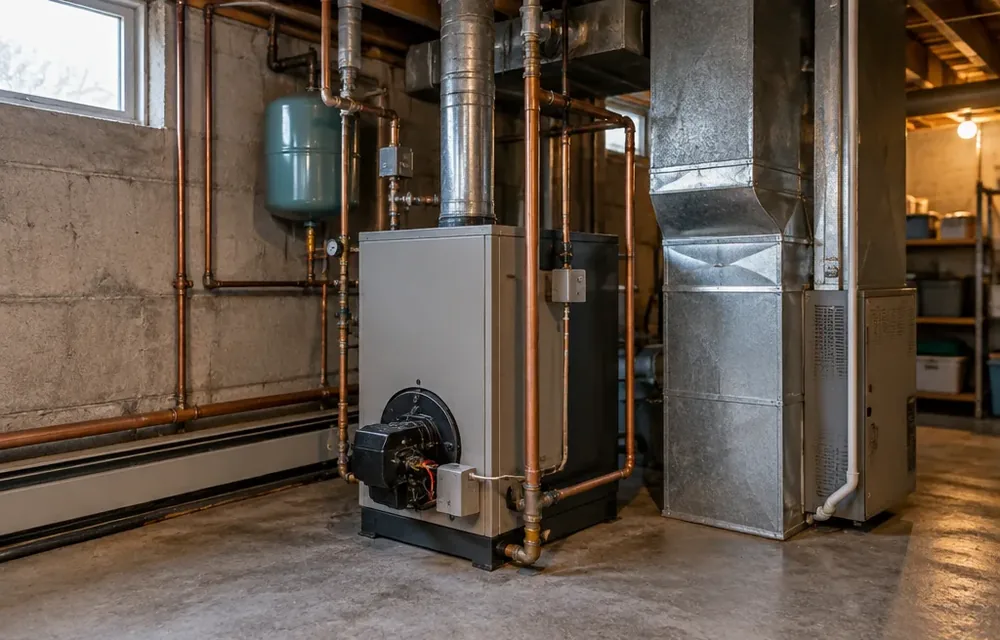
How do boilers and furnaces heat a home?
Heat mechanism: Boilers heat water and move it through baseboard, radiators or radiant loops, while furnaces heat air and move it through ducts and registers. Heat mechanism differs in medium, with water holding warmth through pipes and air delivering quick room swings through ducts.
Loop versus duct behavior: Hydronic loops warm steadily and hold temperature between cycles, with zone valves or circulators directing flow room by room. Ducted air warms fast and filters the airstream, with dampers and blower speeds balancing rooms. Note whether rooms carry baseboard, radiators or registers, because that installed path usually decides the plant. See boiler service details for loop parts and gas piping notes for fuel paths.
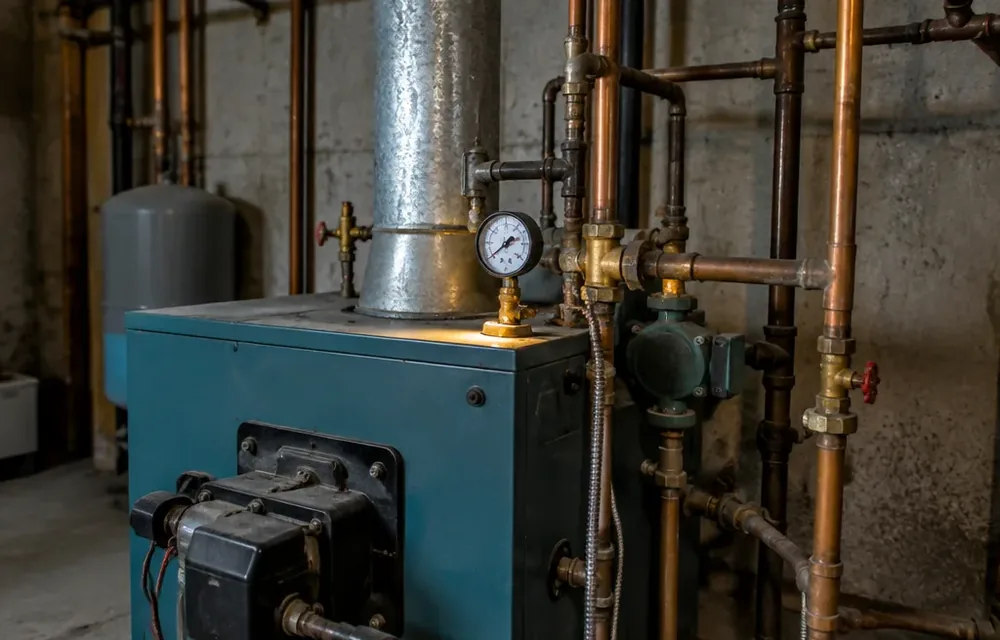
Controls and safeties: Both plants use thermostats, limits and safeties, with boilers adding pressure gauges, expansion control and relief paths and furnaces adding filter, blower and flue or vent proving. Gauge readings, fault codes and filter state help the visit more than room feel alone. Record those readings before adjusting anything through winterize notes.
What causes uneven heat, and how can you tell the source?
Uneven heat causes: Uneven heat comes from air in hydronic loops, low system pressure, weak circulators, clogged filters, weak blowers and leaky or unbalanced ducts. Uneven heat that follows one wing or floor points to distribution rather than plant size.
Boiler side clues: Cold upstairs radiators with warmth below often mean trapped air or low pressure, while endless short cycling with lukewarm loops often means control or expansion trouble. Weeping bleeders, pressure creep and relief drips mark the same family. Bleeding without checking fill pressure often worsens the pattern. Compare boiler emergency signs while you note gauge behavior.
Furnace side clues: Weak airflow at distant registers with a hot plant closet often means a clogged filter, slipping blower performance or crushed duct runs. Hot and cold swings between cycles often mean overshoot from thermostat placement or leaky return paths. Check filter state, register blockage and whether additions tap old trunks before assuming the heat exchanger failed through emergency help triage.
What to do in order when heat fades
Ordered heat steps: Ordered heat steps start with thermostat setting, fuel and power checks, then distribution checks that match the plant type. Ordered heat steps avoid resetting the same fault without learning why it tripped.
Safe homeowner checks: Confirm the thermostat calls for heat, confirm fuel valves sit open and breakers sit on, and replace a visibly clogged filter on a furnace with the correct size. On a boiler, note gauge pressure and any fault code without draining or venting loops yourself. If you smell gas, leave the home and call the gas utility from outside before calling (978) 592-1168. Review what counts as an emergency and boiler emergency notes while you wait.
What to log for the visit: Log which rooms stay cold, when cycling started, gauge readings, recent filter changes and any relief drips or new noises. Photos of gauges, labels and fault displays help size parts. That log lets the visit test air, pressure, circulation or airflow in one trip rather than returning through the cost guide scoping.
Boiler versus furnace compared
Comparison frame: Boiler versus furnace differs in distribution, room feel and remodel fit rather than one always winning. Boiler versus furnace choice usually follows baseboard and radiators versus ducts already framed into the home.
Read the rows: Use the table below to match your rooms to the sounder plant. Baseboard and radiator rooms lean boiler, ducted rooms with cooling lean furnace, and additions lean whichever path reaches them cleanly. Fuel, venting and water quality refine the call. Pair the table with boiler service scope and gas piping needs for fuel changes.
Remodel reality: Switching plants means new distribution through finished walls, which often costs more in carpentry than in hardware. Keeping the plant family and renewing controls, circulation or duct sealing usually delivers steadier comfort with less disruption. Let a room by room survey of emitters and ducts decide before hardware talk.
| Feature | Boiler and hydronic loops | Furnace and ducts |
|---|---|---|
| Heats by | Hot water through baseboard and radiators | Warm air through ducts and registers |
| Room feel | Steady warmth that lingers between cycles | Quick warming with more swing between cycles |
| Zoning style | Zones by loop valves or circulators | Zones by dampers and duct layout |
| Cooling path | Needs separate cooling since no ducts | Shares ducts with central cooling |
| Best existing fit | Colonials and capes with baseboard in place | Ranches and splits with ductwork in place |
| Common upkeep | Pressure, air venting and circulator care | Filter, blower and duct sealing care |
Why Massachusetts colonials and capes lean hydronic
Local housing: Massachusetts colonials and capes lean hydronic because oil and gas boilers with baseboard loops heated subdivisions and village streets for decades. Massachusetts colonials often added rooms onto those loops, so bonus rooms sit at the far end where air and weak flow show first.
Additions and remodels: Garage bonus rooms, dormers and rear additions usually tap existing loops or ducts rather than gaining new plants. Long hydronic runs to those rooms collect air first, while long duct runs lose airflow to leaks and kinks. Homes near Carlisle farmhouses with long loops, near Westford mill village houses with aging valves, and near Concord antique colonials with layered remodels all show the same far room chill.
Fuel and water mix: Many streets burn gas where mains reach and oil where tanks remain, with well pockets adding mineral load that scales boiler feed and indirect tanks. Share fuel type, emitter style and far room behavior on the call. Those facts guide whether the visit prioritizes venting air, balancing flow or sealing ducts through boiler service triage.
Limits of each heating path
System limits: System limits appear when comfort trouble traces to envelope and airflow rather than plant output, such as missing insulation, open knee walls and blocked registers. System limits also appear when one plant serves a layout it cannot reach without new distribution. Drafty knee walls, thin attic cover and registers blocked by rugs mimic plant failure while the plant itself runs soundly, so check those spots before judging output.
Boiler limits: Boilers cannot push heat through air bound upper runs, seized zone valves or scaled indirect coils without service to those parts. They cannot fix cold rooms fed by undersized loops added as afterthoughts. Furnaces cannot deliver through crushed returns, disconnected trunks or filters left clogged for seasons. In both cases new hardware on old distribution repeats the same cold rooms. Review frozen pipe prevention where cold rooms threaten supply lines and note which far rooms chill first for the visit.
When renewal beats repair: Renewal of controls, circulators, valves, blowers or duct sealing often steadies comfort without changing plant family. Plant replacement leads when exchangers, blocks or heat exchangers reach their limit or venting cannot be made safe. Let pressure logs, combustion checks and airflow readings draw that line rather than room feel alone. Ask for a room by room survey with written findings so choices rest on distribution rather than habit, which keeps renewal focused on loops, ducts and controls that shape comfort.
When to call for heating help in Massachusetts
Call timing: Call timing for heating help fits no heat, repeated loss of pressure, relief discharge, new leaks at valves or radiators, and carbon monoxide alarm or gas odor protocols already followed. Call timing also fits far rooms that never warm despite filter care and thermostat checks.
How to call well: Call (978) 592-1168 with plant type, fuel, gauge or fault readings and far room pattern ready. Note boiler pressure, fault codes and filter size and age. Keep the area around the plant clear and leave gas, vent and relief work alone. See boiler emergency notes and what moves the price for visit scope.
Massachusetts rules: Heating plants that burn fuel and alter hydronic or gas piping in Massachusetts fall under 248 CMR, the Uniform State Plumbing Code and fuel gas rules, with the Board of State Examiners of Plumbers and Gas Fitters governing who may work on those systems as listed on mass.gov. We test controls and safeties, verify venting and leave pressure and shutoff labeling clear. Permits move through the local inspector where plant or fuel changes apply.
Near you
When to call
Related guides
Frequently asked questions
Is a boiler or furnace better for a Chelmsford colonial?
A boiler is usually better where baseboard and radiators already serve the rooms, since keeping hydronic distribution avoids new duct carpentry. A furnace fits where ducts already run and cooling shares the path. Survey emitters room by room first. Far room chill often traces to air, pressure or duct leaks rather than plant size.
Can I switch from a boiler to a furnace?
A switch is possible but means adding full ductwork through finished walls, which often outweighs hardware cost. Keeping the boiler family with renewed controls and circulation usually steadies comfort with less disruption. A room survey of loops, chases and attic or basement duct space decides feasibility before any bid.
Why do upstairs radiators stay cold?
Upstairs radiators stay cold from trapped air, low system pressure or weak circulation to the far loop. Bleeding without checking fill pressure often worsens the pattern. Note gauge pressure, relief behavior and whether lower floors heat well. A boiler service visit vents air, sets pressure and tests circulators in sequence.
Why does my furnace run but rooms stay cool?
A furnace runs cool rooms through clogged filters, weak blower output and leaky or crushed ducts that starve far registers. Check filter size and state plus register blockage first. Hot plant closets with weak distant airflow point to distribution rather than burner output. Duct sealing and balancing often help more than larger hardware.
Still stuck?
Describe what you see when you call and a local specialist will guide the next step.