What this setting needs
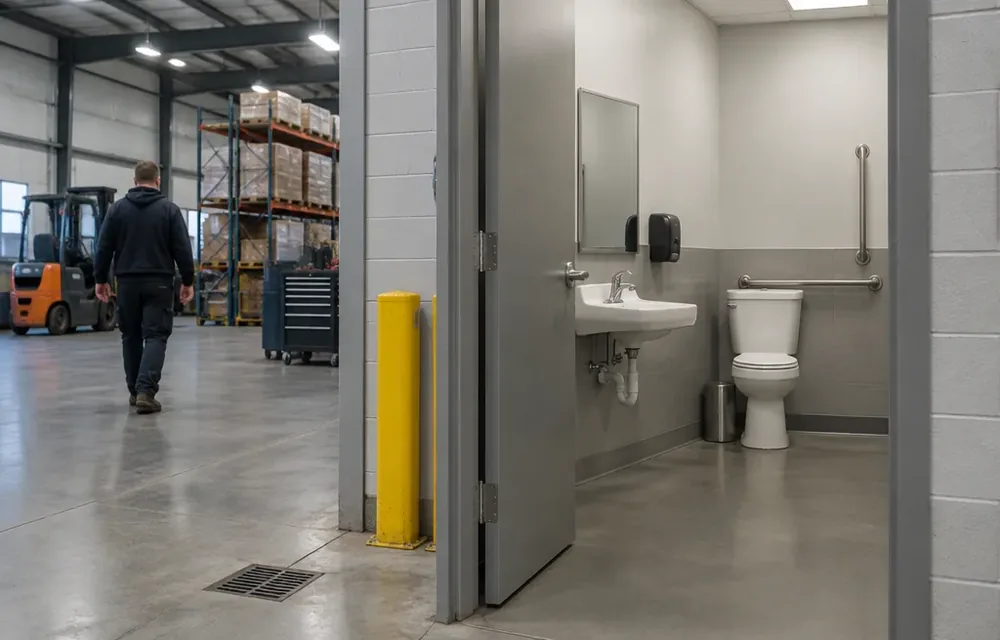
High-demand restrooms
Shift breaks send many users to a few restrooms at once, so flush valves, fill valves, and cartridges wear on a short cycle. Recording part numbers and failure dates keeps spares matched and downtime brief.
Floor drains and trench runs
Washdown water, pallet grit, and storm inflow carry silt into floor drains and long low-slope runs. Regular trap flushing and silt checks prevent the gray delta that narrows the bore and feeds odor.
Gas piping for heat and process
Unit heaters, boilers, and process equipment need sized branches with reachable shutoffs and tested joints. Additions that move equipment call for re-sizing from the meter rather than tapping the nearest branch.
Access around operations
Racked aisles, staged pallets, and dock schedules decide where hoses run and where water can be isolated. A clear path to cleanouts, meters, and heaters shortens every visit more than any tool choice.
Restrooms and drains under shift loads
Restroom load pattern: peak use arrives in waves rather than steadily, so weak flush valves and slow branches show first at shift change. A single running toilet can waste water all shift while masking a branch that also drains slowly. Testing several fixtures together under load reveals the shared restriction.
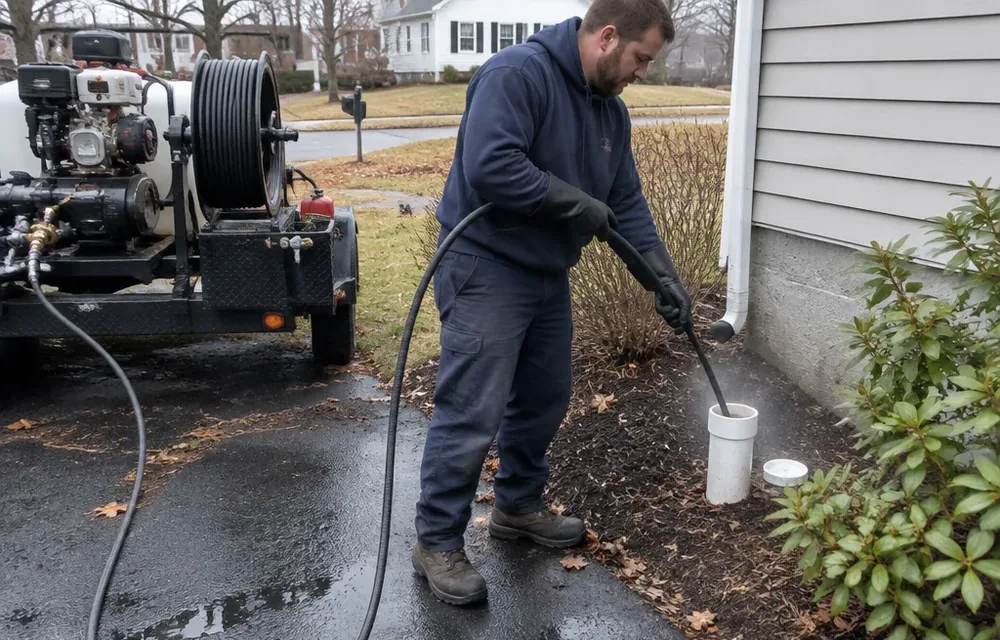
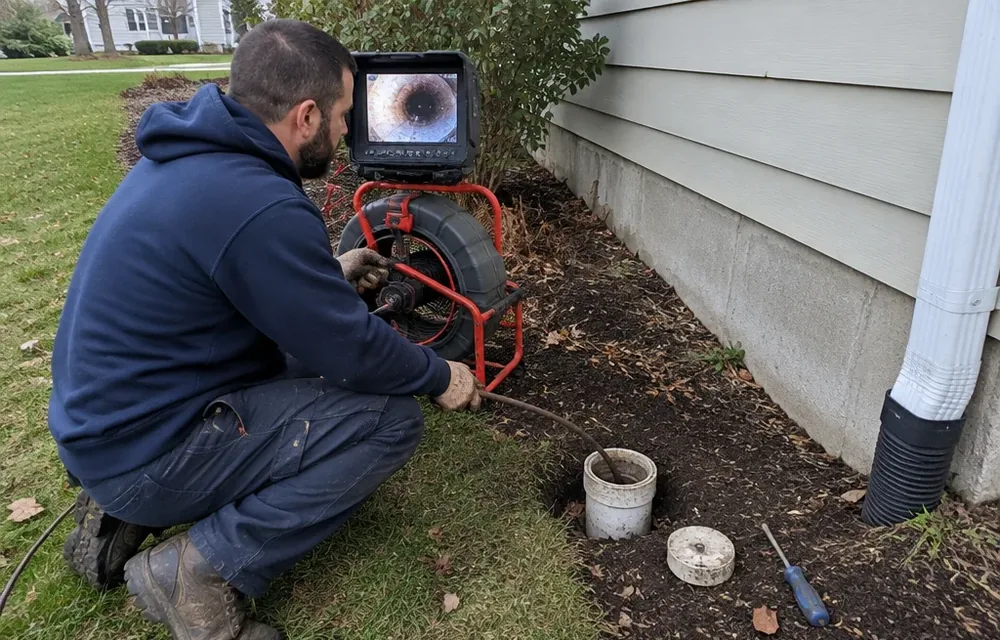
Floor drain upkeep: silt settles in traps and bellies where slope is flat, then hardens between washdowns and grabs paper and lint. Cable work restores flow, while jetting scours the full bore once the line is open and sound. Camera video with distance marks shows whether the run wants scheduled scouring or grade correction. See hydro jetting for where pressure fits and drain cleaning for first-pass clearing.
Site context: many Chelmsford warehouse blocks sit on flat lots with long laterals to the main and limited exterior cleanouts. Forklift wash areas and dock drains add grit that homes never see. Mapping cleanouts, trap locations, and discharge points on one sheet makes the next visit shorter. Buildings near Billerica and Tewksbury with similar slabs follow the same map.
Gas piping and heater loads in work buildings
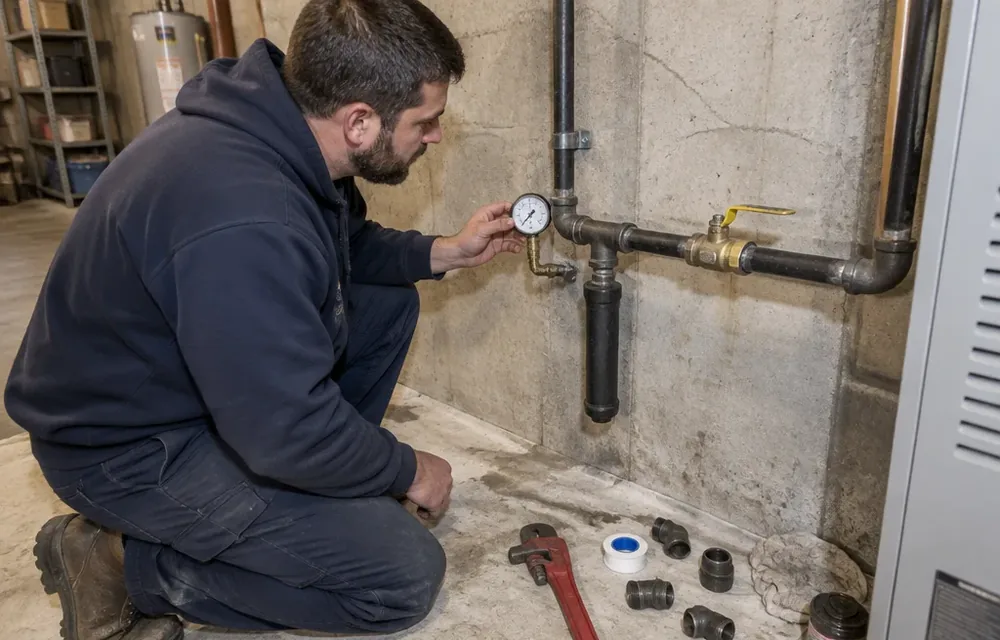
Load and route check: each gas appliance plate lists input that, with run length from the meter, sizes the branch and manifold. A new heater tapped into a branch that already feeds boilers and water heaters may starve at peak fire. Tracing every branch to the meter before sizing avoids that shortfall.
Safety order: gas odor, hissing at a joint, or a carbon monoxide alarm with fuel equipment running means leaving the building and calling the gas utility and fire service first. Piping inspection starts only after the scene is declared safe. Routine piping work never starts from odor response.
Permit and test path: gas alterations in Massachusetts need permits with pressure testing and inspection through the local inspector, plus utility coordination where the meter is affected. Gas piping visits cover sizing, shutoff reach, sediment details, and gauge-proved testing before appliances return to service.
Code and shift planning notes
Plumbing and gas scope: sanitary and supply alterations fall under 248 CMR, the Uniform State Plumbing Code, with the Board of State Examiners of Plumbers and Gas Fitters governing who may alter piping and gas branches. Structural defects found on camera move to repair planning with permit and inspection steps through the town office.
Shift phasing: restroom banks are serviced one side at a time so crews keep facilities during breaks. Floor drain work stages from the downstream cleanout toward upstream fixtures to limit hose runs through work zones. Sharing shift times, dock windows, and lockout contacts on the call sets the order.
Scope drivers: fixture counts, lateral length, cleanout availability, gas load and run distance, and whether jetting or camera equipment is needed shape the plan. Our cost guide explains those drivers without listing figures, so managers can compare windows and access options clearly.
Related services
Frequently asked questions
How do warehouses handle restrooms during repairs?
Phased banks keep restrooms usable during most repairs. One side stays open while the other is isolated to its branch, then crews retest and swap sides. Clear signage and a brief shift note prevent use of closed fixtures. Sharing headcounts, break times, and floor plans on the call helps set a sequence that survives peak demand.
What clogs warehouse floor drains most often?
Silt, pallet grit, and washdown solids clog floor drains fastest. Low-slope runs let fines settle between cleanings, where they harden and catch paper and lint. Regular trap flushing and silt removal slow the cycle. Where flow returns slowly after cabling, camera video shows whether scouring or grade correction will hold longer than another cable pass.
When does a warehouse need gas piping review?
A gas review is needed when equipment moves, new heaters are added, or existing units starve at peak fire. Input ratings plus longest run from the meter decide branch size rather than the nearest pipe size. Missing shutoffs, tired connectors, and unlisted routing also belong on the correction list. Permits with pressure testing and inspection complete the path.
Does jetting fix a broken warehouse sewer?
No, jetting cleans a sound bore and cannot repair a belly, offset, or break. Pressure scours silt, scale, and fine roots from intact walls but will not restore grade or close a joint gap. Post-jet camera video often reveals the defect that buildup hid. That section then moves to sewer repair planning with permits, while jetting remains useful prep.
Industrial and Warehouses?
Call and describe the building. A local specialist takes it from there.