How to tell what your sewer needs
Blockage without damage: paper and roots that clear fully on cable, with a camera showing a sound bore and correct fall, usually need cleaning and a maintenance plan rather than digging. Note how fast trouble returns, because a year of clear flow after cleaning points away from structural failure.
Structural defect: standing water in a belly, an offset joint that snags paper, a cracked or collapsed wall, or heavy root masses at every hub mean cleaning will only buy weeks. The camera distance and depth readings locate the defect within feet so repair targets the right span. See backed-up sewer and gurgling drains for the patterns we confirm on video.
Inside or outside: trouble that appears only at one bathroom group may sit in the interior branch, while waste rising at the lowest drain with good branch flow points to the building sewer outside. We test interior branches first so yard work is only planned when the exterior line proves faulty.
Why sewers fail around Chelmsford
Older Chelmsford laterals include clay tile and concrete hubs with mortared joints that shift with frost and soil movement. Maples, oaks, and pines send fine roots into those hubs, and each cable pass that cuts roots without sealing the joint invites a thicker return. Low spots settle where trench backfill was loose, creating bellies that hold paper and grease even when the pipe wall looks intact.
Additions, driveways, and patios add load over shallow runs, while downspout ties and sump discharges overload combined paths during storms. Homes near river lowlands see higher groundwater that finds every open joint. These patterns explain why backups cluster after wet weeks and why a single cleaning rarely holds on a joint with visible offset.
Options honestly compared
Cable clearing with camera proof: restores flow fast and documents the bore for planning. It fits sound lines with soft blockage and buys time on root joints while a repair is scheduled. It does not fix a belly, offset, or break.
Spot repair at the defect: opening one section to replace the broken or offset length preserves sound pipe on both sides and keeps trenching short. It fits a single clear defect with good fall and material elsewhere.
Full replacement or lining where sound: replacing the lateral to the town connection restores fall, material, and joints for the long term but involves the longest trench and restoration. Lining or bursting can reduce digging where the host pipe and access allow, though not every break qualifies. Compare trenchless with traditional methods and pair the choice with drain cleaning planning so flow stays open until work day.
What moves the cost
Length, depth, and surface: a short shallow run under lawn differs greatly from a deep run under a driveway, patio, or retaining wall. Pavement cutting, shoring, dewatering, and landscape restoration each add labor and restoration factors.
Material and method: PVC replacement, spot repair with proper couplings, and trenchless lining or bursting each carry different materials, equipment, and crew needs. Street-side connections and town coordination add steps where the lateral meets the main.
Permits, inspections, and flow control: sewer alterations in Massachusetts need permits and inspection under 248 CMR through the local inspector, often with town public works coordination at the street. Bypass pumping or staged use limits during work add handling. Our cost guide explains these drivers, and video with distance marks keeps the plan exact.
When this is the wrong answer
Sewer repair is the wrong answer when the blockage sits in an interior branch and the exterior camera shows a sound line with good flow. In that case branch cleaning and vent checks solve the symptom without yard work. A dry trap odor or a roof vent blocked by leaves also mimics main trouble without any exterior defect.
It is also the wrong first step when a septic tank in an outlying area is due for pumping, because a full tank backs up the whole house the same way. If fixtures drain well and only one toilet runs poorly, look to fixture repair and trap work first. Video evidence should precede any digging decision.
Standards that apply in Massachusetts
Building sewer work in Massachusetts follows 248 CMR, the Uniform State Plumbing Code, with the Board of State Examiners of Plumbers and Gas Fitters governing who may alter sanitary piping. Proper bedding, fall, joint materials, cleanout placement, and backfill practice are code matters, not preferences, and most exterior sewer work needs a local permit with inspection.
We keep cleanouts accessible, maintain required separation from water lines where the trench exposes both, and record depth and location for your files. Town coordination at the street connection is handled before excavation so the tie-in passes inspection the first time.
Signs you need this
Waste back in a low fixture
Water or paper rising in a basement shower or floor drain points past the branch and into the building sewer.
Gurgling across several rooms
Toilets and tubs that gurgle together suggest a main restriction or a vent and main combination that needs a camera.
Soggy yard or settling soil
A damp trench line, lush strip, or odor outside can mark a break or offset joint leaking into the soil.
What happens on a visit
We ask you to halt water use to limit backup. We cable from the best cleanout to reopen the bore without flooding finishes.
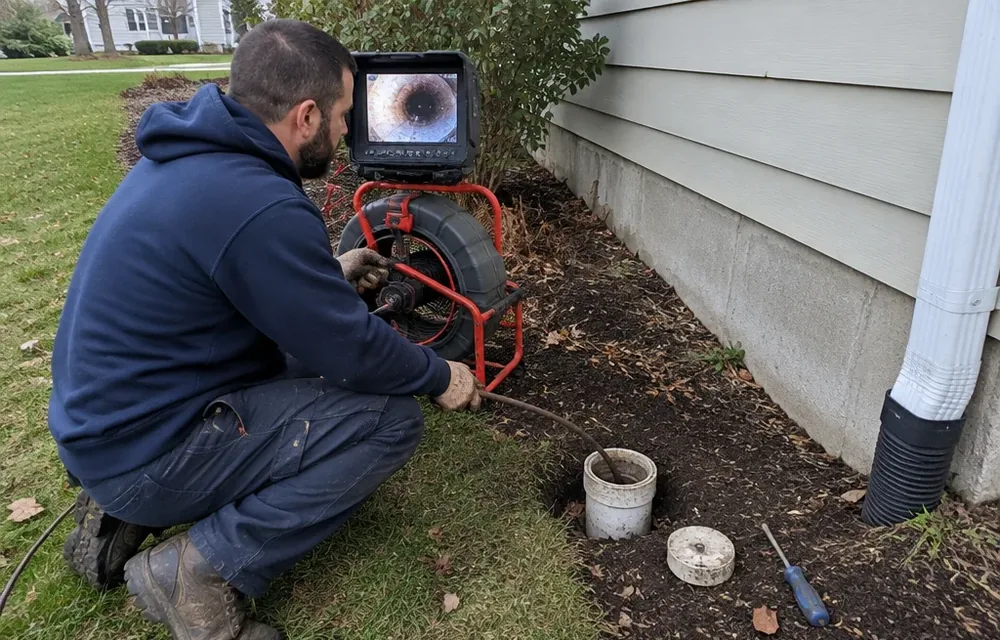
We run the camera with distance and depth readings, recording roots, bellies, offsets, and breaks. You watch the footage with us.
We locate the defect from above, mark the span, note depth and surface cover, and check interior branches so only the failed length is planned.
We excavate or use trenchless methods where the pipe qualifies, bed and joint new pipe to grade, fit cleanouts, and meet the inspector on site.
We backfill in lifts, restore flow, run multiple fixtures together, and re-camera the repaired span to prove full-bore fall.
When this is the wrong answer
Do not book sewer replacement for a single slow sink, a dry trap odor, or a toilet that only needs trap and vent attention, because the building sewer is likely sound. Do not dig without camera proof showing distance, depth, and defect type. If waste rises low in the house or the same main clogs every few weeks, that is the opposite case and video plus hydro jetting assessment should come first, then repair planning.
Related reading
Where it comes up
Related services
Frequently asked questions
How do I know if my sewer line is broken?
A broken line usually shows repeat main backups, paper snagging at one distance on cable, or camera video with a cracked wall, offset hub, or collapse. Soggy trench soil or odor outside supports the finding but does not prove it alone. Interior branch trouble without exterior symptoms points elsewhere. Distance-marked video is the proof that separates a break from a simple blockage.
What is the difference between trenchless and traditional sewer repair?
Traditional repair opens a trench, removes the failed length, and beds new pipe to correct fall with full visual control. Trenchless lining or bursting reduces digging by working through access points where the host pipe and soil allow. Not every belly or collapse qualifies for lining. Compare trenchless with traditional repair and let the camera decide.
How often should a sewer line be cleaned?
Cleaning frequency rests on what the camera shows rather than a calendar. A sound line may go years after one thorough clearing, while a root-jointed clay line may need seasonal attention until repair. Grease-heavy kitchen mains need habit changes more than frequent cable passes. We set the interval from video and return speed, not from habit.
Can tree roots be kept out of sewers?
Roots enter through open joints and fine cracks seeking moisture, so sealing the joint is the lasting answer. Cutting alone prunes the intrusion and invites thicker regrowth. Spot repair or replacement with sound joints stops entry at that span, while deep-rooted trees near the trench may need landscape planning. Camera depth marks show which joints are involved.
Who handles the street connection in Massachusetts?
The homeowner lateral typically runs to the town main, with permits and inspection through the local plumbing inspector and coordination with public works at the street. Digging near the roadway needs marking of utilities and traffic care. We handle the permit and inspection steps and explain where town responsibility begins before work starts.
Can a homeowner repair a sewer line in Massachusetts?
Homeowners should not open or alter building sewers, which fall under 248 CMR and the Board of State Examiners of Plumbers and Gas Fitters and need a license holder with permits and inspection. You can stop water use, note where backup appears first, and keep cleanouts accessible. Excavation, joint work, and tie-ins belong with a license holder.
Need sewer line repair and replacement in Chelmsford?
Call now and describe what is happening. A local specialist takes it from there.