How to tell a freeze from a break
Freeze without break: no flow or a thread of water at one group, with no stain, hiss, or meter movement, usually means ice still holds the bore. Leave the faucet cracked, warm the room with the cabinet open, and avoid forcing valves that resist. See frozen pipes for the pattern we confirm first.
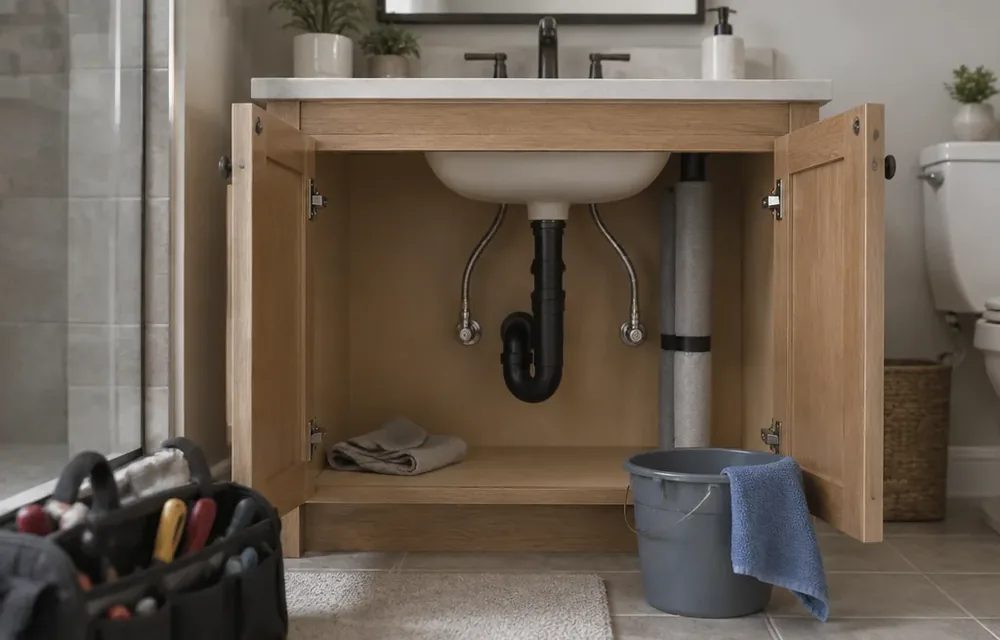
Freeze with split: a damp spot, a hissing wall, or a meter that turns with all taps closed means the ice has already parted the pipe. Close the local valve and then the main if flow continues, and keep buckets and towels ready at the low corner. Do not raise heat fast and leave, because pressure on a split grows as ice melts.
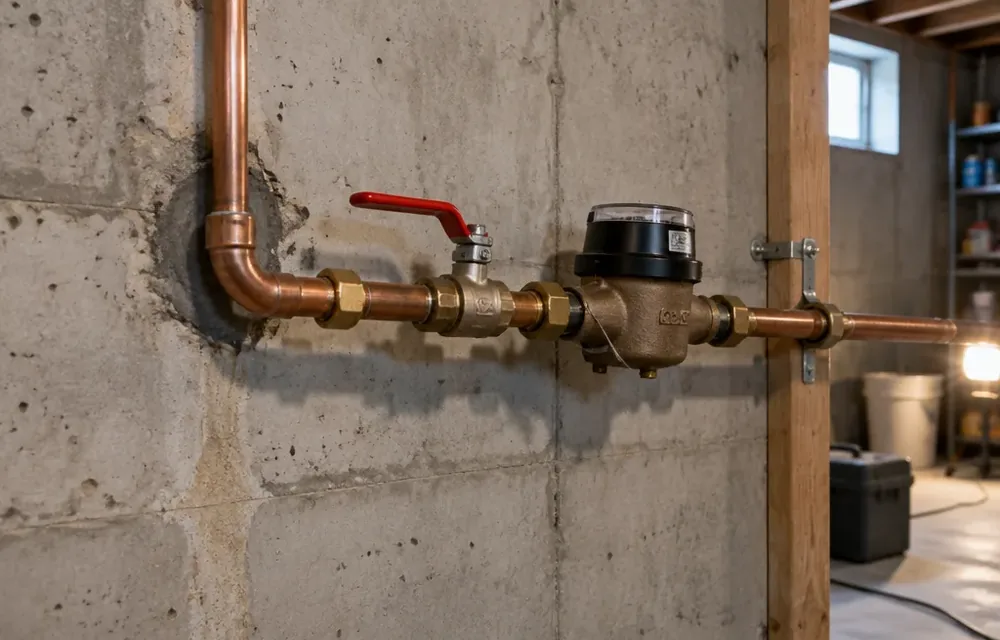
Whole-house loss: no water everywhere in deep cold points to a frozen service entry or a town-side issue rather than one branch. Check with a neighbor and confirm the main area temperature before thaw work starts. We verify the entry point and meter behavior on arrival.
Why pipes freeze around Chelmsford
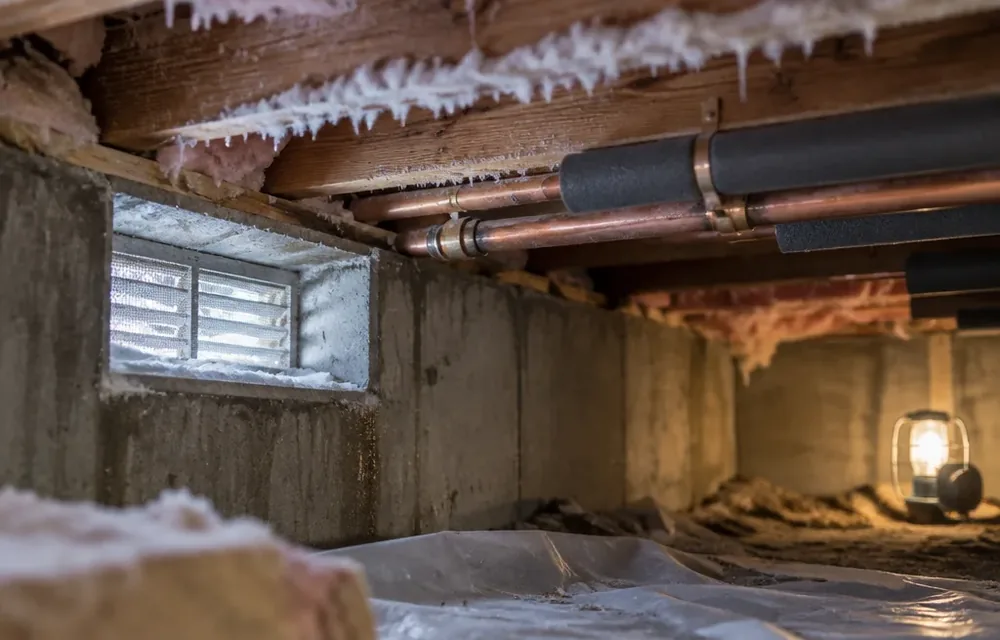
Chelmsford capes, raised ranches, and colonials with later additions often run supply through garage walls, bump-outs, knee walls, and vented crawl spaces that sit far below room temperature. Wind finds hose-bib penetrations, dryer vents, and rim-joist gaps and chills the first elbow behind the sheathing. Night setback thermostats that drop the house into the low sixties let those cavities fall below freezing even when living rooms feel fine.
Exterior hose bibs left connected to hoses trap water in the stem and split the seat inside the wall. Basement bathrooms added along cold foundation walls and kitchen sinks on outside walls with thin insulation freeze first. Mid-winter thaws followed by a hard refreeze catch pipes that survived the first cold week because groundwater and masonry stay cold longer than air.
Options honestly compared
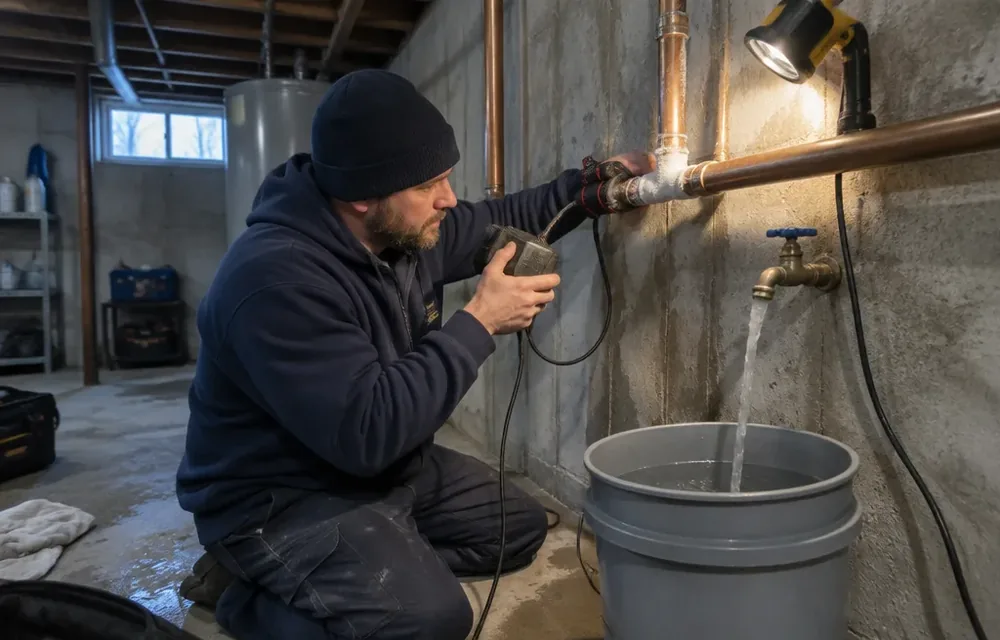
Controlled thaw: gentle room heat, warm towels, and low electric heat applied by a pro with the faucet open melts the plug while pressure has somewhere to go. It fits accessible runs with no sign of splitting and preserves finishes. Patience matters more than heat output.
Open and repair: when testing shows a split, a swollen section, or repeated freezing at one elbow, cutting that bay and replacing the failed length with a better-routed and insulated path lasts longer than thawing alone. Re-routing through a warm chase beats wrapping a cold chase every time.
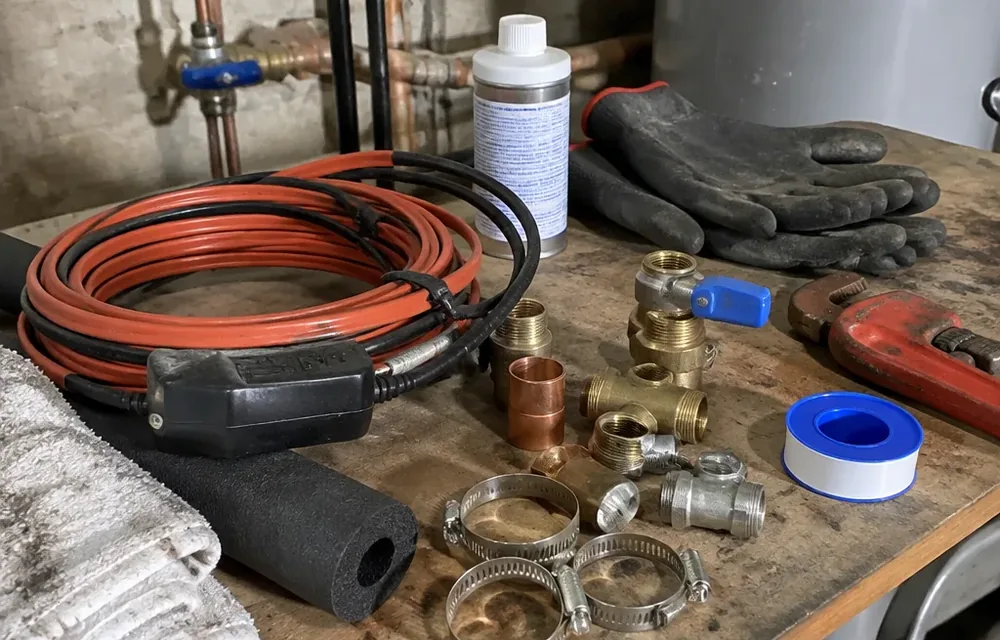
Prevention package: pipe insulation with sealed joints, heat cable on approved runs with a thermostat, sealing of rim and penetration drafts, and hose-bib winter valves each cut risk in a different way. Insulation alone will not save a pipe in moving cold air, and heat cable needs proper listing and control. For habit detail, read frozen pipe prevention and winterize steps. Open flame, high-heat guns, and boiling water are poor trades because they scorch wood and burst the pipe they were meant to save.
What moves the cost
Access and length of freeze: an exposed basement run thaws and insulates faster than a line buried in a tiled exterior wall or a low crawl space. Multiple elbows in the cold zone add thaw and inspection time along the whole run.
Repair and re-route needs: a single split coupling differs greatly from a re-route through finished ceilings with new insulation and draft sealing. Hose-bib replacement with an interior shutoff and drain cap adds valve work beyond the thaw.
Timing and permits: deep-night thaw calls during a cold snap carry different labor factors than scheduled prevention visits in fall. Alterations to piping may need a permit and inspection under 248 CMR. Our cost guide explains these drivers, and we describe the thaw path before heat is applied.
When this is the wrong answer
Thaw work is the wrong answer when the meter spins with all fixtures off and walls are already wet, because the pipe has split and needs leak repair rather than more heat. Whole-street loss with neighbors also affected points to the service entry or town supply rather than your branch.
It is also the wrong fix for a slow tub drain that merely looks frozen, or a boiler zone that stays cold because of air rather than ice. If heat is out and pipes are at risk, ask for emergency help first so the house warms before thawing starts.
Standards that apply in Massachusetts
Supply piping protection, insulation, and shutoff practice in Massachusetts follow 248 CMR, the Uniform State Plumbing Code, with the Board of State Examiners of Plumbers and Gas Fitters governing who may alter potable piping. Hose bibs need proper backflow protection, and concealed repairs need code-correct joints with support and access where required.
We use only listed heat cable where the manufacturer allows it, never open flame in joist bays, and we verify backflow and drain-down behavior at exterior valves. Where a re-route opens walls, we coordinate permit and inspection steps through the local inspector before closing.
Signs you need this
No flow at one cold tap
A kitchen or bath on an exterior wall that stops during a freeze while other taps work points to a local ice plug.
Frost or bulge on exposed pipe
White frost, a swollen section, or a humming valve in a crawl space marks where ice is gripping the bore.
Drip that starts at thaw
Water beading at a joint as the house warms means the ice split the pipe and pressure should stay low until checked.
What happens on a visit
We check which taps fail, where the run travels, and whether the meter moves. We confirm power and heat are safe to use for thawing.
We crack the affected faucet and the lowest tap so meltwater and pressure have somewhere to go without hammering the joint.
We warm the room first, then work from the tap back toward the cold zone with controlled heat, feeling for the ice edge as flow returns.
We dry the run, restore pressure slowly, and watch every joint and elbow under load with a light and meter check.
We insulate and seal the chase, fit interior shutoffs for hose bibs, and note thermostat and cabinet habits that keep the run above freezing.
When this is the wrong answer
Do not book thawing for a pipe that already sprays at a joint, because heat will only raise pressure on a split that needs repair first. Do not use open flame, a high-heat gun, or boiling water on a frozen joint. If no home on the street has water, or a wall is wet with the meter turning, ask for leak detection or utility coordination instead, and keep the main closed until the run is checked.
Related reading
Where it comes up
Related services
Frequently asked questions
What should I do when a pipe freezes?
Open the affected faucet slightly, warm the room with cabinet doors open, and keep the house heat steady rather than cycling low. Do not force stuck valves or apply open flame. If flow does not return within an hour or any dampness appears, close the local valve and call us. Controlled thaw with a relief path protects the joint while ice melts.
How do I know if a frozen pipe has burst?
A burst usually shows as a wet spot, a hiss inside the wall, or a meter that turns with all taps closed once thaw starts. No flow alone means ice still holds, while flow that returns with dripping at a joint means the wall has parted. Keep pressure low and buckets ready at thaw, and watch the lowest ceiling below the run.
Can I thaw pipes myself?
Homeowners can warm the room, open cabinets, and trickle the tap while waiting. Direct heat on piping, especially with flame or high-heat guns, risks fire and burst and is best left to us with controlled methods. If the run is concealed, the meter moves, or water appears, stop and call rather than opening walls.
How do I stop pipes freezing again?
Keep steady heat, open cabinet doors on outside-wall sinks during snaps, disconnect hoses in fall, and seal rim and penetration drafts that wash cold air over elbows. Insulation with sealed joints plus interior shutoffs for hose bibs covers most Chelmsford capes and additions. Read frozen pipe prevention for the full habit list.
Should heat cable go on my pipes?
Heat cable fits short approved runs that cannot be re-routed through warm space, when fitted to manufacturer listing with a thermostat and proper insulation over it. It is not a substitute for draft sealing or for moving a line out of wind wash. We confirm the run allows it and that the circuit and control are correct before fitting.
Can a homeowner insulate pipes in Massachusetts?
Homeowners can fit snap-on insulation on accessible basement runs and seal obvious drafts with caulk and foam. Altering piping routes, soldering valves, or fitting heat cable on supply lines is work for a license holder under 248 CMR and Board rules. If freezing returns at the same elbow each year, ask for a re-route plan rather than thicker wrap alone.
Need frozen pipe prevention and thawing in Chelmsford?
Call now and describe what is happening. A local specialist takes it from there.