How to tell jetting fits your line
Jetting fits: camera video with grease coating, soft scale, or fine roots in a sound pipe with correct fall responds well to scouring. Flow improves across all fixtures at once after the pass, and the bore looks round and clean on the return camera run.
Jetting waits: a belly holding water, a badly offset joint, or a cracked wall needs repair planning rather than pressure, because scouring cannot restore grade or close a break. We prove the bore with cable and camera first so pressure never hits a weak span blind. See clogged drains and backed-up sewer for the patterns we separate.
Fixture versus main: a single slow lavatory with hair at the stopper does not need a jetter in the yard. Whole-branch or main-line symptoms with wall buildup do. Note which fixtures share the trouble and how fast it returns, because that history sizes the nozzle and pressure choice.
Why buildup returns around Chelmsford
Chelmsford kitchens often feed long, cool basement runs to the main, so grease sets on the wall well before the street and narrows the bore a little each year. Mature maples and oaks send fine roots into older clay and concrete hubs, and each cable cut without scouring leaves tails that catch paper. Laundry lint and powder residue add a rough coat that grabs grease faster the next time.
Hard, mineral-bearing town water lays scale on older cast and galvanized interiors, creating a pitted surface that holds organic film. Disposals that take starchy foods and coffee grounds daily feed the layer. Much of Chelmsford is served through the Lowell Regional Water Utility system, so mineral load is steady and scouring results last when habits change with them.
Options honestly compared
Cable snaking: restores flow fast with the least equipment and remains the right first step for a hard blockage. It leaves wall film behind, so grease and root lines often slow again within months.
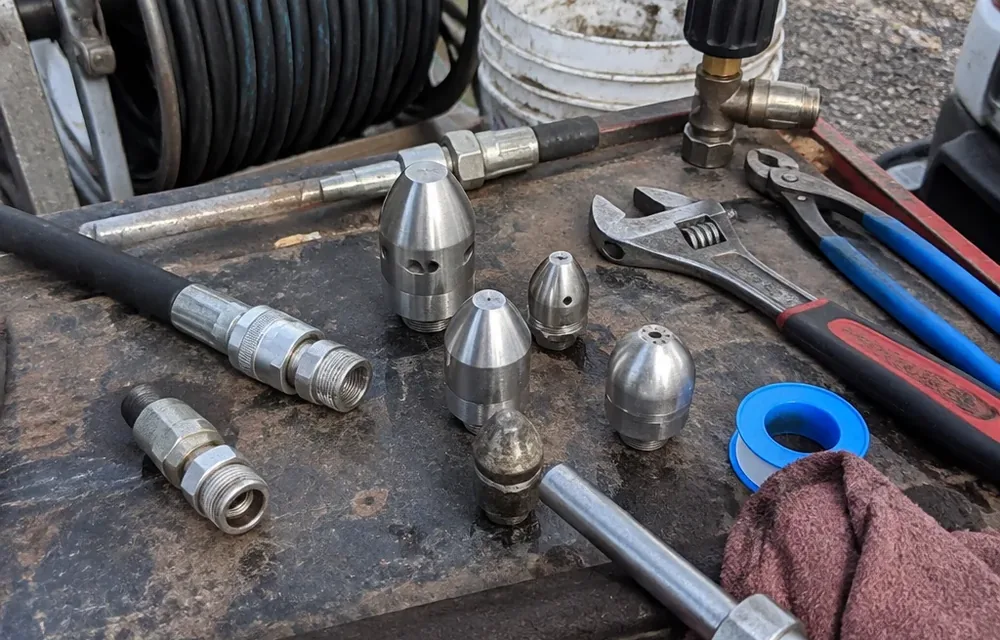
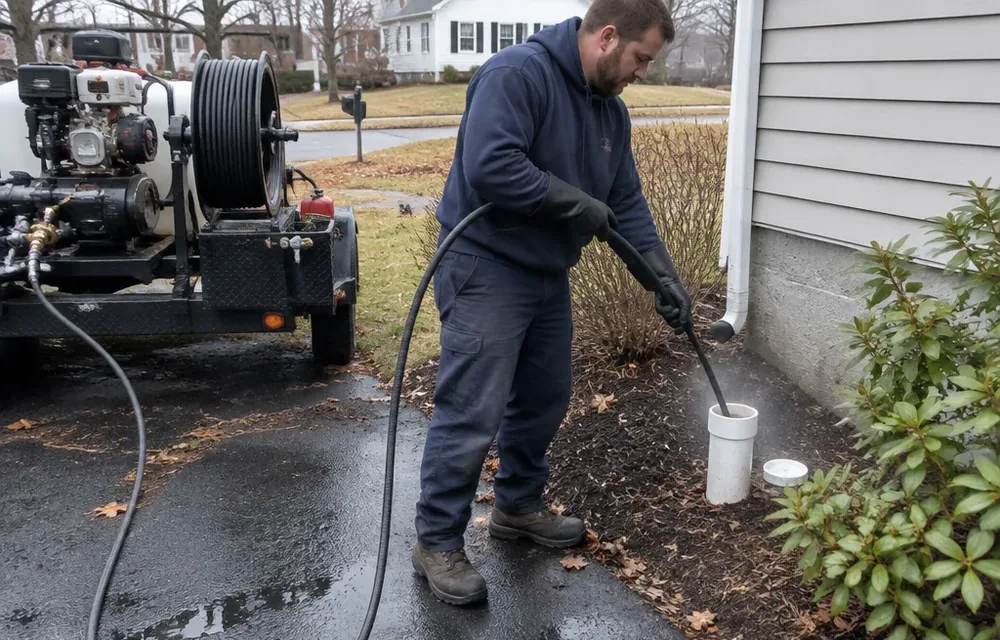
Hydro jetting with camera proof: scours the full circumference with rotating water, then proves the result on video with distance marks. It fits sound grease and root lines and commercial-style kitchen loads in homes that cook daily. It needs access, water supply, and a pipe that camera shows can take pressure.
Repair after jetting: when video after scouring reveals a belly, offset, or break that was hidden under buildup, spot repair or replacement fixes grade and joints for the long term. Jetting then becomes prep rather than the cure. For planning, pair jetting with drain cleaning history and sewer repair video before deciding.
What moves the cost
Access and length: a ground-level exterior cleanout with a short run to the street keeps setup simple, while pulling toilets, working from a roof vent, or jetting a long lateral to the main adds hose, water, and time. Basement height and storage around the cleanout affect staging.
Blockage type and pipe condition: heavy grease, dense root tails, and hard scale need slower passes and nozzle changes compared with light film. Fragile Orangeburg, thin-wall, or already cracked sections need lower pressure and may rule jetting out entirely.
Camera, water, and restoration: pre- and post-jet camera runs, water use, and any repair planning after the bore is clean shape the scope. Permits apply when the camera reveals work beyond cleaning under 248 CMR. Our cost guide explains these drivers without quoting a figure here.
When this is the wrong answer
Jetting is the wrong answer for a collapsed section, a severe belly holding inches of water, or a joint offset that camera shows snagging paper on concrete edge. Pressure will not restore fall or close a break, and it can push water into soil through an open crack. Those need repair planning with video marks.
It is also the wrong tool for a dry trap odor, a vent blocked at the roof, or a septic tank due for pumping. If a single fixture slows while the main camera shows a clean bore, look to trap, stopper, and vent work rather than the jetter. Tell us the return interval and we will steer you to cleaning, jetting, or repair honestly.
Standards that apply in Massachusetts
Drain and sewer cleaning that opens or alters piping in Massachusetts falls under 248 CMR, the Uniform State Plumbing Code, with the Board of State Examiners of Plumbers and Gas Fitters governing who may work on sanitary systems. Pressure work must respect pipe listing and condition, with cleanouts refit and traps and vents left intact.
We confirm pipe material and soundness on camera before selecting pressure and nozzle, protect interiors from back-spray, and control discharge so soil and finishes stay clean. Where video reveals structural defects, we explain permit and inspection steps through the local inspector before any repair is scheduled.
Signs you need this
Same line clogging quarterly
A kitchen or main that clears then slows again within months usually has wall buildup that snaking leaves behind.
Grease-lined or root-haired bore
Camera video showing yellow grease sheets or fine root tails explains why paper snags again so fast.
Slow fall with full fixtures
Multiple fixtures that drain but never briskly point to a narrowed bore rather than a single plug.
What happens on a visit
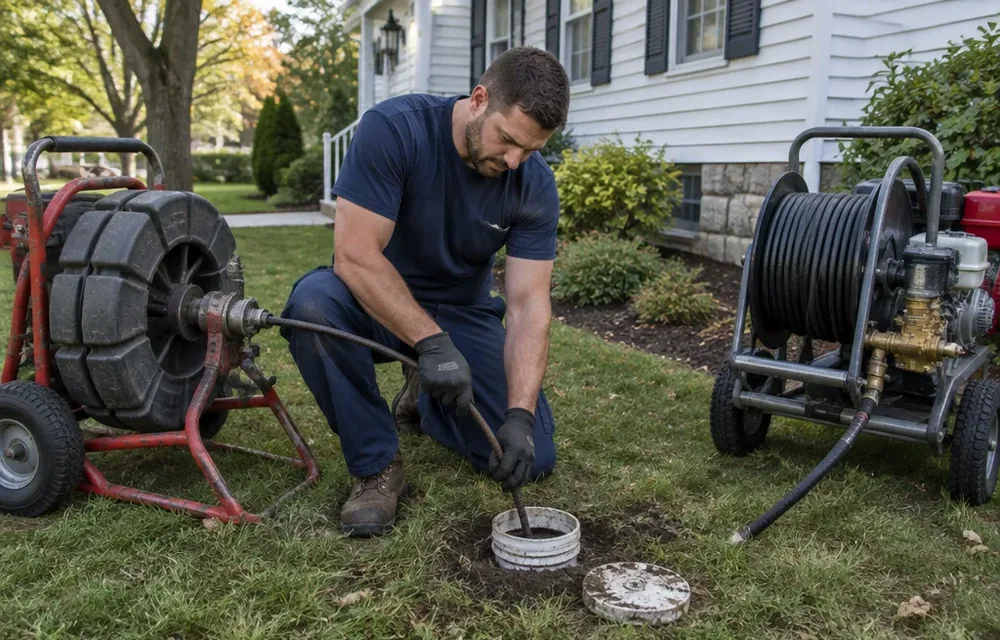
We cable the blockage to reopen the bore and confirm fixtures drain. We note distance and resistance for the camera run.
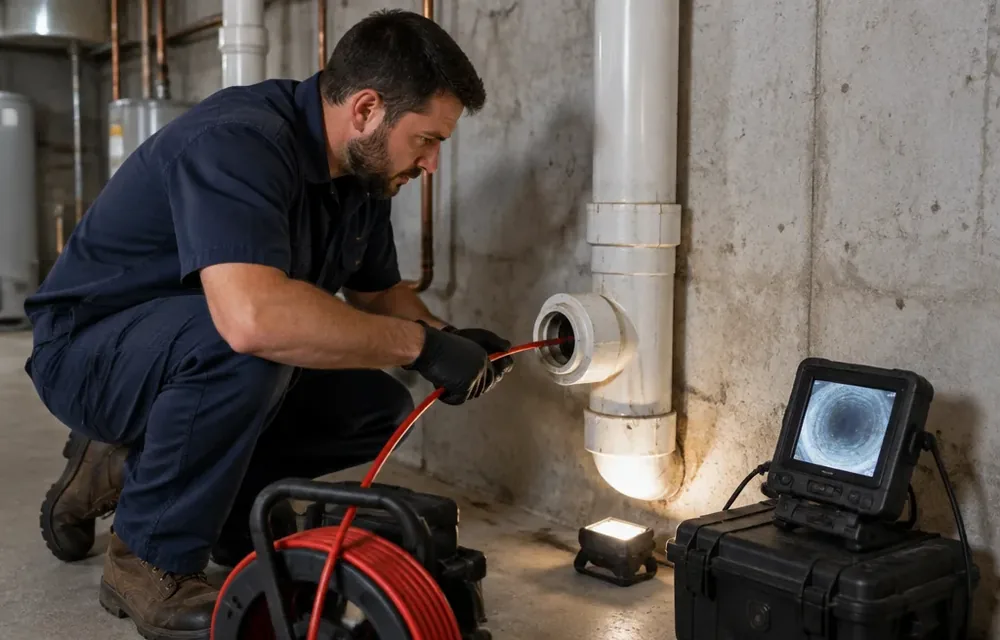
We record grease, scale, roots, bellies, and joints with distance marks. We confirm the pipe can take pressure before jetting.
We work from downstream toward upstream with the right nozzle, flushing debris to the main while watching flow return at fixtures.
We run the camera again to prove a round, clean bore. We mark any belly, offset, or break that scouring revealed.
We show before and after video, note grease and root sources, and set cleaning or repair timing from evidence rather than habit.
When this is the wrong answer
Do not book jetting for a single hair-clogged lavatory, a dry trap smell, or a line the camera shows as broken, bellied, or badly offset, because pressure cannot fix grade or structure. Do not jet a fragile or unknown pipe without a pre-jet camera run. If waste backs up low with standing water on video, or the same main slows every few weeks with grease sheets on camera, that is the opposite case and jetting after a cable opening is the sound next step.
Related reading
Where it comes up
Related services
Frequently asked questions
Is hydro jetting better than snaking?
Jetting cleans the full bore while snaking punches a path through the blockage. Snaking remains the right first step to restore flow and feel the obstruction. Jetting fits sound lines with grease, scale, or fine roots that return quickly after cables. The pre-jet camera decides, because bellies and breaks need repair rather than pressure.
Will jetting damage old pipes?
Jetting is safe for sound pipe when pressure and nozzle match material and condition shown on camera. Cracked, collapsed, or thin-wall sections should not take full pressure and need repair planning instead. That is why we cable and camera first, then select a gentler pass or rule jetting out when video shows weakness.
How long does hydro jetting last?
Duration rests on pipe condition and habits after the pass. A scoured bore with sealed joints and changed grease habits can run years, while an open root joint or daily grease load narrows again faster. Post-jet video with distance marks sets a realistic interval. Repair of the joints that feed roots extends the result most.
What should I stop putting down drains after jetting?
Keep grease, coffee grounds, rice, pasta, wipes labeled flushable, and fibrous peels out of drains even with a disposal. Wipe pans to the trash, use strainers, and run full hot flow after dishwashing to carry film to the main. These habits matter most on long cool Chelmsford basement runs where grease sets before the street.
Can a homeowner rent a jetter in Massachusetts?
Homeowners can plunge and maintain strainers and stoppers by hand. High-pressure jetting in building drains and sewers, plus opening concealed piping, belongs with a license holder under 248 CMR and Board rules because pressure can injure and can damage weak pipe. If more than one fixture is affected or sewage appears, stop water use and call us.
Do I need a camera with jetting?
A camera before jetting proves the pipe can take pressure and maps bellies and offsets that pressure cannot fix. A camera after jetting proves the bore is round and clean and records any defect uncovered under buildup. Without both runs, jetting is guesswork. Read whether a camera is worth it for the full reasoning.
Need hydro jetting in Chelmsford?
Call now and describe what is happening. A local specialist takes it from there.