Signs
One fixture slow with standing water
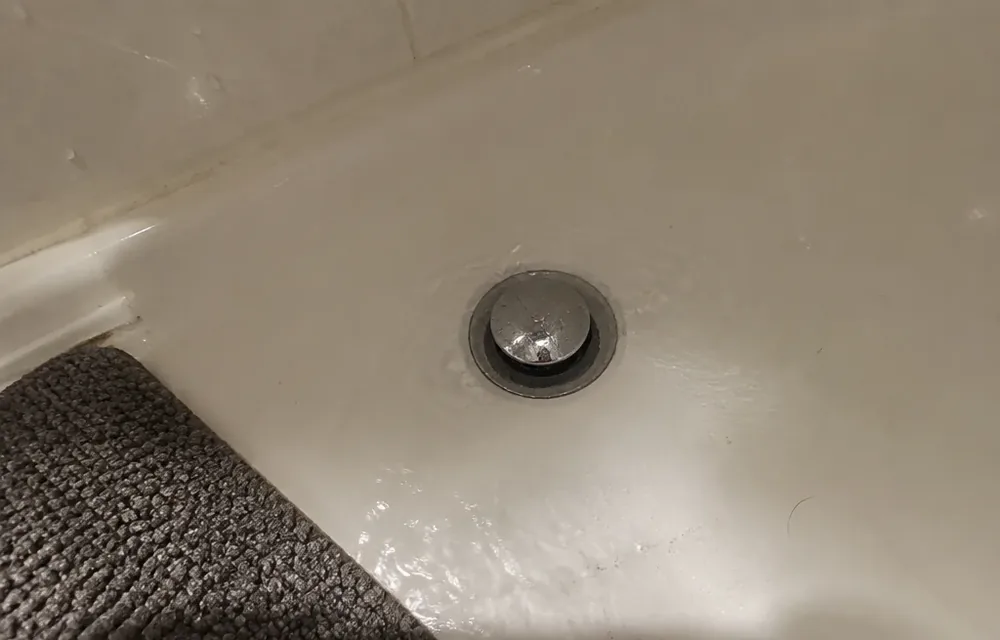
A sink or tub that holds water and clears only after long waiting usually has hair, soap, or grease near the trap and stopper rather than a main failure.
Gurgle in another fixture during use
A toilet that bubbles when a sink drains, or a tub that gurgles when the washer pumps, points to air trapped by a branch or main restriction.
Return low in the house
Waste or gray water rising in a basement shower or floor drain means the downstream path is blocked and water use should pause until the line is checked.
Repeat clog in the same spot
A drain that clears for a short while and then slows again often has buildup left on the pipe wall or roots at a joint that snag paper.
A clogged drain is a narrowed pipe, not always a full plug
Short answer: a clogged drain is a pipe whose bore has narrowed enough that water and waste can no longer pass at normal flow. A clogged drain can be a soft plug of hair and soap near the stopper, a grease lining along a kitchen branch, or a root mass at an exterior joint that catches paper. The location decides the tool, which is why fixture patterns matter more than plunging harder.
What you are seeing: branch clogs affect one trap group and often respond to hand methods, while main restrictions affect several rooms and need cable work through a cleanout. Air trapped behind the blockage seeks the nearest vent or fixture, so gurgling and odor often travel away from the actual plug. Waste returning low in the house tells you the blockage sits downstream of that low point.
Why patience helps: repeated plunging on a main restriction can push water into another fixture or loosen a weak slip joint without clearing the wall buildup. Note the order in which fixtures slow, whether flushing makes a shower rise, and whether the trouble follows laundry discharge. Those three observations locate the restriction within a branch or the main before any tool is fed.
Grease, hair, scale, and roots cause most clogs
Short answer: kitchen grease, bath hair and soap, mineral scale, and exterior roots cause most persistent clogs. Grease cools along long basement runs and coats the wall, hair binds with soap into mats at stoppers and trap bends, and scale roughens older piping so paper snags. Roots enter through fine joint gaps and grow into hair-like masses that comb solids from the flow.
Inside the house: starchy foods, coffee grounds, and fibrous peels add body to kitchen lines even where a disposal is fitted, and lint plus powder residue from laundry arrives in sudden pump surges that overwhelm a narrowed main. Bath groups in capes and colonials often share a wet vent added during a remodel, so one slow branch slows the whole group. Hard, mineral-bearing town water leaves scale that steadily narrows older branch arms.
Outside the house: clay and concrete joints that have shifted with frost and soil let fine roots seek moisture at the hub, and each cutting pass without sealing the joint invites thicker return. Low spots where trench fill settled hold paper and grease in standing water even when the wall looks intact. Patios, driveways, and additions add load over shallow runs, while storm inflow can push a weak main over the edge during wet weeks.
Some slow drains are not clogs and need a different fix
Short answer: vent trouble, dry traps, and broken pipe can mimic a clog but do not clear with cable work. A roof vent blocked by leaves or nesting material lets air lock the flow so fixtures gurgle and empty slowly even though the bore is open. A dry trap lets sewer gas smell rise without any blockage at all.
Vent and trap look-alikes: a toilet that flushes weakly while the tank fills normally may have a rim jet blocked by scale rather than a drain plug. A single lavatory that drains slowly after a new pop-up fitting may have a stopper set too low. A basement floor drain that hums with odor after dry spells often needs water in the trap rather than a cable.
Structural look-alikes: a belly that holds water, an offset joint that snags paper every week, or a collapsed span will clear briefly and then return on the same schedule. When waste backs up in several rooms or the same main needs attention on a short cycle, ask about a camera look and sewer line repair planning rather than another pass. A septic tank due for pumping in outlying areas can also back up the whole house the same way.
Clogs follow familiar Chelmsford-area patterns
Short answer: kitchen branches, shared bath groups, and tree-lined laterals clog most often in local homes. Long kitchen runs from additions through cool basements in Chelmsford, bath groups in capes around Billerica and Tewksbury and root-prone joints near mature maples all shape where trouble lands.
Where inside clogs start: many kitchens feed a long horizontal to the main through a cool basement where grease sets well before the street, so the same sink slows every few months while baths run fine. Baths with hair-heavy use and low-flow showerheads leave soap along the wall, and laundry standpipes tied into older branches surge during pump-out. Basement height and stored goods around the cleanout often decide how simple access will be.
Where outside clogs start: streets lined with maples and oaks still carry older jointed laterals that roots find at the hub, and river-lowland soils that stay damp through spring keep those joints active. Homes with disposals that take daily grounds and starch see faster buildup on the same street than neighbors with strainers and trash habits. Hard town water adds scale that makes one house on a block chronic while the next stays clear.
A cleaning visit opens the line and proves full flow
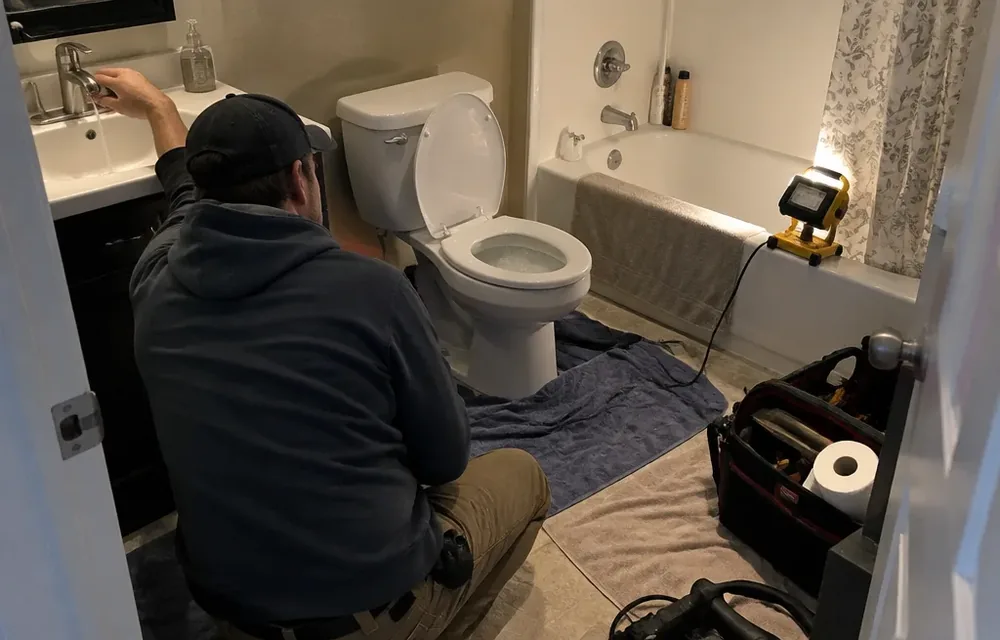
Short answer: a drain cleaning visit maps fixtures, opens at the best access, cuts and retrieves the blockage, and retests under load. We ask which fixtures slow, which gurgle, and where return appears first, then run taps in sequence to confirm whether trouble is local or main-line. You hear the plan before cable is fed.
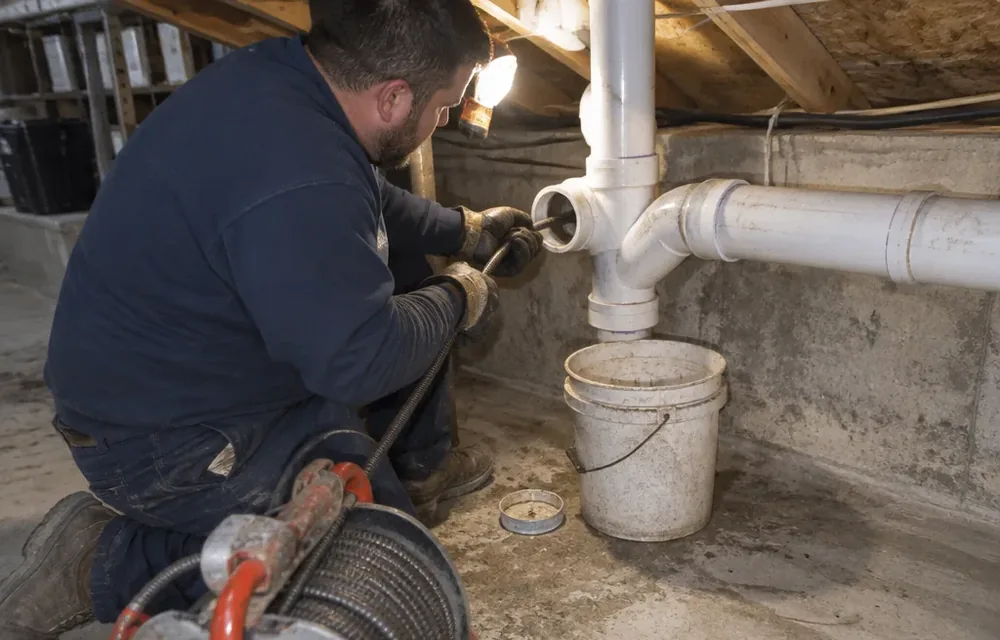
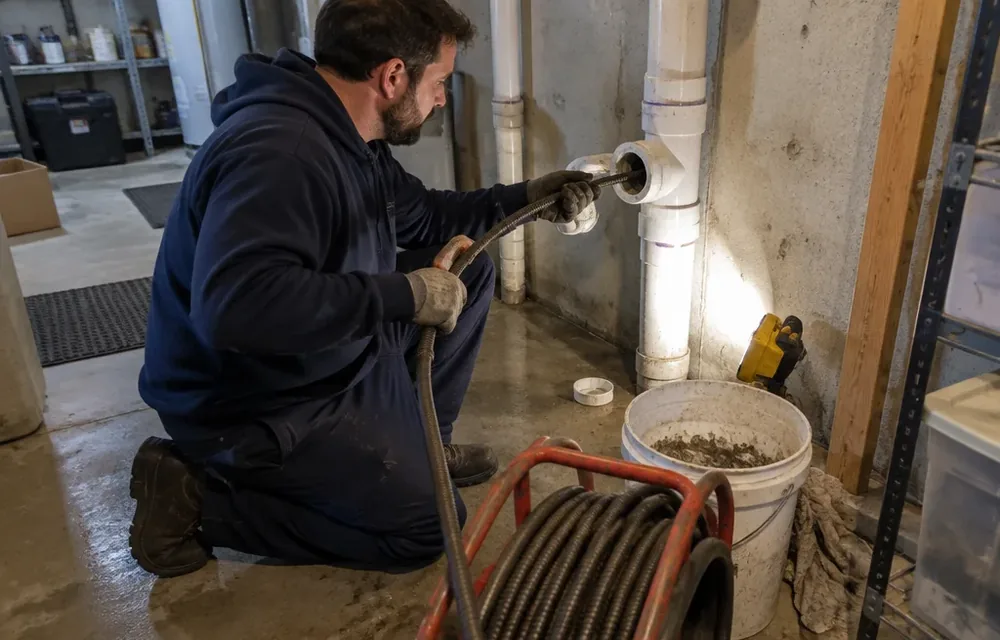
How the work proceeds: we prefer a ground-level exterior or basement cleanout where present so finishes stay protected, and we pull a trap or toilet only when no cleanout exists. Cable and head are matched to the blockage type, with short passes that pull debris back rather than packing it downstream. We show what came back on the cable and note pipe material and distance so the next step targets the right span.
How the result is proven: every fixture is run together after clearing, with toilets flushed and low drains watched for return. If the cable still drags or flow fades under load, we repeat the pass or discuss jetting and camera work for grease-lined or root-haired walls. Where the wall proves broken or bellied, we explain repair planning instead of selling another clearing. Chemical openers stay out of the process because they rarely move dense blockage and they put the next hands on the trap at risk.
Gentle homeowner checks help while harsh methods harm
Short answer: hand plunging, stopper cleaning, and careful trap checks help while chemicals and powered cables in walls harm. Lift and clear hair at the stopper, plunge with steady pressure on a single slow fixture, and wipe grease from pans into the trash rather than the sink. Stop and call us if several fixtures connect or waste appears low in the house.
What you can do safely: fit strainers in kitchen and shower, run cold water during short disposal use, and space laundry loads so surges do not stack. Keep the cleanout area clear in the basement and note cycle patterns for the visit. If a product was already poured, tell us plainly so the line can be handled without skin or eye contact.
Damage risk from waiting or forcing: a soft branch plug left alone coats further and hardens into a longer lining that needs more passes to remove. Forcing a large powered cable without feel can scar plastic, separate a weak joint, or push the plug into the main where more fixtures join the backup. Main-line waste that keeps rising can wet finished basements, lift flooring, and soak storage, so pausing water use matters more than another chemical bottle. Steady habits with strainers and grease control do more over time than repeated harsh treatments.
The service that fixes it
Related services
Related problems
Frequently asked questions
Why does the same drain keep clogging?
Repeat trouble in one spot usually means residue left on the wall or roots at a joint rather than a fresh plug. Grease, soap scale, and root hairs narrow the bore so paper snags again on a short cycle. A cable pass restores flow, but a camera look shows whether scouring or a small repair will hold longer. Distance marks keep the fix on the right section.
Is a main-line blockage different from a sink clog?
Yes, a sink clog affects one trap while a main restriction links several fixtures and often returns low in the house. Gurgling across rooms, a shower that fills during laundry, and waste in a low drain all point downstream of the branch. Stop water use when low return appears and ask for cable work through a cleanout rather than trap methods.
Are chemical openers safe for my pipes and fixtures?
Chemical openers rarely clear a full blockage and they leave a hazard for anyone who opens the trap afterward. They can dull finishes, soften some plastics, and sit in the line without moving grease or roots. Hand plunging and mechanical cable work clear more reliably and leave no residue to handle. Tell us if a product was used before we open anything.
What should stay out of kitchen and bath drains?
Keep grease, coffee grounds, rice, pasta, fibrous peels, wipes, and heavy hair out of drains even where a disposal is fitted. Wipe pans to the trash, use strainers daily, and brush hair before showering where shedding is heavy. These habits matter most on long cool branches where grease sets early. See slow tub drain causes for bath care.
Seeing clogged drains?
Call and describe the symptom. A local specialist will tell you the sensible next step.