Signs
Rotten-egg odor at one fixture
A single sink, shower, or floor drain that smells while others stay fresh often has a dry trap, a faulty seal, or buildup in the overflow and strainer.
Odor after dry spells or vacancy
A bath or basement that smells following travel or a dry stretch usually lost trap water to evaporation and needs refilling and watching.
Odor with gurgling across rooms
Smell that arrives with bubbling in another fixture points to vent restriction or main-line pressure pushing drain air past weak seals.
Persistent odor with slow drains
Smell joined by sluggish emptying and residue suggests wall buildup or a line restriction that holds waste and gas in the branch.
Sewer gas smell is drain air entering where water should block it
Short answer: sewer gas smell is air from the drainage system slipping past a trap, seal, or vent path into living space. Sewer gas smell is best understood as a barrier problem, because every fixture relies on a bend of water and a balanced vent to keep drain air outside rooms. When the water seal thins or air pressure swings, odor finds the weakest opening first.
What you are noticing: the odor often reads as rotten eggs, musty earth, or sour waste, and it may come and go with weather, fixture use, and wind at the roof terminal. Floor drains, basement showers, laundry standpipes, and rarely used baths lead the list because their traps sit low and dry first. Overflow channels, strainers, and pop-up assemblies can also hold a film that smells even when the trap itself holds water.
Why timing matters: odor only in the morning after still nights points to evaporation and stack effect pulling on weak seals, while odor during laundry or showers points to pressure from a restriction downstream. Note the room, the hour, and which fixtures ran just before the smell, because that sequence separates a dry trap from a vent or line fault without opening anything.
Dry traps, vents, and buildup cause most odor
Short answer: most odor comes from traps that dried, vents that cannot balance air, or organic film coating the branch. Infrequent baths, floor drains in mechanical rooms, and laundry standpipes lose seal water to still air, and each flush of a nearby fixture can then pull the last inch through. Leaves and nesting material at the roof terminal add suction that tugs seals dry even faster.
Trap and seal faults: loose slip joints, cracked strainer baskets, worn wax or silicone at a toilet base, and missing cleanout caps all give drain air a direct path around sound traps. A toilet that rocks or a vanity trap that was never aligned will pass odor while looking intact from above. Basement bars and addition baths with long, flat trap arms are prone to siphonage when a nearby fixture discharges.
Buildup and line faults: hair, soap, and grease coat pop-ups, overflows, and branch walls where bacteria feed and release odor with each warm use. A partial restriction downstream holds waste in the branch longer, so gas lingers and pushes back through the weakest seal. Heavy root intrusion or a settled exterior span can add whole-house odor that strengthens during high use and eases overnight.
Some odors mimic sewer gas but start elsewhere
Short answer: heater bacteria, well-type water traits, and exterior sources can smell like sewer gas while drains test sound. Warm water only odor that fades after running often traces to the water heater or a rarely flushed branch rather than the drain bore. Cold water odor at every tap points to supply-side traits rather than traps.
Water-side look-alikes: a water heater that sits at low delivery temperature with long idle stretches can develop musty hot-only odor, and a softener or filter overdue for service can add earthy notes to otherwise clear water. Run cold and hot separately at one tap, then compare rooms, because drain odor stays at the fixture while water odor travels in the stream. Where rust joins the smell, read rusty water before planning drain work.
Room and exterior look-alikes: a dead trap primer line, a dry mop sink, pet areas, and damp storage can all read as drain odor in still basement air. Mulch beds over a shallow exterior break, a full septic tank in outlying areas, and a storm drain holding organic debris can push odor through windows rather than pipes. When fixtures drain well and traps hold water, widen the search beyond the branch before scheduling cable work.
Odor follows familiar Chelmsford-area layouts
Short answer: spare baths, basement groups, and leaf-heavy vent terminals shape local odor calls. Finished basements around Chelmsford, spare baths in colonials near Billerica and Carlisle and laundry corners tucked beside heaters all combine low use with long trap arms.
Where dry traps lead: guest baths that sit unused for weeks, floor drains beside heaters and softeners, and laundry standpipes that only wet during wash cycles dry first in heated winter air. Capes with dormered baths often share a wet vent added during a remodel, so one strong flush can tug a nearby shower seal. Block foundations with cool, still basements hold odor near the floor long after the trap is refilled.
Where vents and lines join in: streets with mature maples and oaks shed leaves that cap roof terminals each fall, and clay or concrete exterior joints invite root masses that pressurize the system during high use. Long kitchen branches through cool basements coat with grease that smells with each warm discharge. River-lowland damp adds basement must that mixes with true drain odor, so testing traps one by one matters more here than air fresheners.
A drain visit proves traps, vents, and line condition
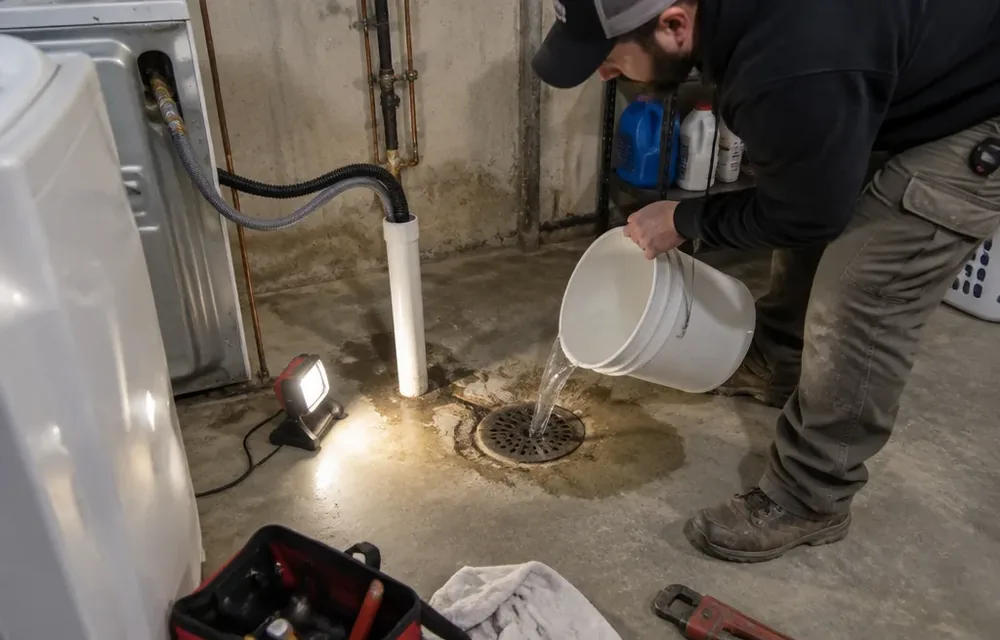
Short answer: a drain cleaning visit refills and tests traps, checks seals and vents, and confirms whether the branch needs clearing. We pour and mark trap levels, run fixtures in sequence, and watch whether seals hold or pull with nearby discharge. You see which opening actually passes air before any cable is fed.
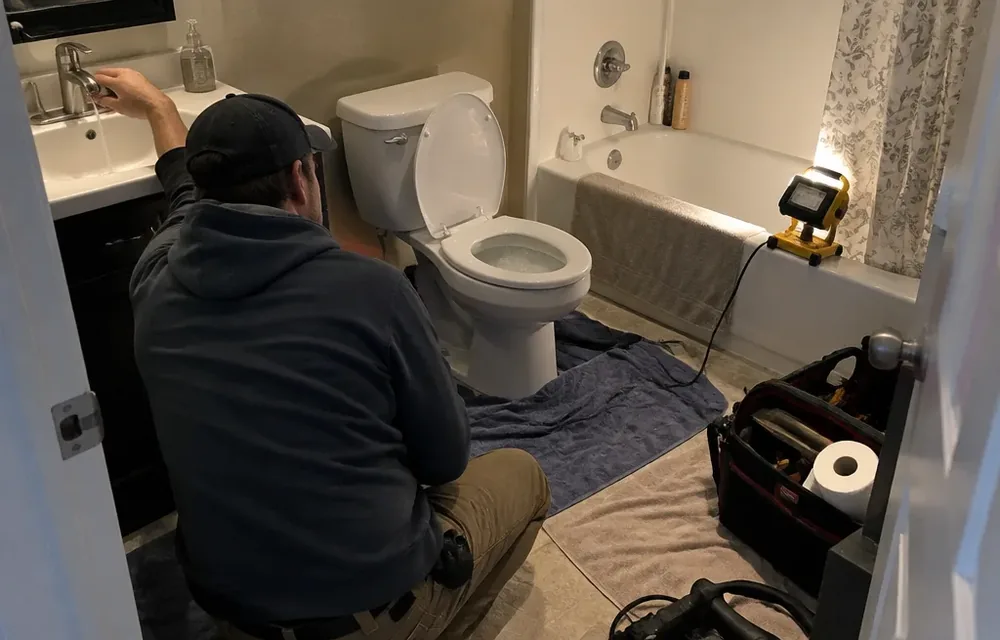
How the search proceeds: we start with strainers, overflows, pop-ups, and cleanout caps, because surface film and missing caps explain many single-fixture odors without line work. Toilet bases are checked for rock and seal weep, slip joints are checked for alignment, and roof-terminal behavior is read from fixture response rather than ladder work on the day. Where gurgling links rooms, we test branch and main restriction with controlled flow.
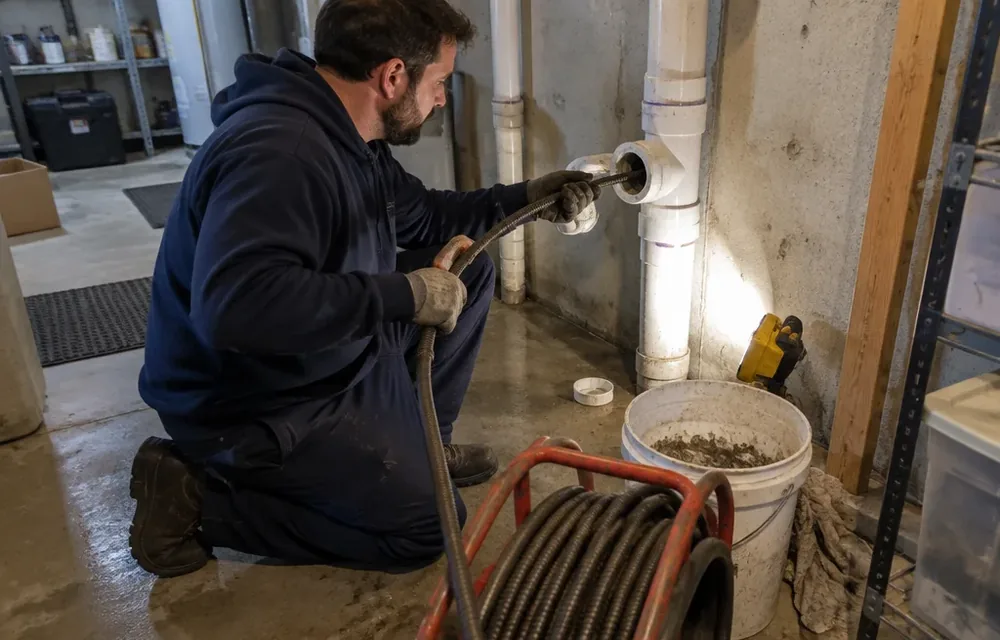
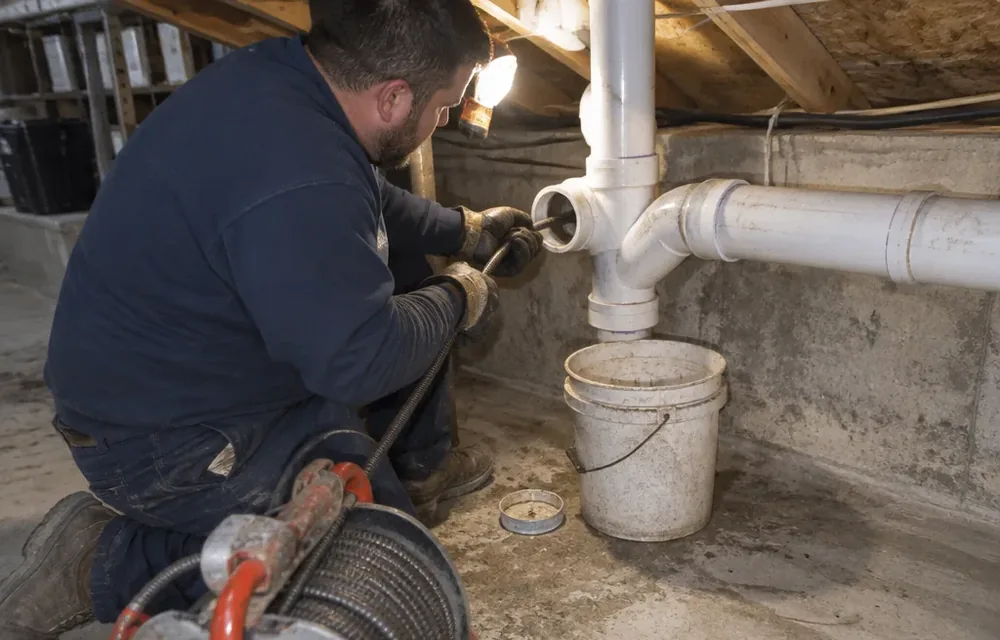
How clearing fits: when wall film or a partial restriction holds waste and gas, cable work plus thorough flushing removes the food source and restores smooth flow that no longer lingers. Where the line proves sound and traps still pull, we explain vent and seal corrections as the next plan rather than repeat clearing. Camera work follows only when odor joins repeat backups or whole-house pressure signs that point to exterior joints.
Simple homeowner checks clear many odors without risk
Short answer: refill traps, clean surface film, and track timing before reaching for harsh products. Run rarely used taps and showers until flow turns fresh, pour water into floor drains and mop sinks, and wipe pop-ups, strainers, and overflow mouths where film collects. Note whether odor fades after refill or returns with the next laundry load.
What you can do safely: remove and rinse strainers, brush overflow passages with a small brush and mild soap, and confirm cleanout caps are present and snug. Keep spare baths in weekly use with a short run of each tap, and keep basement doors ajar so still air does not pool odor near the floor. Photos of the suspect fixture and the trap area help us arrive with the right seals on hand.
Damage and comfort risk from delay: trap odor alone rarely harms piping, but the underlying fault can still stain and swell vanities, loosen toilet seals, and hide a slow weep that feeds wall cavities. Chronic branch restriction left alone coats further and can graduate from odor to backup low in the house, with finished basements taking the first harm. Harsh chemicals poured for odor rarely reach the film and they endanger hands and eyes at the next opening, so steady water use and surface cleaning protect more than strong bottles.
The service that fixes it
Related services
Related problems
Frequently asked questions
Why does one bathroom smell like rotten eggs?
One-room odor usually traces to a dry or weak trap, film in the overflow or pop-up, or a loose seal at the toilet base or slip joint. Refill rarely used traps, clean strainers and overflow mouths, and check for rocking at the toilet. If odor returns with nearby fixture use or joins gurgling, vent or branch restriction is more likely than a simple dry trap.
Can a dry floor drain cause sewer smell?
Yes, floor drains in mechanical rooms and basements dry first because they rarely see flow. Pour water until the bend refills, then watch whether odor fades for days or returns with laundry discharge. Fast return after refill points to siphonage from a nearby fixture or a vent path that needs attention rather than another pour.
Does sewer gas smell mean the main line is blocked?
Not always, though whole-house odor with gurgling and slow flow can signal downstream restriction holding waste and pressure in the system. Single-fixture odor with good flow usually stays at the trap or seal. Note how many fixtures connect and whether low drains back up, because that spread separates local seals from main-line pressure.
What can I clean myself when drains smell?
You can refill traps, rinse strainers, brush pop-ups and overflow mouths with mild soap, and confirm cleanout caps are snug. Run spare baths weekly so seals stay charged. Avoid harsh chemicals that linger in the branch and harm the next hands on the trap. If odor persists with good flow or joins backups, ask for trap, seal, and vent testing.
Seeing sewer gas smell?
Call and describe the symptom. A local specialist will tell you the sensible next step.