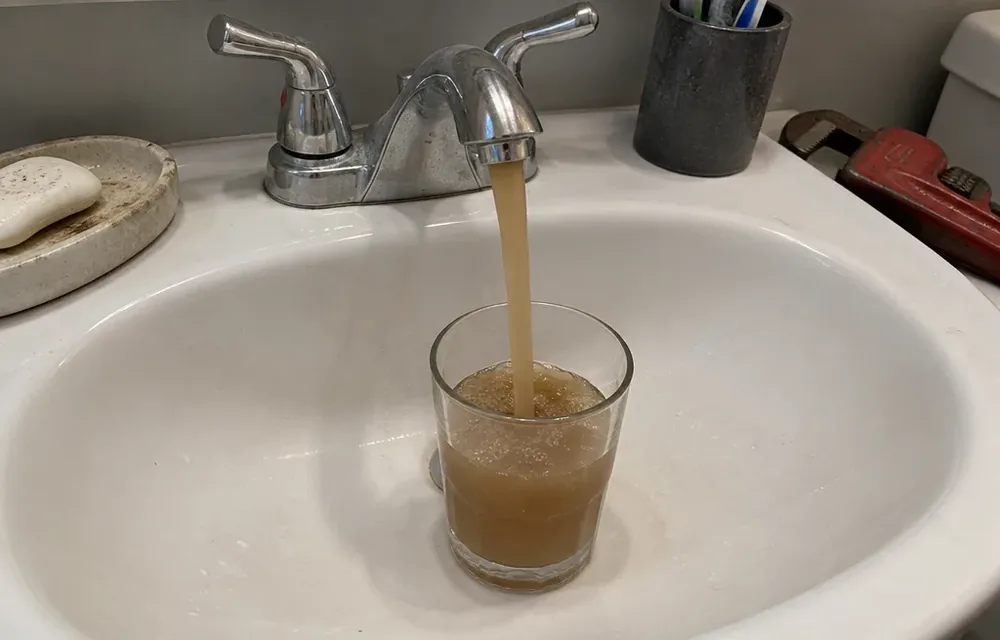
Signs
Color at first draw that clears
Brown or yellow water that runs clear after a short run often means sediment settled in the house line or heater and stirred on opening.
Hot-only discoloration
Color on hot taps with clear cold points toward tank sediment and anode activity rather than the town main or cold piping.
Specks that settle in the tub
Fine grit that gathers in tubs and toilet tanks signals scale flaking from older piping or mineral settling from the supply.
Color after nearby main work
Brown water across hot and cold right after street work or hydrant use often means the main stirred and the house lines need careful flushing.
What rusty water is
Direct answer: Rusty water is tap water carrying mineral sediment and fine pipe scale that colors the stream yellow, brown, or orange. The tint comes from iron and manganese minerals plus corrosion scale flaking from older steel and iron piping. It can look alarming in a white tub while still flowing with normal pressure, which makes the pattern across taps more useful than the shade alone.
How it behaves: Color that appears at first draw and clears with running usually sits in the house branch or heater and stirs on opening. Color across every tap at once, hot and cold together, often follows disturbance in the town main or a long idle period in a large building. Specks that settle quickly point toward scale breaking loose, while even tint that lingers points toward finer mineral suspension moving through.
Why taste and odor help: Mineral-heavy water often carries a metallic note and leaves pale or rusty rings where it dries. Musty or sulfur notes point toward different water chemistry than plain iron tint and need different treatment choices. Note color, clarity after settling in a clear glass, and which temperatures show it, because that trio separates heater, house piping, and main-side causes. See rusty water patterns and low water pressure from scale for the checks we run.
What causes mineral color and sediment
Direct answer: Mineral color comes from source minerals, aging pipe scale, and heater sediment combining in older plumbing. Town and well supplies carry dissolved minerals that settle where water rests and warms. Older galvanized and iron piping grows rough scale inside that flakes whenever flow changes sharply, sending brown bursts to nearby taps.
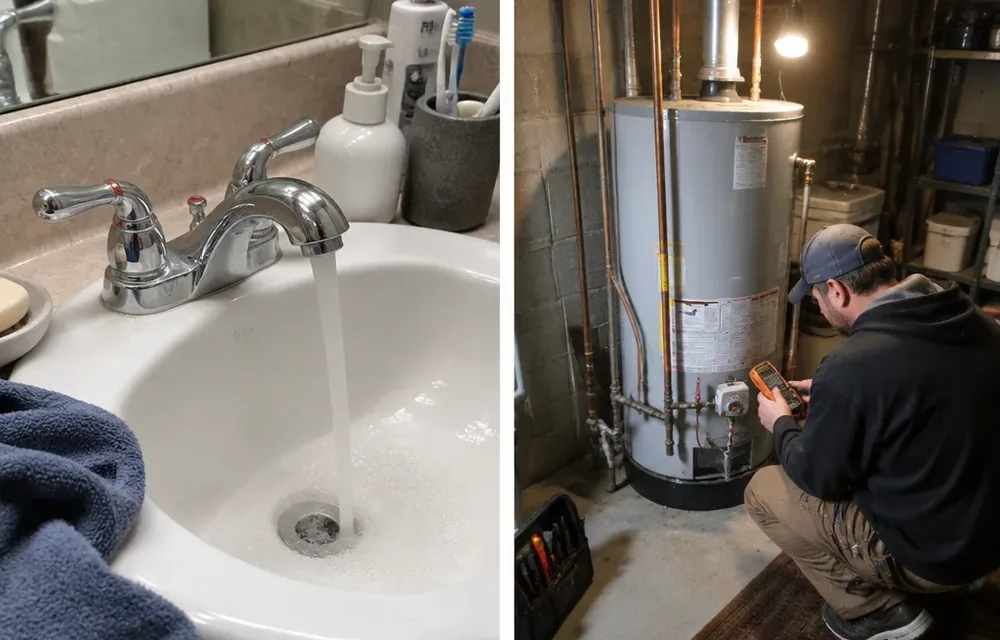
Heater contribution: Tank water heaters gather sediment at the bottom where heat bakes minerals into a soft bed that stirs whenever hot taps open. Anode rods that protect the tank also shed fine material as they work, which adds to hot-side tint in older tanks. Rumbling during heat cycles, longer heat recovery, and hot-only color together point toward tank sediment load rather than cold piping or the street main.
Disturbance triggers: Street main work, hydrant use, and long shutdowns stir mains that then feed cloudy water to whole streets at once. Inside, water softeners set wrong, whole-house filters loaded past service, and valves opened fast after repairs all send settled material downstream. Run cold taps gently after any plumbing work and clean aerators afterward, because the first flush carries the loosest scale to the nearest screens.
Look-alikes worth ruling out
Direct answer: Algae in toilet tanks, dye from new parts, and drain debris often look like supply rust and need different fixes. A single toilet with brown tank water and clear taps nearby usually has tank or bowl deposits rather than pipe corrosion. Black flecks from a failing heater hose washer or softener resin look different from brown mineral scale and point to rubber or media rather than iron.
Heater versus main: Hot-only color with clear cold points to the tank, while hot and cold together across the house point toward cold piping or the main. Color that clears quickly at the kitchen cold tap but lingers at a distant bath points to the branch serving that bath. If every home on the street shows color at the same hour, let the main settle and flush cold taps lightly rather than draining the heater.
Drain and fixture tricks: Brown rings at tub jets, pink film at shower corners, and dark aerator debris can come from drain splash and airborne film rather than supply minerals. New faucet cartridges, supply hoses, and heater parts can tint first draws until they rinse clean. When in doubt, fill a clear glass from a hose bibb ahead of treatment gear and compare it with kitchen and bath draws to place the source. See no hot water from sediment for heater-side tells.
Where rusty water comes up locally
Direct answer: Rusty draws cluster in homes with older steel piping, in neighborhoods with long service runs, and where heaters work hard through cold months. Mixed copper patched into older galvanized pipe corrodes at the transition and sheds scale whenever flow surges. Long runs to distant baths let minerals settle between uses, so first draws run tinted while the kitchen stays clear.
Older piping streets: Colonials and mill-era homes around Chelmsford and nearby blocks in Lowell still carry galvanized branches behind newer baths and kitchens. Those branches narrow with scale, drop pressure at one fixture, and send brown bursts after valves open fast. Pale crust at shutoffs and supply stops plus grit in aerators marks those runs before the color turns steady.
Heater and mineral load: Ranch and split-level streets through Dracut and nearby towns with hard town water see tank sediment build where heaters fire through mineral beds. Hot-only tint, rumbling heat cycles, and warm water that tires early together point to tank load rather than street mains. Homes with softeners set for past water use and filters left past service see color return first at distant hot taps.
What a visit for rusty water involves
Direct answer: A visit maps which taps and temperatures carry color, then separates heater, house piping, and main-side causes. We draw cold and hot in sequence from near and far taps, check aerators and toilet tanks for grit, and listen to the heater during a heat cycle. We look at pipe materials at exposed runs, shutoff condition, and where treatment gear sits in the flow path.
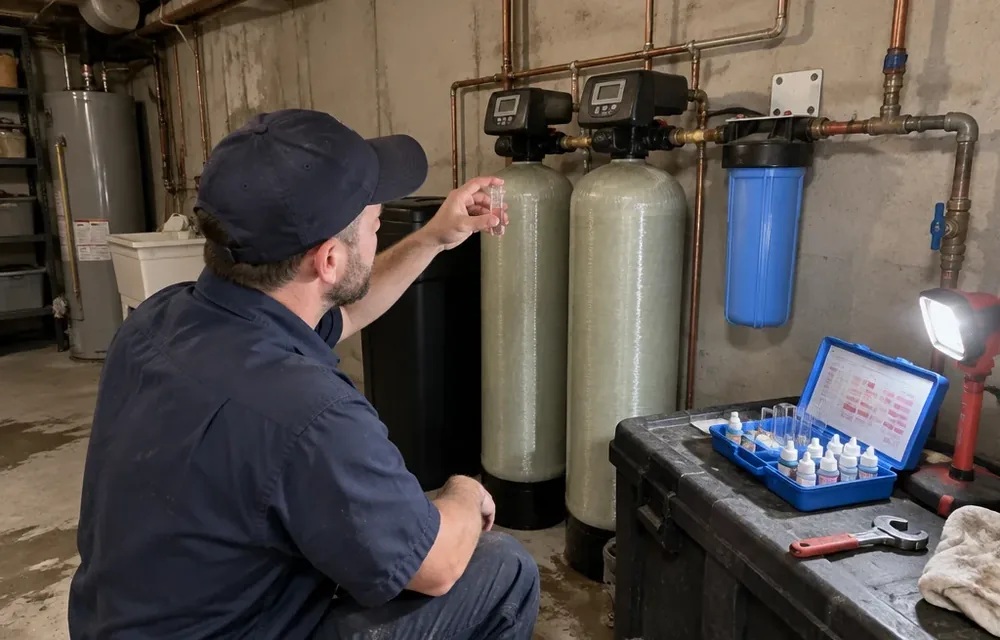
How we narrow treatment: Heater drain samples and heat behavior show whether tank sediment drives hot-side tint. Pressure and flow at scaled branches show whether pipe replacement in one run will hold or whether mineral load needs broader treatment. We review softener settings and filter service state against current use rather than old defaults. This work lines up with water treatment and filtration for mineral load and with water heater installation and repair when tank condition drives the color.
What you receive: You receive a plain read on source zone, heater condition, and which rinse, repair, or treatment step clears the right water. We show draw results tap by tap so the pattern is visible without jargon. Where a heater flush, branch repair, or settings change resolves the tint, we say so plainly before discussing broader filtration that the pattern does not support.
Homeowner checks and damage risk
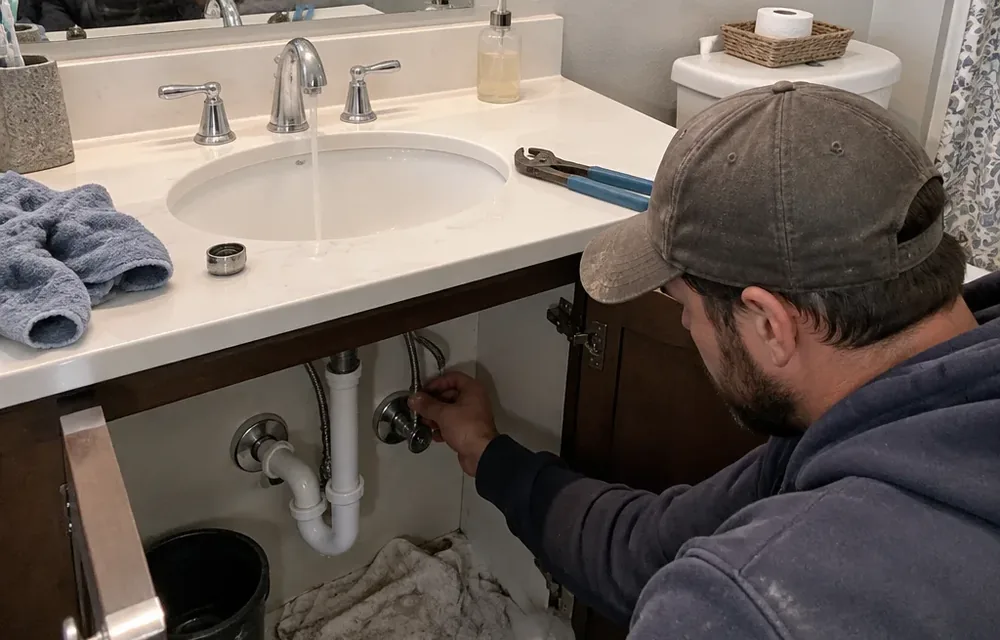
Direct answer: Homeowners can place the source safely with glass draws, gentle flushing, and aerator checks. Fill a clear glass from cold and hot at near and far taps, let each settle, and compare tint and settled grit. Run a cold tap gently after street work rather than opening every tap fast, and clean aerators and shower screens after color events so trapped grit does not mimic ongoing trouble.
Safe checks to try: Note whether color follows hot only, cold only, or both, and whether first draws clear with running. Check toilet tanks for settled grit that marks supply sediment versus bowl-only film. Look at exposed piping for older steel sections and crust at joints, and check softener salt level and filter service lights without changing settings. Leave heater draining, anode work, and pipe opening to us, especially where relief piping and hot water scald risk are involved.
Damage risk if color stays: Ongoing scale narrows older branches, starves distant fixtures, and wears faucet cartridges and toilet fill parts with grit. Tank sediment insulates the burner zone, lengthens heat cycles, and shortens tank service where heaters fire through deep beds. Laundry picks up tint first on light loads, and fixtures stain where mineral water dries. Early mapping costs less than repeated cartridge swaps and tank strain, especially where hot-only tint and rumbling already pair together.
The service that fixes it
Related services
Related problems
Frequently asked questions
Is rusty tap water from my heater or the town main?
Hot-only color with clear cold points to tank sediment and heater activity, while color across hot and cold at every tap points toward house piping or the town main. Check near and far taps in a clear glass and note which temperatures show tint. That pattern places the source before any flush or treatment choice.
Should I drain my water heater when hot water runs brown?
Not before the source is mapped, because draining a scaled tank without checks can clog valves and stir more sediment into hot lines. Hot-only tint with rumbling and slow recovery supports tank service by a pro. Whole-house color after street work calls for gentle cold flushing and aerator cleaning instead.
Why does color clear after running and then return the next day?
Settled sediment and pipe scale rest between uses and stir whenever flow starts, so first draws carry the loosest material. Long branches and heaters that sit idle overnight show the pattern most. If clearing takes longer each week, the bed is growing and the branch or tank needs attention rather than longer daily flushing.
What should I note before calling about rusty water?
Note which taps and temperatures show color, whether first draws clear, and whether street work or plumbing repairs came just before. Save a settled glass sample note and check softener and filter service state. That record lets water treatment help start at the right zone instead of retesting every tap.
Seeing rusty water?
Call and describe the symptom. A local specialist will tell you the sensible next step.