Signs
Weak flow at one tap only
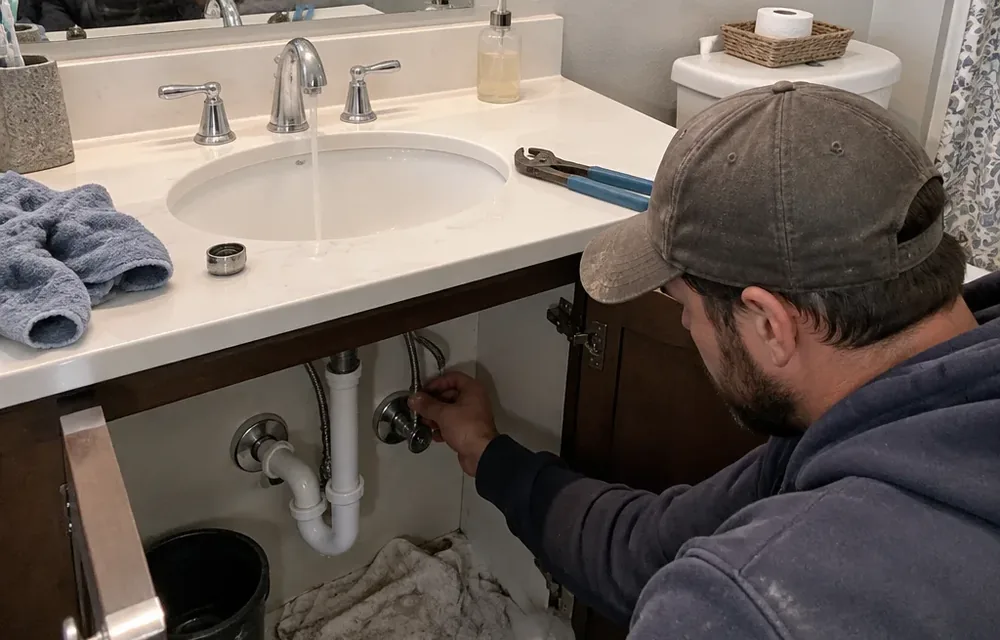
A single faucet that trickles while neighbors run strong often has a clogged aerator, scaled cartridge, or partially closed stop rather than a house-wide fault.
Whole-house fade with thin showers
Every fixture running soft together points to the main valve, a pressure control, treatment equipment, or a supply seep affecting the shared feed.
Hot-only weakness
Hot taps that fade while cold taps run strong often trace to heater sediment, a tempering path, or scale in hot branches rather than the town feed.
Pressure that pulses or hammers
Flow that surges, bangs pipes, or fades during laundry and showers often involves a control, expansion behavior, or a restriction that moves under load.
Low pressure is restricted flow, not always low street supply
Short answer: low water pressure is flow choked somewhere between the street and the tap, and the choke point can be tiny. Low water pressure from a clogged aerator or scaled cartridge feels identical at the sink to a larger control fault, which is why room-by-room comparison matters. Whole-house weakness points upstream, while single-tap weakness points at the fixture.
What you are seeing: aerators pack with grit, cartridges narrow with scale, stops sit half closed after service, and softener or filter media loads with sediment until flow thins. A pressure control that no longer holds steady lets flow sag during high use and surge when use stops. A hidden supply seep bleeds pressure continuously so upper floors fade first.
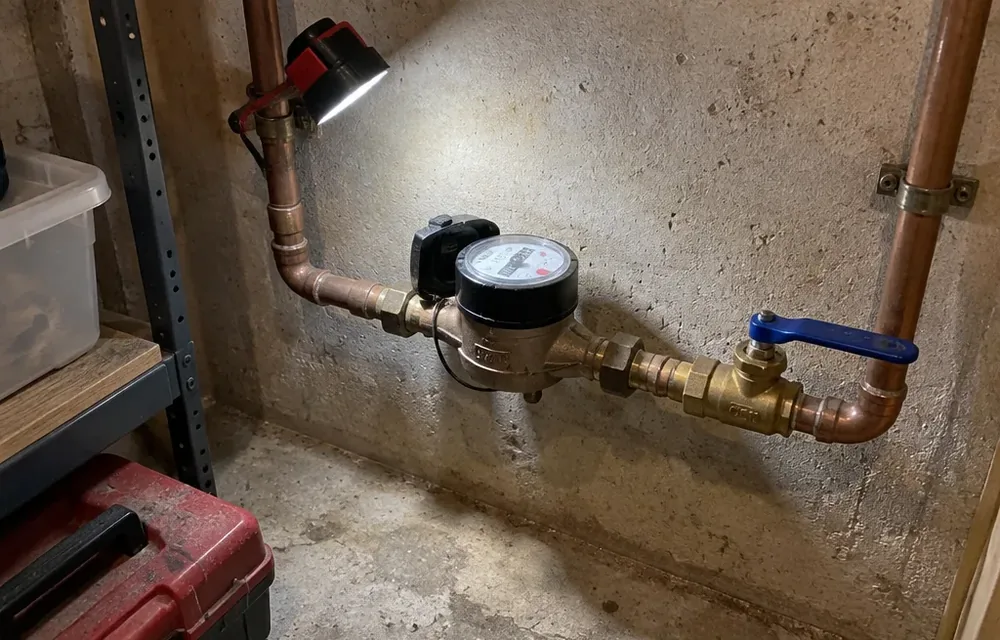
Why comparison helps: run cold and hot separately at several taps, flush a toilet while a shower runs, and note whether laundry changes the pattern. If one room lags while others hold, the branch or fixture is suspect. If every room fades together or the meter moves with fixtures off, the shared feed deserves testing before fixture parts are changed.
Scale, controls, and hidden seeps cause most weakness
Short answer: mineral scale, tired controls, treatment equipment, and supply seeps cause most lasting weakness. Hard, mineral-bearing town water leaves grit that packs aerators and scores cartridges, and galvanized nipples shed rust that fouls new parts within weeks when old stops remain. Each narrows the path a little until showers feel thin.
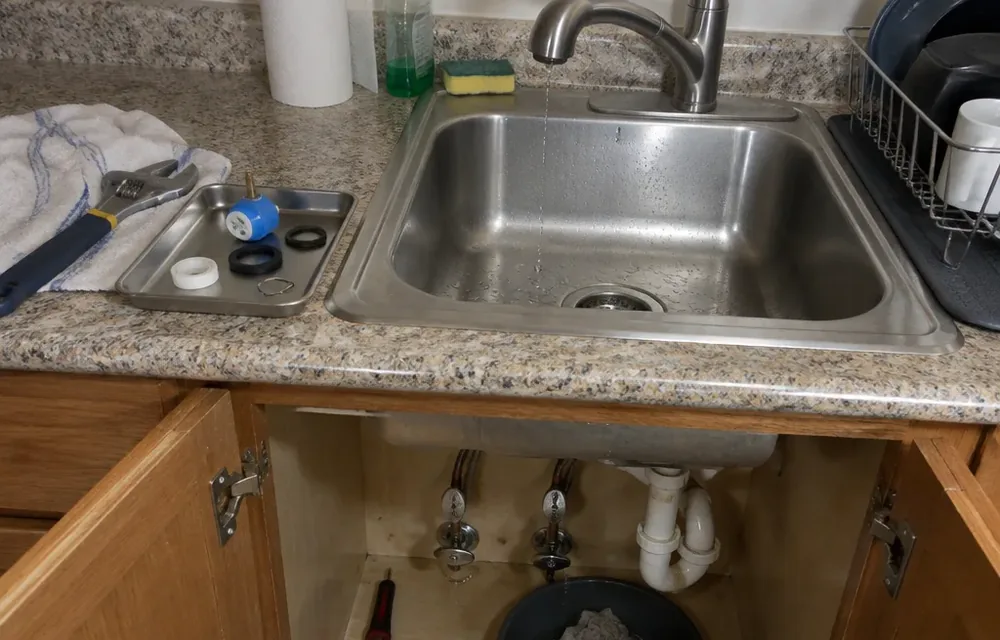
Fixture and branch causes: partially closed stops under sinks and behind toilets, kinked supplies, tempering devices set low, and showerheads loaded with scale each cap one point without affecting the house. Long branches to additions settle sediment at elbows and feed the farthest fixture the dirtiest water. A single scaled mixing cartridge can halve flow at one shower while the lavatory beside it runs strong.
House-wide causes: a main valve left half closed after service, a pressure control with a tired spring, a softener stuck in a restricted cycle, and a whole-house filter overdue for change each thin the shared feed. A pinhole or joint seep behind a wall or under a slab bleeds pressure and often raises use at the same time. Street-side work that disturbs sediment can also send a slug of grit that packs several aerators at once.
Some weak flow is not a pressure fault at all
Short answer: a scaled showerhead, a failing heater path, or a drain restriction can feel like low pressure while supply tests sound. A shower that mists while the tub spout below it fills strongly often needs head cleaning rather than pressure work. Hot-only fade with rumbling at the tank points to sediment rather than the main.
Heater and valve look-alikes: a tempering valve set low caps hot delivery at a safe but thin-feeling blend, and a worn shower cartridge blends cold into the hot path. A running toilet that passes water continuously can steal flow during morning overlap. Read no hot water when heat fades with the flow.
Drain and supply look-alikes: a slow tub drain that leaves you standing in ankle water makes a sound shower feel weak by contrast. A burst pipe that sprays out of sight drops pressure while staining appears elsewhere. When the meter turns with fixtures off or a wall hisses, treat the loss as a seep rather than a fixture clog.
Weak flow follows familiar Chelmsford-area patterns
Short answer: hard water, older stops, and long addition branches shape local pressure calls. Mineral scale in town water around Chelmsford, galvanized stops in older baths near Lowell and Dracut and far branches feeding dormered baths all narrow flow first.
Where fixtures choke: kitchen pull-downs with fine screens, bath lavatories with small cartridges, and showers with flow-saving heads pack first where grit arrives. Basement baths and addition branches with long, cool runs settle sediment that feeds the farthest tap dirtiest. High street pressure in some blocks hammers fill valves overnight and leaves morning flow uneven.
Where shared feeds thin: streets with steady town pressure show tired pressure controls first at upper showers and heater relief lines. Homes with softeners and whole-house filters see flow sag when media loads and no bypass test has been run. Neighborhoods with mature trees and older jointed services can also admit soil fines after street work that pack several aerators on the same week.
A pressure visit maps the house and tests upstream first
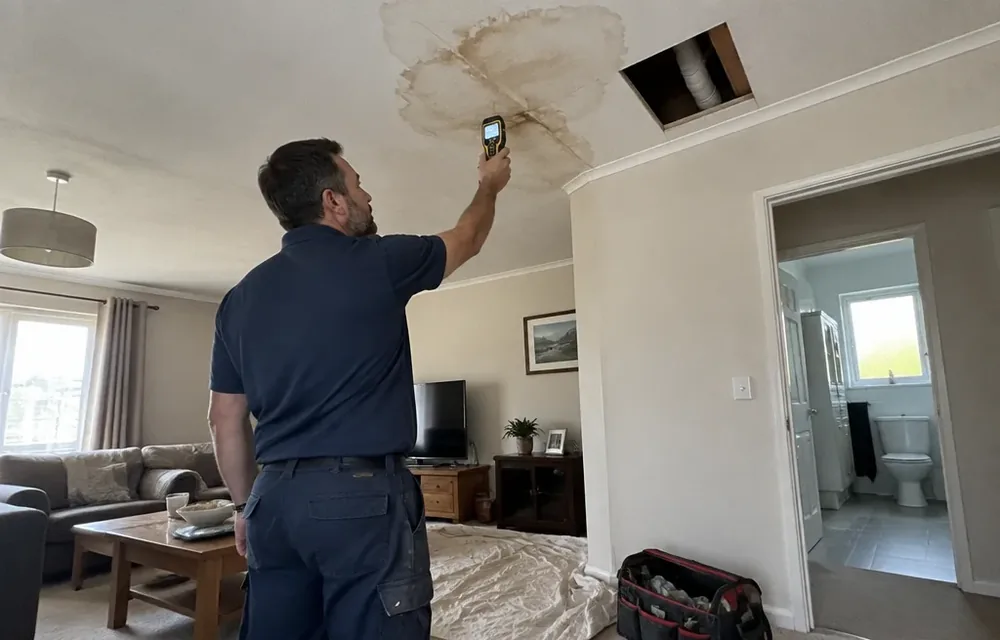
Short answer: a leak detection and burst pipe repair visit compares fixtures, checks valves and controls, and rules out hidden seeps before parts are changed. We run hot and cold in sequence, read meter behavior with fixtures off, and work from the main inward so a single clogged screen is not mistaken for a house fault. You see which point actually thins the flow.
How testing proceeds: aerators and stops are checked gently at the weak taps, treatment units are bypassed briefly to isolate their effect, and pressure behavior is read at several levels of the house. The heater feed, tempering path, and expansion behavior join the same pass when hot flow lags. Where the meter moves or a wall hisses, acoustic and moisture checks locate the seep before walls are opened.
How the fix is framed: a fixture fault ends with cleaning or factory parts plus renewed stops and supplies where rust feeds the cycle. A control or treatment fault ends with adjustment or service of that unit rather than repeated fixture swaps. A seep ends with a targeted pipe repair and drying guidance. We explain which path your pattern supports so only the choking point is disturbed.
Gentle checks help while forcing valves harms
Short answer: rinse aerators, ease stops gently, and compare rooms without forcing stuck valves. Unscrew one aerator, rinse grit, and test before touching the next fixture. Try stops with light pressure only, and leave a spinning or weeping stop alone rather than muscling it with pliers.
What you can do safely: photograph weak versus strong taps, note hot against cold, and write down whether laundry or irrigation changes the pattern. Keep the main and heater areas clear, and test treatment bypass only if you know the valve positions and can return them. If the meter turns with fixtures off or a stain grows, keep water use light and call us with those two facts.
Harm risk from force or delay: forcing a frozen stop often snaps the stem and turns a thin shower into an open spray, while repeated cartridge swaps on rust-fed branches foul new parts within weeks. A hidden seep left to run soaks framing, swells trim, and feeds wall cavities that later need removal rather than drying. Whole-house fade that is nursed along can starve heater and boiler feeds and shorten their behavior, so mapping the choke point early protects more than another screen rinse alone.
The service that fixes it
Related services
Related problems
Frequently asked questions
Why is pressure low at one faucet only?
One-tap weakness usually traces to a packed aerator, a scaled cartridge, or a partially closed stop at that fixture. Rinse the aerator, note whether hot, cold, or both lag, and ease the stop without force. Whole-house weakness points upstream instead. A rust-fed stop that keeps fouling new parts should be renewed with supplies as a set.
Why does shower flow fade when laundry runs?
Overlap fades flow when branches are narrowed by scale or when a control no longer holds steady under load. Note whether cold, hot, or both dip together, because hot-only dip implicates heater or tempering paths. Spacing high-use fixtures helps comfort, but persistent fade deserves valve, treatment, and pressure-side testing.
Can a hidden leak lower my water pressure?
Yes, a supply seep bleeds pressure continuously and often raises use at the same time. Watch the meter with fixtures off, listen for hissing in quiet rooms, and check for cool, damp spots that grow overnight. Steady meter movement with weak upper-floor flow points to a seep rather than a fixture clog. See high water bill from a hidden leak.
What should I avoid touching myself?
Avoid forcing stuck stops, opening pressure controls, and altering treatment heads without knowing bypass positions. Light aerator rinses and pattern notes help, while snapped stems and mis-set controls harm. If a valve weeps, spins, or will not close, leave it and call us with the fixture location so the visit brings the right parts.
Seeing low water pressure?
Call and describe the symptom. A local specialist will tell you the sensible next step.