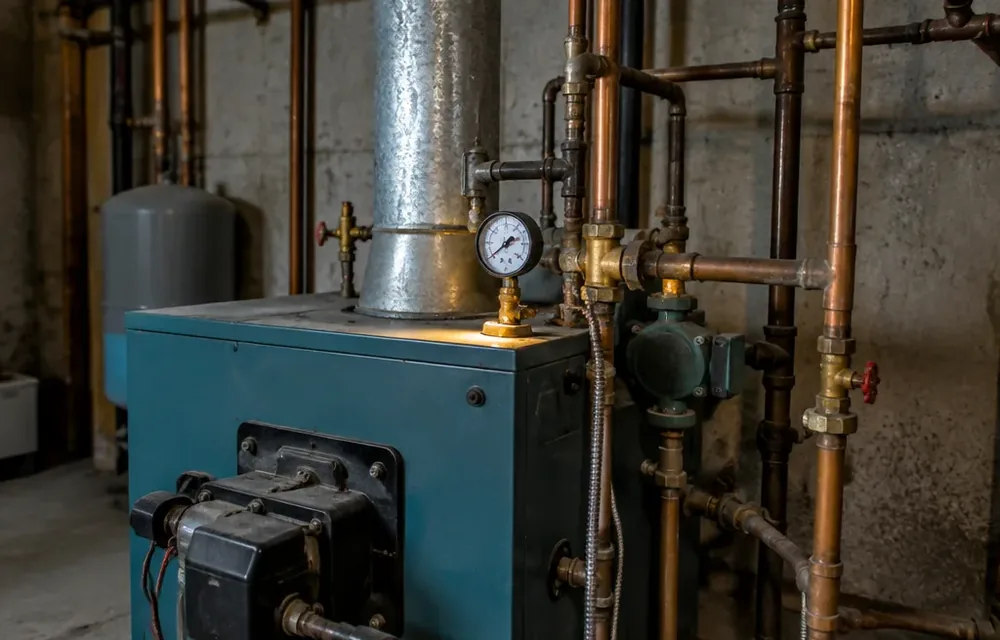
How does a home boiler heat rooms?
Boiler heat mechanism: A home boiler heats water and moves that hot water through baseboard, radiators, or radiant loops to release warmth room by room. A pump or zone valves direct flow, an expansion tank absorbs pressure swing, and controls fire the burner and limit temperature and pressure. That closed loop keeps the same system water cycling unless fresh makeup enters through the feed.
Controls and safeties in sequence: Thermostats call for heat by zone, the control confirms safe conditions, the burner fires, and the circulator moves water until rooms satisfy the call. Relief valves, limits, and low water cutoffs stand guard when pressure or temperature or water level moves out of bounds. Short cycling, frequent lockout, or relief discharge each signal that this sequence is being interrupted. Those patterns help the person on the phone separate control trouble from water side trouble before anyone touches the unit, as boiler installation and servicing shows in how service tests each stage.
Water side behavior you can read safely: A gauge reads higher when hot than when cold, and steady makeup should be rare once air is purged. A gauge that falls daily, a feed that runs often, or bleed valves that always spit air point to expansion or feed trouble rather than a dead burner. Rusty bleed water and cold low radiators point to sludge settling where flow is weakest. Note cold and hot readings without opening panels, and share them on the call alongside which zones stay cold.
What boiler signs occur and how do you tell them apart?
Boiler sign groups: Boiler sign groups divide into no heat, leaks and pressure loss, noise and uneven rooms, and fuel or vent safety signs. Each group carries a different urgency and a different safe response. Placing your signs into the right group keeps the next step calm and correct.
No heat versus leak trails: No heat with a quiet unit and an error code often traces to ignition, flame sensing, or a control lockout that needs diagnosis in heating season. No heat with a low gauge and frequent feed points to water side loss through a vent, valve, or relief path. Water pooling at the unit base with rust or relief discharge needs prompt help, while a damp joint that only mists when hot still deserves quick daytime review. Record codes, gauge swing, and which zones are cold rather than resetting again and again, since notes on boiler with no heat patterns help frame that account.
Noise, odor, and visual cues: Kettling, banging, or gurgling with uneven rooms often means sludge, air, or pump trouble rather than a failed block. Soot, scorching, or a strong fuel smell near the unit moves into safety first handling with distance and a utility call. A carbon monoxide alarm near sleeping areas or the boiler room always outranks heat comfort and calls for fresh air and help outside the home. Keep the boiler area clear and avoid opening gas piping or burner covers yourself, since that work belongs with a license holder under state rules.
What should you check in order without opening the unit?
Safe check order: A safe check order for boiler trouble stays outside panels and piping while gathering facts that speed diagnosis. Start with thermostat and power basics, then read gauges and error codes, then look and listen for leaks and odors. Stop and call when safety signs appear rather than pushing further.
Thermostat, switch, and gauge pass: Confirm thermostats are set for heat with a setpoint above room temperature and the correct heat type where shown. Check that the boiler emergency switch was not bumped off and that the breaker serving the unit remains on. Read the pressure and temperature gauge when cold and again when hot where visible, and copy any error code word for word. Share those readings for your Chelmsford or Sudbury home when you call (978) 592-1168 so the visit starts with the right parts in mind.
Look, listen, and hold steady: Look for water at the unit base, relief discharge, and damp insulation without touching hot surfaces or electrical parts. Listen for the burner firing, the circulator humming, and air hissing at vents during a call for heat. Avoid repeated resets, avoid draining or filling the system yourself, and avoid bleeding many radiators at once without guidance. Those restrained steps preserve evidence and keep pressure behavior readable, as with gas piping safety practice where restraint matters more than speed.
Boiler states compared side by side
State comparison: State comparison places common boiler states beside each other so urgency stays clear when the house is cold and stress runs high. The key split is whether safety is involved, whether water is leaving the system, and whether heat can wait for daylight. The table below applies that split to frequent calls.
Cold house versus cold room: A fully cold house in cold weather with a locked out unit points toward help now, while one cold room with the rest of the house warm often traces to air, balance, or a zone valve that fits daytime review. A gauge that falls daily with relief water points toward prompt help even when rooms still warm, because makeup keeps adding oxygen and scale. Frequent resets without a code note waste the best clue, so copy the display before touching anything. That evidence habit shortens diagnosis in boiler installation and servicing.
Odor and alarm handling: Any strong fuel smell, visible soot, or carbon monoxide alarm activity moves past plumbing triage into leaving the area and contacting the gas utility or fire service first. A brief faint odor that clears with air and does not return still deserves daytime review with combustion checks. Do not ventilate by opening burner covers or gas piping yourself. Heating help follows once the scene is declared safe, with later comparison to boiler with furnace choices when replacement enters the talk.
| Boiler state | Urgency level | Safe homeowner step | What help does next |
|---|---|---|---|
| No heat across house in cold weather | Help now | Confirm thermostats and switch, note codes and gauges | Diagnose ignition, controls, and safeties |
| Water pooling at unit or relief pouring | Prompt help | Keep clear of hot and electrical parts, note source | Find leak path and test expansion and feed |
| One cold room with rest warm | Daytime visit | Note zone, bleed behavior, and valve positions | Purge air, balance flow, test zone valve |
| Noise with uneven heat and no leak | Daytime visit | Note when noise occurs and which radiators stay cold | Flush assessment, pump check, water treatment |
| Fuel smell, soot, or alarm activity | Leave and call utility first | Move out, air the path out, avoid switches | Safety clearance then heating diagnosis |
Why boiler trouble hits Chelmsford homes the way it does
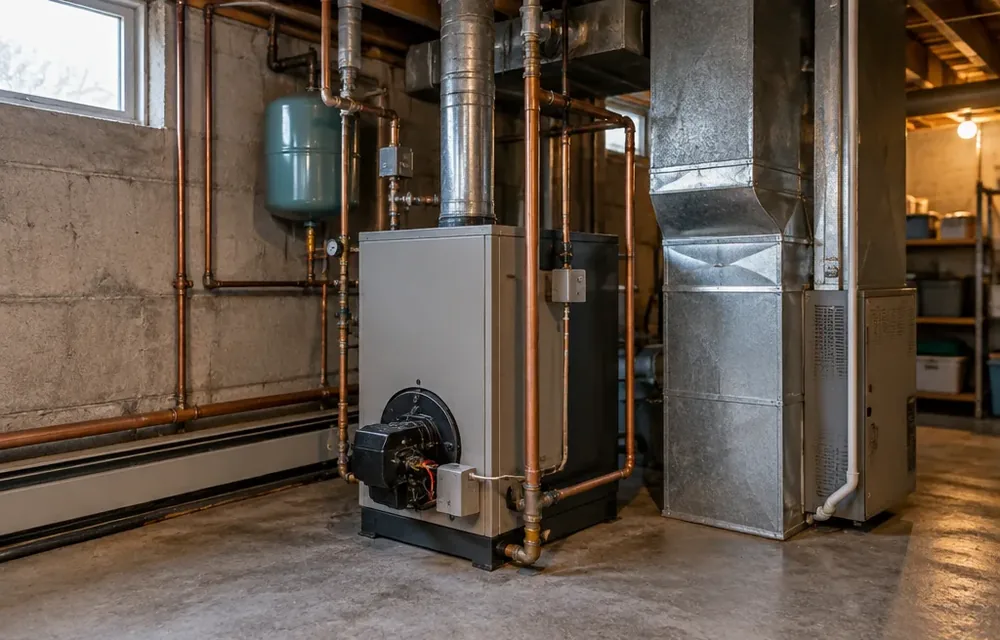
Chelmsford boiler pattern: The Chelmsford boiler pattern grows from hydronic colonials and capes where one boiler feeds copper fin baseboard or cast iron radiators through cool basements. Later additions add zones that the original pump and piping were not sized to balance, so flow favors the short loop and starves far rooms. That imbalance shows as upstairs rooms cooling first when sludge builds.
Water and weather context: Much of Chelmsford draws town water through the Lowell Regional Water Utility system, which moves about four point six billion gallons per year for about one hundred thirty five thousand customers across Lowell, Dracut, Tyngsborough, and Chelmsford. Billerica Water Works serves nearby areas from its Treble Cove Rd plant. Each fresh makeup fill adds oxygen and minerals that settle low and feed corrosion, so repeated feeding shortens component life. Cold snaps expose weak air elimination and tired expansion tanks, with relief drips appearing on the coldest nights, links that tie boiler care to water treatment and filtration and to winterize plumbing in Chelmsford.
House layout notes: Basement headroom, distance to chimney or vent terminal, and the number of zones shape both service access and replacement planning. Finished basements hide near boiler piping that still needs air access and relief discharge clearance. Homes in Tyngsborough and Westford share many of these hydronic layouts, so zone by zone notes travel well across town lines when you describe cold rooms.
Limits of homeowner checks and temporary heat ideas
Check limits: Check limits for boiler trouble sit at the panels, piping, and fuel train. Reading thermostats, gauges, and codes plus keeping the area clear are homeowner actions that help without adding risk. Opening burner covers, altering gas piping, draining the system, or swapping controls moves into license holder work with permit steps.
Code frame in plain terms: Boiler and gas work in Massachusetts falls under Two Forty Eight CMR, the Uniform State Plumbing Code, plus fuel gas rules through the Board of State Examiners of Plumbers and Gas Fitters on mass dot gov. Most boiler repairs and swaps need a permit and inspection through the town inspector, with venting, combustion air, and condensate handling held to code minimums. That frame explains why phone help stays with safe checks and shutoff talk rather than part swaps. Hiring background in hiring and license checks sets out how to confirm standing before work starts.
Temporary warmth without new risk: Safe interim steps include closing off unused rooms with doors, keeping interior doors open toward plumbing walls, and letting the remaining zones run steadily rather than with deep setbacks. Avoid portable fuel heaters without maker guidance and proper venting, and avoid heating with ovens or burners that add moisture and combustion risk. Keep pipes on exterior walls in mind and read frozen pipe prevention and thawing while you wait for heat help rather than improvising piping changes.
When should you call for boiler help?
Boiler call judgment: Boiler call judgment turns on cold severity, water loss, and safety signs rather than on age or noise alone. No heat with freeze risk, a leaking block or pouring relief, repeated lockouts that leave rooms cold, and any fuel or alarm signs all point toward help now. Uneven rooms or a single noisy pipe with no leak usually fits scheduled service with notes in hand.
What to report on the call: Share thermostat settings, boiler switch position, cold and hot gauge readings, error codes, and which zones stay cold. Add leak location, relief behavior, sounds during a call for heat, and any odor or alarm activity without delay. Mention the fuel type and whether additions changed the zone count, because that shapes pump and balance thinking. Those details speed triage for Chelmsford, Carlisle, and Concord.
How the visit proceeds: Call (978) 592-1168 and stay clear of hot surfaces, relief discharge, and electrical parts while help is arranged. Keep the boiler area open for access and keep the path from door to unit lit and clear. The visit will confirm safety and venting first, then test controls and water side behavior before recommending repair or longer term planning with boiler installation and servicing.
Near you
When to call
Related guides
Frequently asked questions
Is no heat from my boiler an emergency?
No heat is an emergency when cold weather threatens pipes or vulnerable occupants and the unit will not stay running. Note thermostat settings, gauge readings, and error codes without opening panels. One cold room with the rest warm usually fits daytime service. Call (978) 592-1168 when the whole house cools and will not recover.
What should I do when the relief valve pours water?
Keep clear of hot discharge and electrical parts, note where water appears and what the gauge reads, and avoid repeated resets. A pouring relief often reflects expansion or feed trouble rather than a bad valve alone. Prompt help can test tank charge, feed behavior, and limits. Do not cap or plug the relief path.
Can I reset my boiler and wait?
One careful reset after noting the code is enough to report what happened. Repeated resets hide the best clue and can stress ignition and controls. Copy the code word for word, note gauges and cold zones, and share that account on the call. The visit can then start with diagnosis rather than guesswork.
When is fuel odor a boiler emergency?
Fuel odor with strong presence, soot, scorching, or alarm activity is a safety emergency that starts with leaving the area and contacting the gas utility or fire service. Do not operate switches or open gas piping yourself. Heating help follows once the scene is declared safe. A brief faint odor that clears still deserves daytime combustion review.
Should I repair or replace an aging boiler?
Repair fits when the block tests sound, the flue and jacket remain solid, and parts stay available. Replacement fits cracked sections, repeated leaks, unavailable controls, or venting that cannot be made safe. Test results and parts status matter more than age alone. Read boiler with furnace choices once heat is stable.
Still stuck?
Describe what you see when you call and a local specialist will guide the next step.