How to tell repair from replacement
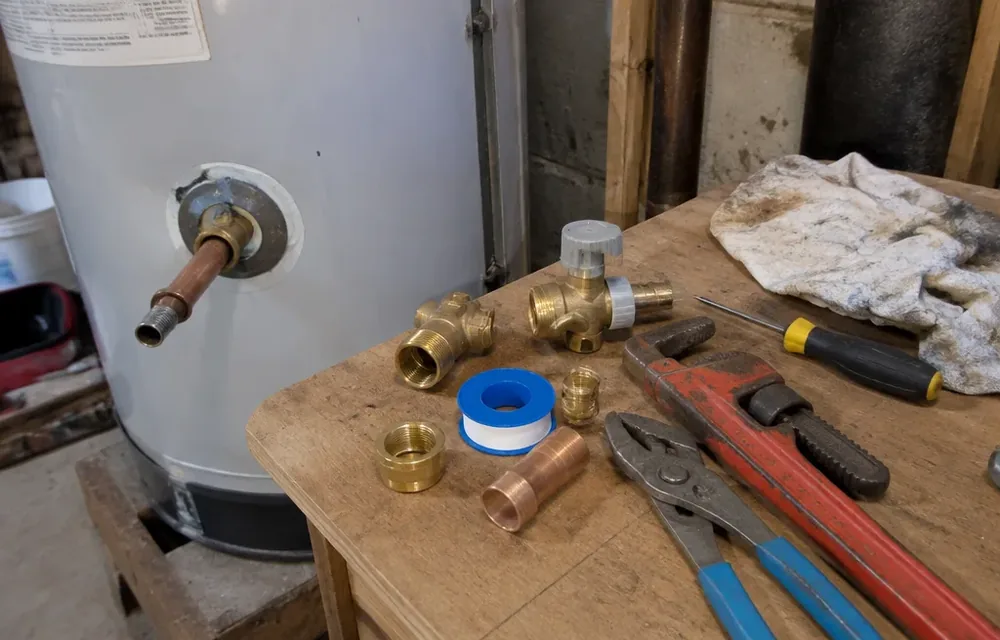
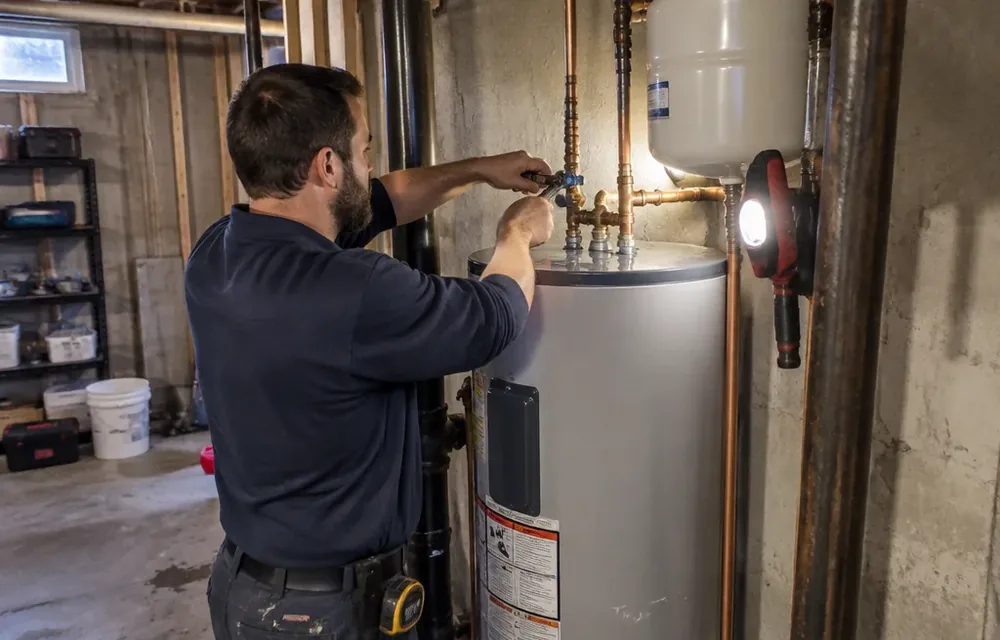
Repair likely: a unit under mid-life with sound steel that trips once, shows one failed element, or drips at a loose fitting often returns with a part and a flush. Note the age on the rating plate, the fuel type, and whether the relief has discharged, because those three facts shape the call.
Replace likely: water weeping from the tank seam, a rusted base, repeated relief discharge after parts are ruled out, or a flue in poor shape means the vessel or venting has reached its limit. Short hot water that persists after thermostat and element tests also points to a scaled or undersized tank. See water heater leaking for the checks we run before condemning a tank.
Fuel and size check: gas, oil-indirect, and electric each vent and wire differently, and a growing household may need a larger first-hour rating. Record how many showers run back to back and whether the dishwasher and washer overlap, because that use pattern sizes the next unit more than the old label does.
Why heaters fail around Chelmsford
Chelmsford town water carries hardness and minerals that settle as sediment in the bottom of tank heaters. That blanket forces the burner or elements to run hotter and longer, which pops, rumbles, and stresses the glass lining until pinholes form. Basements that stay cool and damp in spring also keep relief discharge and small seeps hidden behind storage until the base rusts.
Many heaters sit in tight basement corners with the boiler, washer, and softener nearby, so combustion air and service clearance are tight. Older gas vents with long lateral runs corrode quietly, while electric units on hard water burn through lower elements first. Homes served through the Lowell Regional Water Utility system see consistent mineral load, which is why flushing and anode checks matter here even when water tastes fine.
Options honestly compared
Targeted repair: thermostats, elements, gas controls, igniters, relief valves, and supply valves can each be replaced when the tank tests sound. Repair keeps the existing vent and piping and is usually done in one visit with a retest under load.
Like-for-like tank swap: a new tank of the same fuel and similar capacity fits the existing space, vent, and piping with the least change. It restores reliable hot water without reworking the room, though it keeps standby loss through the tank wall.
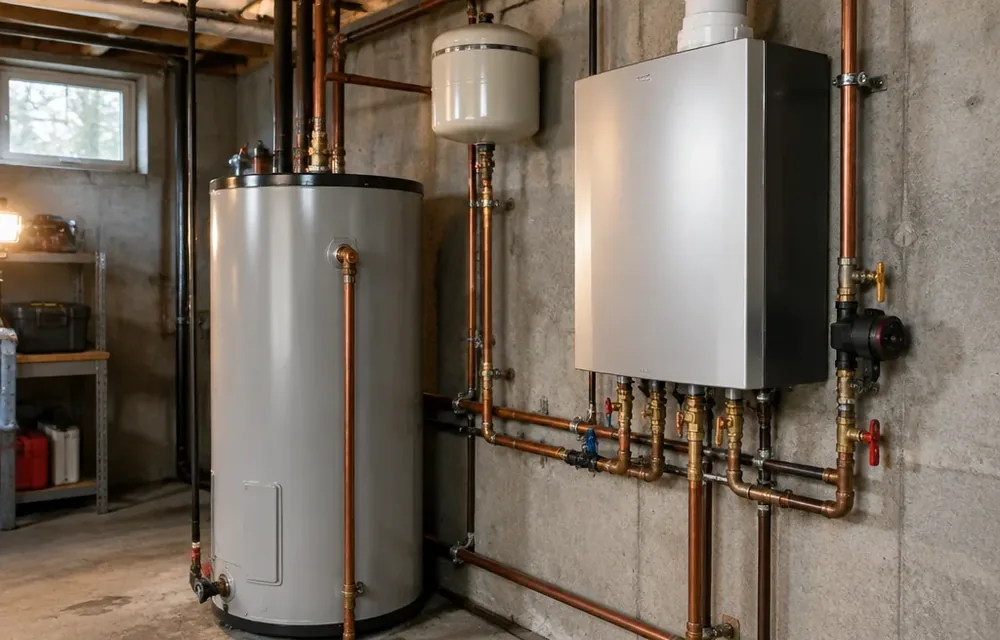
Tankless or high-efficiency tank: wall-hung continuous units remove standby loss but need gas sizing, venting, condensate handling, and water treatment attention on hard water. High-efficiency tanks keep familiar piping with better insulation and controls. Compare tank with tankless and ask us about your gas line and vent path before choosing either.
What moves the cost
Access and venting: a heater in an open basement with a short vertical vent is reached and swapped faster than one boxed behind finished walls with a long lateral flue. Gas vent liner needs, condensate routing, and platform or drain pan work each add scope.
Fuel, size, and water quality: larger first-hour ratings, power-vent or direct-vent models, mixing valves, expansion control, and treatment for hard water each change parts and labor. Oil-indirect tanks tied to a boiler involve boiler-side piping and controls beyond the tank itself.
Permits and disposal: heater swaps in Massachusetts need a permit and inspection under 248 CMR, and old tank haul-away with proper draining adds handling. Emergency no-hot-water dispatch carries different labor factors than a scheduled swap. Our cost guide explains these drivers without quoting a number here.
When this is the wrong answer
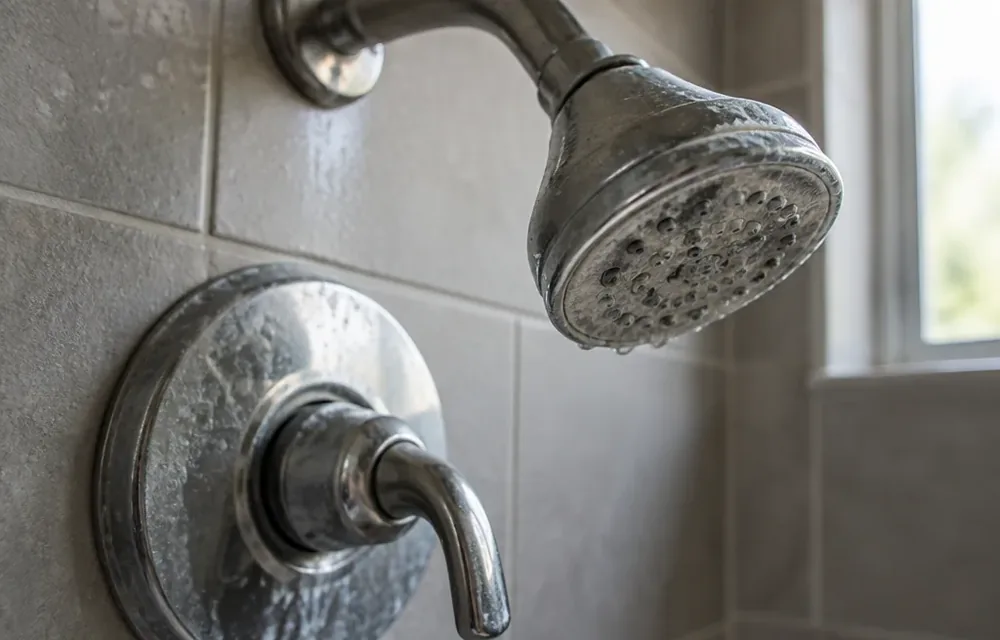
Water heater work is the wrong answer when the real fault is a single shower mixing valve, a tempering valve set too low, or a boiler control that feeds an indirect tank. Those need valve or control work rather than a new heater. A running toilet that wastes hot water through a recirculation loop can also mimic short supply.
It is also the wrong call when low water pressure at one tap comes from a clogged aerator or a partially closed stop. If rusty water clears after a few seconds only at one faucet, the fixture or branch line may be the source rather than the tank. Describe the pattern on the call and we will test before recommending a unit.
Standards that apply in Massachusetts
Water heater installation in Massachusetts follows 248 CMR, the Uniform State Plumbing Code, with fuel gas rules for gas units, enforced with the Board of State Examiners of Plumbers and Gas Fitters. Relief valve discharge, expansion control, drip leg and shutoff placement, vent sizing, and combustion air each have minimums that we meet on every swap.
We set temperature to a safe delivery level, verify draft on gas units, test relief operation without flooding the room, and confirm dielectric separation where copper meets steel. Permits go through the local plumbing inspector, and we leave the rating plate, manual, and shutoff locations marked for you.
Signs you need this
No hot water or short supply
A tripped reset, failed element, or weak burner often explains sudden loss or showers that turn cool halfway through.
Water at the base or relief drip
Moisture at the drain valve, relief line, or tank seam needs prompt checks because tanks rarely reseal themselves.
Rumbling and rusty water
Popping during heating and rust at the hot tap point to sediment and anode wear that shorten tank life.
What happens on a visit
We ask about loss pattern, noises, and any water at the base. We check gas, power, relief discharge, and the cold feed valve.
We test thermostats, elements, burner operation, and thermocouple or ignition behavior. We check expansion and house pressure where relief has lifted.
We inspect the seam, base, top fittings, and flue. We tell you plainly whether repair or replacement is the sound path.
We replace the failed control or fit the new tank with code-correct valves, expansion control, pan and drain where needed, and proper venting.
We fill and purge air, fire the unit, set temperature, run hot taps in sequence, and confirm relief, draft, and leak-free joints.
When this is the wrong answer
Do not book a new heater for a single cold shower caused by a worn mixing cartridge, a tempering valve turned down, or a tripped breaker that simply needs diagnosis. Do not replace a tank that only needs an element or a thermostat without testing first. If water is actively pouring from the seam or relief keeps lifting after checks, that is the opposite case and you should call promptly rather than nursing the unit along.
Related reading

Where it comes up
Related services
Frequently asked questions
Why do I have no hot water?
No hot water usually traces to a tripped electric reset, a failed element or thermostat, a gas control or ignition fault, or a boiler issue feeding an indirect tank. Check the breaker, look for relief discharge, and note any error code before you call. We test controls in sequence so a simple part is not mistaken for a dead tank. See no hot water causes.
Should I repair or replace my water heater?
Repair fits a mid-life tank with sound steel and one failed control or fitting. Replacement fits seam weeps, a rusted base, repeated relief lift after checks, or a flue that cannot be made safe. Use pattern and hot-water demand in the choice. Our on-site test of the vessel and vent decides more than age alone.
Tank or tankless water heater for Chelmsford?
Tanks keep familiar piping and handle hard water with flushing and anode care. Tankless units remove standby loss but need gas sizing, new venting, condensate handling, and scale control on mineral-bearing town water. Household shower overlap and space shape the better fit. Compare tank with tankless and ask about your gas and vent path.
Why is my water heater rumbling?
Rumbling comes from steam bubbles under sediment that blankets the bottom of the tank. Hardness minerals bake into that layer in Chelmsford water and force longer, hotter burns. Flushing helps early, but deep scale after years of neglect rarely fully clears. Anode checks and regular flushing slow the return.
Can a homeowner install a water heater in Massachusetts?
Massachusetts requires a license holder for water heater piping and gas connections under 248 CMR and the Board of State Examiners of Plumbers and Gas Fitters, with a permit and inspection through the local inspector. Homeowners can test breakers, note codes, and close the cold feed in a leak. Installation, venting, and relief work belong with a license holder.
What size water heater do I need?
Sizing rests on first-hour demand rather than the old tank label. Count back-to-back showers, tub fills, and whether laundry and dishwashing overlap those showers. A household with two morning showers in a row needs a different rating than one with spread-out use. We size from your routine and the fuel available, not from the sticker alone.
Need water heater installation and repair in Chelmsford?
Call now and describe what is happening. A local specialist takes it from there.