How to tell pump, tank, and switch trouble apart
Pump trouble: Pump trouble shows as pressure that cannot reach cut-out no matter how long the motor runs, or as flow that collapses the moment a second fixture opens. A pump drawing low sputters air with sediment, trips overloads, or runs hot and loud compared with its normal hum. Note the gauge reading with no fixtures running and again with two fixtures open, because a pump that cannot build pressure under load has a delivery problem rather than a control problem.
Tank and switch trouble: Tank and switch trouble shows as rapid short cycling, with the gauge needle bouncing between cut-in and cut-out every few seconds while the pump starts and stops. A waterlogged conventional tank or a bladder tank with lost precharge leaves no air cushion, so tiny draws swing pressure across the whole switch range. Tapping the tank side for a dull full-versus-hollow line and reading the air valve charge with the pump off separates tank failure from switch failure. See low water pressure causes and no hot water patterns for the symptoms we sort against well behavior.
Treatment and plumbing look-alikes: A clogged sediment filter, a fouled softener head stuck in backwash, or iron-clogged fixture screens mimic pump failure by strangling flow at points past a healthy pump. Pressure that reads strong at the tank gauge but weak at faucets points past the well system into filters, softeners, or supply piping. Note filter ages, softener behavior, and whether outside hose bibbs run strong while indoor fixtures weaken, because that split places the fault. Compare water treatment notes and leak detection where hidden supply loss joins the picture.
Why well setups look this way around Chelmsford
Pockets around Westford, Groton, Carlisle, and Dunstable stay on private wells with drilled depths, yields, and mineral profiles that vary street by street. Iron and manganese stain fixtures and feed sediment that wears pump ends and clogs screens, while acidic water pits copper and brass on its way to faucets. Many systems grew by addition, with a treatment chain bolted onto an older pump and tank that were sized for a smaller household and fewer baths.
Well pits and crawl-space tanks add freeze exposure that town-water streets never see, and power flickers in wooded neighborhoods stall pumps mid-cycle and stress controls. Low-yield wells that recover slowly punish high-demand mornings, with laundry plus showers drawing the column down until the pump sucks air. That combination of mineral load, added demand, and exposed equipment is why we test quality, quantity, and controls together rather than condemning the pump on pressure alone.
Seasonal swings matter more on wells than on town supply. Dry spells lower the water table and stretch recovery, spring runoff stirs sediment that loads filters overnight, and winter cold finds uninsulated pit piping first. Homes near Groton with long driveways over buried lines and near Westford with mixed well and town streets show the same seasonal rhythm, and telling dispatch your well depth, tank size, and treatment chain shortens diagnosis considerably.
Options honestly compared
Switch and tank service: A pitted pressure switch, a clogged switch nipple, or a tank with lost precharge often explains short cycling and pressure swings without any pump fault. Cleaning the nipple, fitting a matched switch set to the tank precharge, or replacing a failed bladder tank restores the air cushion that smooths delivery. This fits systems where the pump builds rated pressure on a hose test and the gauge behavior alone condemns the controls.
Pump repair or replacement: A pump with a failed motor, worn impellers, a split drop pipe, or corroded wire splices needs a pull and either repair of the down-hole parts or replacement matched to depth, yield, and household demand. Replacement sizing weighs static level, recovery rate, and peak fixture load rather than copying the old horsepower, since added baths and irrigation often outgrew the original unit. Variable-speed drives suit some low-yield wells by softening starts and matching output to demand, while conventional setups remain the sound baseline where yield is steady.
Treatment pairing: Iron, manganese, sediment, and acidity shorten every pump and tank life they touch, so a bare pump swap without addressing quality repeats the failure. Sediment filtration ahead of the pressure tank, softening or iron treatment matched to lab numbers, and acid neutralization where copper pitting shows protect the new equipment from day one. Pair the choice with water treatment and filtration planning and water heater checks where scale already coats the tank, since the same minerals attack both ends of the system.
What moves the cost
Depth, access, and pull difficulty: A shallow well with a clear pad and a sound pitless adapter allows a straightforward pull, while deep settings, seized pitless units, buried wellheads under additions, or winter-frozen access add rigging, excavation, and time. Drop pipe material and wire condition decide whether the pull reveals one fault or several, and corroded splices or split pipe turn a pump swap into a down-hole renewal.
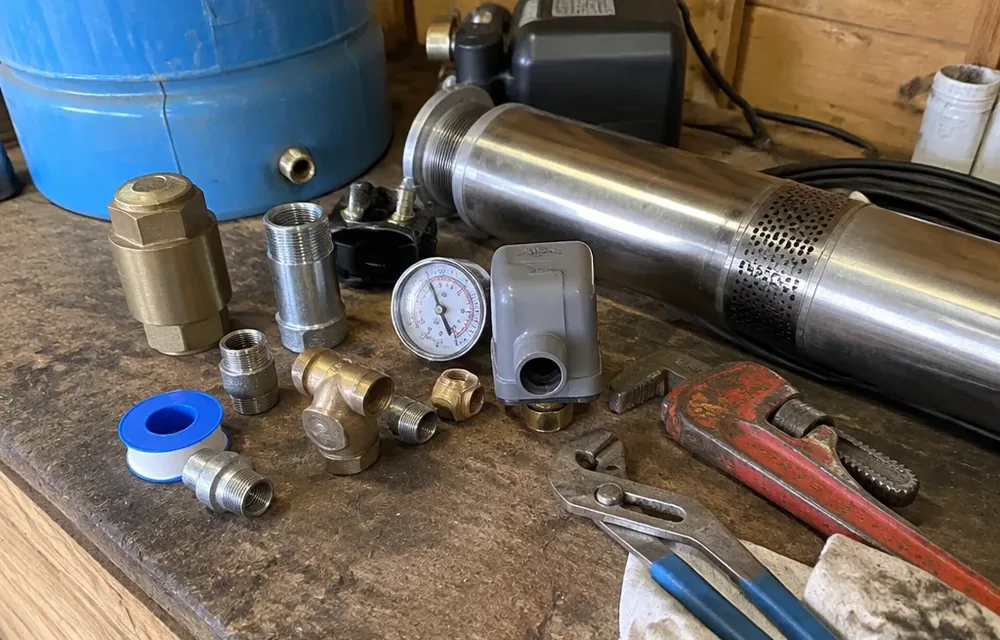
Pump, tank, and treatment parts: Pump rating and drive type, tank size and precharge needs, switches, gauges, relief details, and any treatment media or controls each add parts beyond the motor itself. Sizing to depth and yield rather than habit prevents the short-cycling oversized pump that burns out early or the undersized one that never reaches cut-out. Sediment and iron treatment matched to water tests sit as separate line items with their own maintenance rhythm.
Permits, testing, and water proof: Well work in Massachusetts involves town and state expectations for licensed handling, permits where piping and wiring are altered, and inspection through the local inspector. Yield testing, pressure and drawdown proof under multi-fixture load, and post-work water testing for bacteria and minerals where the system was opened all take time after parts are set. Our cost guide explains these drivers without quoting a figure here, and we describe the proof sequence before any pull begins.
When this is the wrong answer
Well pump work is the wrong answer on town-water streets, where pressure trouble traces to the service valve, pressure regulator, filters, or hidden supply leaks rather than any pump. A regulator failed closed or a main valve half shut mimics pump fade exactly, and the tank gauge on town systems tells that story in seconds. Homes that switched from well to town supply with old equipment still piped in need abandonment and valving corrections rather than pump service.
It is also the wrong first call for water heater recovery trouble with strong cold pressure intact, which belongs to heater service rather than the well, and for single-fixture weakness with strong hose bibbs, which points to screens, cartridges, or branch piping. A softener stuck in regeneration overnight explains morning pressure loss with treatment noises as the giveaway. Describe gauge readings, filter ages, and which fixtures weaken together and we will steer you to well, treatment, or supply help honestly.
Standards that apply in Massachusetts
Well pump and pressure system work in Massachusetts involves licensed plumbing handling under 248 CMR alongside electrical rules for pump wiring and controls, with the Board of State Examiners of Plumbers and Gas Fitters governing who may alter supply piping. Well construction and water quality expectations involve town health authorities and state guidance, and permits with inspection run through the local inspector where systems are altered. Only qualified hands open wells, pull pumps, and set controls.
We verify disconnects and wiring integrity before any pull, sanitize and flush where the system is opened, set switch points against measured tank precharge, and prove pressure under multi-fixture load before leaving. Backflow protection, relief details, and treatment drain routing follow code rather than habit. For background on hiring, see how to check a plumber license in Massachusetts.
Signs you need this
Pressure that fades or surges
Showers that weaken mid-use or surge between trickle and blast point to tank, switch, or pump delivery trouble rather than town supply.
Pump cycling every few seconds
Short cycling wears motors fast and usually means a waterlogged tank, a failed bladder, or a switch set outside the tank precharge.
Sputtering faucets with sediment
Air spitting with grit or rust-colored slugs signals the pump drawing low, a failing drop pipe, or sediment stirred by a struggling intake.
What happens on a visit
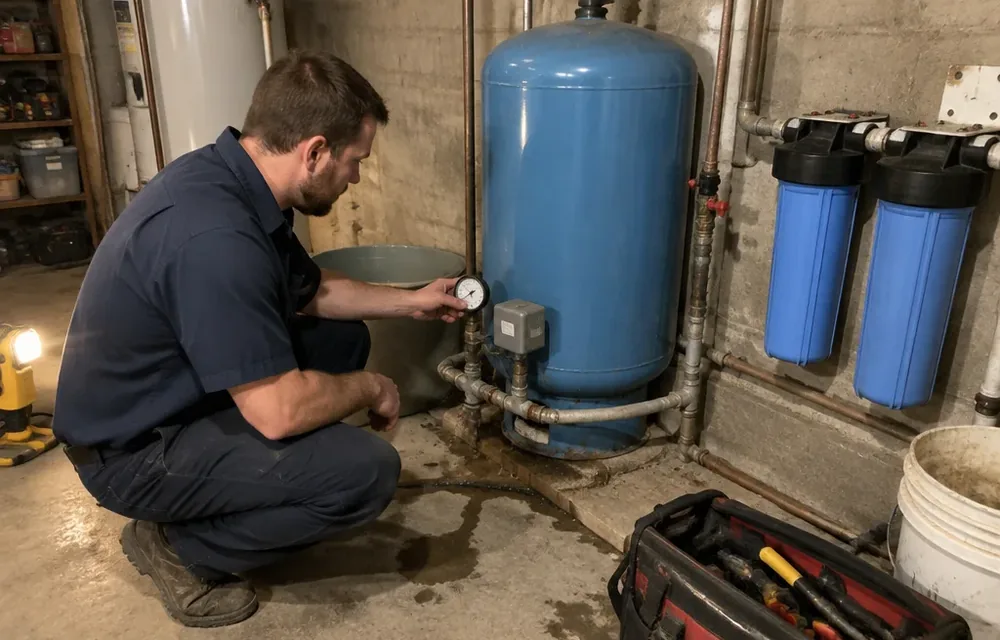
We read static and running pressure, note cut-in and cut-out behavior, and record well depth, tank size, filter ages, and treatment equipment on site.
We hose-test pump delivery against the gauge, check tank precharge with the pump off, and inspect the switch nipple and contacts for the real cycler.
We weigh sediment, iron staining, and recovery behavior so treatment needs and low-yield limits join the plan before parts are chosen.
We service switches and tanks in place, or pull, repair down-hole parts, and set the matched pump with sound pipe and splices.
We run multi-fixture draws, verify cut-out and recovery timing, and confirm treatment chain pressure before the system returns to service.
When this is the wrong answer
Do not book well pump work for town-supply pressure trouble, for heater recovery trouble with strong cold pressure, or for single-fixture weakness with strong hose bibbs, because the pump is not the fault in those cases. Do not keep running a short-cycling pump while waiting, since rapid starts cook motors fast. If water stops entirely with electrical burning smells or a flooded pit around wiring, shut power at the breaker and call now.
Related reading


Where it comes up
Stow
Well streets with iron and sediment.
Hudson
Well pockets with iron and sediment.
Tyngsborough
Mixed town water and well pockets.
Chelmsford
Chelmsford sits between Lowell and Westford where the Concord River joins the Merrimack along the North Chelmsford line, so river-low basements and town-center colonials share one dispatch map.
Lowell
Lowell sits at the meeting of the Concord and Merrimack rivers just east of Chelmsford, threaded by canals and dense brick mill blocks.
Billerica
Billerica spreads southeast of Chelmsford along the Concord River toward Wilmington and Burlington, mixing older village pockets with postwar subdivisions and wooded lots.
Related services
Frequently asked questions
Why does my well pump cycle on and off every few seconds?
Short cycling usually means the air cushion is gone through a waterlogged tank, lost bladder precharge, or a switch set outside the tank charge. Tiny draws then swing pressure across the whole switch range and hammer the motor with starts. A hose delivery test with precharge readings separates tank and switch faults from pump faults.
How do I know the pump needs replacement instead of repair?
Delivery proof decides. A pump that cannot reach cut-out under load, draws air with sediment, or shows failed motor readings needs a pull and likely replacement sized to depth, yield, and demand. Sound delivery with wild gauge swings instead condemns switches, nipples, and tanks. Down-hole pipe and wire condition found during the pull can move a repair plan into renewal.
Why do faucets sputter with grit after the pump runs?
Sputtering with grit means air enters with sediment, usually from the pump drawing the column down on a low-yield well, a split drop pipe above water, or a failing intake screen stirring the bottom. Note whether it follows heavy-use mornings or dry spells, and whether outside bibbs share it. Yield behavior plus pipe inspection places the cause.
Can treatment problems look like pump failure?
Clogged sediment filters, fouled softeners, and iron-choked screens strangle flow past a healthy pump and read exactly like weak delivery at faucets. Strong pressure at the tank gauge with weak indoor fixtures proves the well system while condemning what follows it. Filter ages, softener behavior, and the bibb-versus-faucet split settle the call.
What should I note before calling about well trouble?
Note static and running gauge readings, cycle timing between starts, well depth and tank size where known, filter and softener ages, and which fixtures weaken together. Note staining, odors, and whether dry weather or heavy mornings precede trouble. That record lets testing start at the likely fault instead of re-proving the whole chain.
How do I protect a new pump from early failure?
Match treatment to lab numbers so iron and sediment stop grinding the new pump, keep filters on schedule, and hold tank precharge against switch settings with yearly checks. Insulate pit piping, keep the wellhead clear and protected, and fix dripping fixtures that force needless cycles. A system with clean quality, correct charge, and sound wiring gives the longest service.
Need well pump repair and replacement in Chelmsford?
Call now and describe what is happening. A local specialist takes it from there.