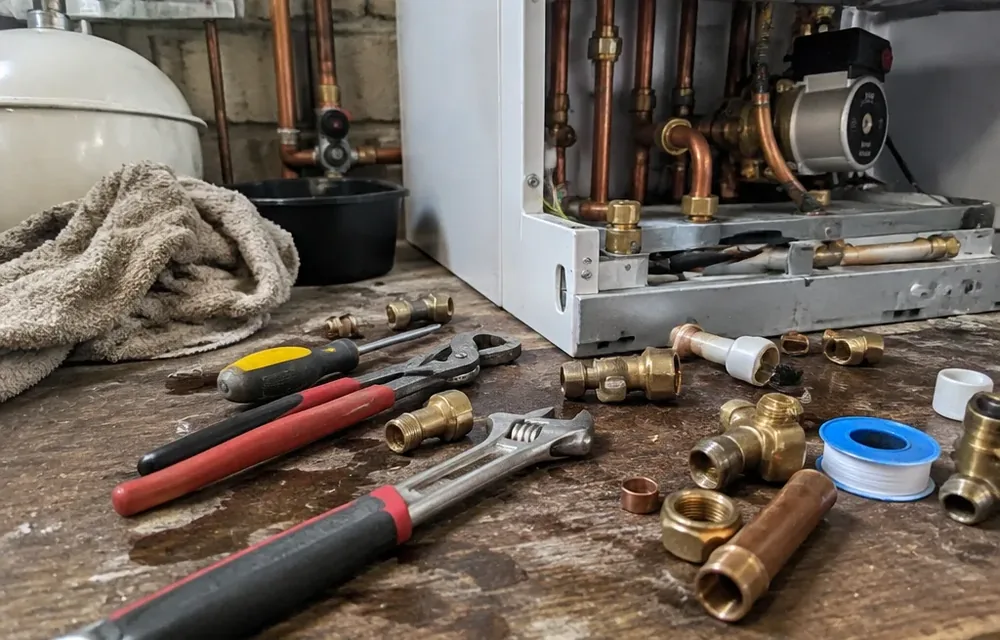
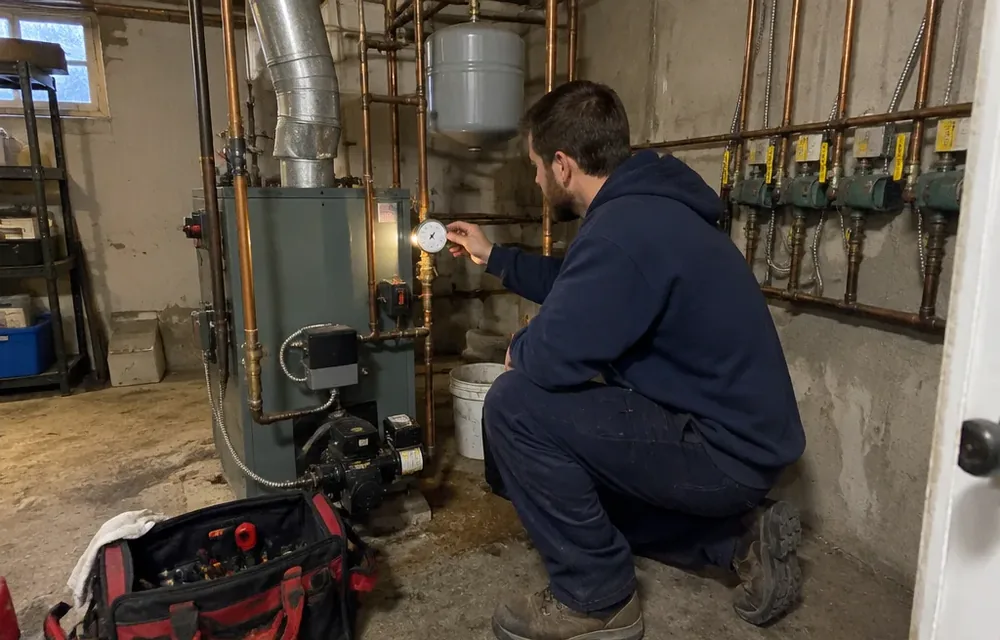
How to tell what your boiler needs
Service need: a system that heats but runs louder each year, needs frequent bleeding, or shows rusty bleed water is due for cleaning and water-side treatment. Note the pressure when cold and when hot, because that swing tells us about the expansion tank.
Repair need: lockouts with an error code, a leaking relief valve, a failed circulator, or a zone that never calls usually trace to one control or moving part. Record the code, the gauge readings, and which zones are cold so diagnosis starts in the right place. See boiler with no heat for the checks we run first.
Replacement need: repeated section leaks, a cracked heat exchanger, parts that are no longer available, or a jacket and flue in poor shape point beyond repair. Age alone does not decide, condition and safety test results do. We show you gauge, combustion, and leak evidence before recommending a new unit.
Why boilers work hard around Chelmsford
Chelmsford has many hydronic homes where a single boiler feeds copper fin baseboard or cast iron radiators through unheated basements and crawl spaces. Hard, mineral-bearing town water feeds the system on makeup, and each fresh fill adds oxygen and scale that settle in the lowest radiators first. That is why upstairs rooms often cool first when sludge builds.
Additions and finished basements add zones that the original pump and piping were not sized for, so flow favors the short loop and starves the far rooms. Cold snaps expose weak air elimination and aging expansion tanks, with relief drips appearing on the coldest nights. Most town water here comes through the Lowell Regional Water Utility system, so makeup chemistry is consistent and treatable once tested.
Options honestly compared
Annual service: cleaning the heat exchanger, checking the burner and ignition, testing controls and safeties, and verifying expansion and feed pressure keeps efficiency and safety in bounds. It fits any working boiler and costs less in labor than a single winter breakdown visit with parts.
Targeted repair: circulators, expansion tanks, air separators, zone valves, and relief valves each fail on their own schedule and can be swapped without replacing the whole appliance. Repair fits when the block, burner, and flue test sound and parts remain available.
Full replacement: a right-sized gas or oil boiler with modern controls, proper near-boiler piping, and clean system water restores even heat and simplifies parts going forward. It involves more access, venting, and permit work than repair, so we only recommend it when test results or parts availability justify it. For fuel context, read boiler compared with furnace and talk to us about your chimney and fuel storage before you decide.
What moves the cost
System access and size: basement headroom, distance to the chimney or vent terminal, and the number of zones shape piping and wiring time. Cast iron removal and disposal add handling compared with a compact wall-hung swap where allowed.
Fuel, venting, and water quality: oil-to-gas changes, liner needs, condensate handling, and system flushing with treatment each add scope beyond the boiler block itself. Controls such as outdoor reset and zone relay upgrades are separate choices with their own wiring.
Permits and inspections: boiler and gas work in Massachusetts needs permits and inspection through the local inspector under 248 CMR and gas fitting rules. Emergency no-heat labor in deep winter carries different factors than scheduled shoulder-season work. Our cost guide explains these drivers, and boiler emergency notes cover after-hours context.
When this is the wrong answer
Boiler service is the wrong answer when the real problem is distribution, such as a single air-bound radiator, a closed balancing valve after a remodel, or a thermostat set to the wrong heat type. Those need bleeding, balancing, or control setup rather than burner work.
It is also the wrong call when the house uses forced air with a furnace and ductwork, or when a heat pump handles mild weather and the boiler is only backup. If you smell strong gas, hear a delayed ignition boom, or see soot and scorching, stop the unit and call the gas utility or fire service first, then us for the heating side.
Standards that apply in Massachusetts
Hydronic and steam boiler work in Massachusetts falls under 248 CMR, the Uniform State Plumbing Code, plus fuel gas and oil burner rules enforced with the Board of State Examiners of Plumbers and Gas Fitters. Gas piping, venting, combustion air, and condensate handling each have code minimums, and most boiler swaps need a permit and inspection.
We test for carbon monoxide, verify draft and relief discharge, and set pressure and temperature to manufacturer and code requirements. Oil systems get filter, nozzle, and electrode attention to spec, while gas systems get manifold and ignition checks. For background, see hiring and license checks.
Signs you need this
No heat or frequent lockout
A boiler that will not fire, trips on limit, or needs constant resets needs same-day diagnosis in heating season.
Pressure loss or new leaks
A gauge that falls daily, relief water on the floor, or bleed valves that always spit air point to expansion or feed trouble.
Uneven rooms and noise
Cold upstairs radiators, kettling, or banging often mean sludge, air, or pump trouble rather than a dead boiler.
What happens on a visit
We ask about lockout codes, pressure swings, and cold zones. We record cold and hot pressure, temperature, and feed behavior.
We check relief discharge, expansion tank charge, flue condition, combustion air, and carbon monoxide readings around the unit.
We clean the heat exchanger, service the burner to spec, purge air, verify circulators and zone valves, and treat system water as needed.
We cycle each thermostat zone, test limits and low-water cutoff, and confirm outdoor reset and pump logic where fitted.
We show readings before and after, list parts with wear, and lay out repair or replacement choices with permit steps where work is planned.
When this is the wrong answer
Do not book boiler service for a forced-air furnace that blows cool air through ducts, because that is a different appliance with its own service path. Do not service a boiler that shows soot, scorching, or a strong fuel smell without utility clearance first. For one cold radiator that bleeds back to hot, or a thermostat set wrong after a power outage, describe the symptom on the call and we will often resolve it with balancing or setup rather than a full service visit.
Related reading
Where it comes up
Related services
Frequently asked questions
What is classed as an emergency repair for a boiler?
A boiler emergency means no heat during freezing weather, a leaking boiler block or relief pouring water, a strong fuel or gas smell, or carbon monoxide alarm activity near the unit. Frequent lockouts that leave the house cold also qualify in winter. Uneven rooms or a single noisy pipe without leaks can usually wait for a scheduled visit. Read boiler emergency explained before you call.
How much does it cost for emergency boiler repair?
Emergency boiler work reflects after-hours labor plus the part and access involved. A failed circulator, expansion tank, or ignition control each carries different parts and drain-down time, and permit needs add steps beyond the night visit. The on-site diagnosis matters more than a phone figure. We explain what failed, what choices exist, and what drives labor on your system.
Why do some radiators stay cold while others heat?
Cold radiators with hot ones nearby usually mean air trapped at the top, sludge settled low, or flow favoring the short loop. Bleeding, flushing, and balancing often restore even heat without new equipment. A pump sized for the original house can also starve a newer addition zone. We test flow and water quality before recommending parts.
Can a homeowner service a boiler in Massachusetts?
Homeowners can check thermostat settings, note gauge readings and error codes, and keep the area clear with proper combustion air. Opening gas piping, altering hydronic piping, or servicing burners falls under state license rules through the Board of State Examiners of Plumbers and Gas Fitters and 248 CMR. Annual service and most repairs belong with a license holder.
Should I repair or replace my old boiler?
Repair fits when the heat exchanger tests sound, the flue and jacket are solid, and parts remain available. Replacement fits cracked sections, repeated leaks, unavailable controls, or venting that cannot be made safe. Efficiency gains matter less than safety and reliability in the decision. We show test results and parts status so the choice rests on evidence.
How often does a boiler need servicing?
Most residential boilers benefit from yearly service before heating season, with oil systems needing burner attention each year without fail. The visit covers cleaning, safeties, expansion, feed, and controls rather than just a vacuum of the jacket. Skipping years lets scale and air build until a cold-night lockout forces the call.
Need boiler installation and servicing in Chelmsford?
Call now and describe what is happening. A local specialist takes it from there.