Signs
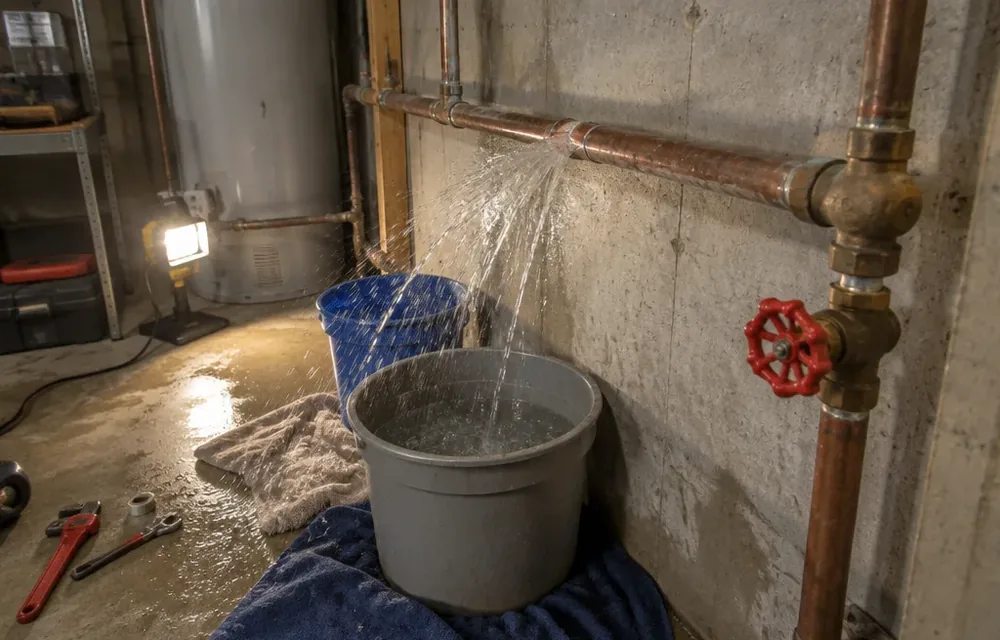
Spray or sheet flow from a joint
A hard stream at an elbow, coupling, or valve stem that continues after the tap is closed means the pressure wall has parted and the local valve should be closed.
Sudden pressure loss in one area
Taps in one bath or kitchen that drop to a thread while the rest of the house runs normally often sit downstream of a split that is dumping water out of sight.
Hiss inside a wall with growing stain
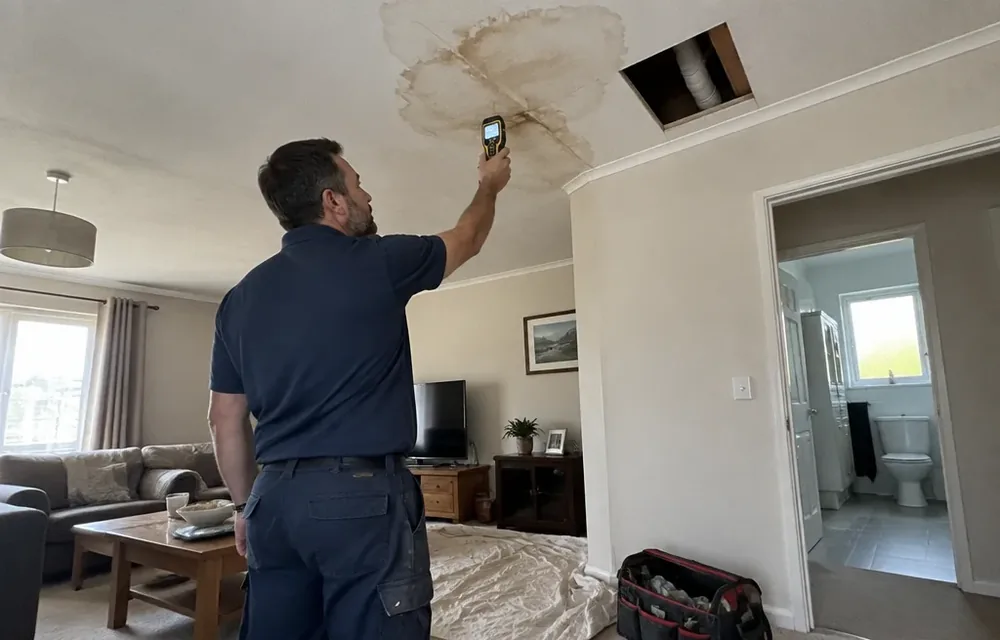
A faint hiss in a quiet room plus a ceiling spot that darkens and feels cool points to a pressurized seep feeding the cavity behind paint.
Meter turning with fixtures off
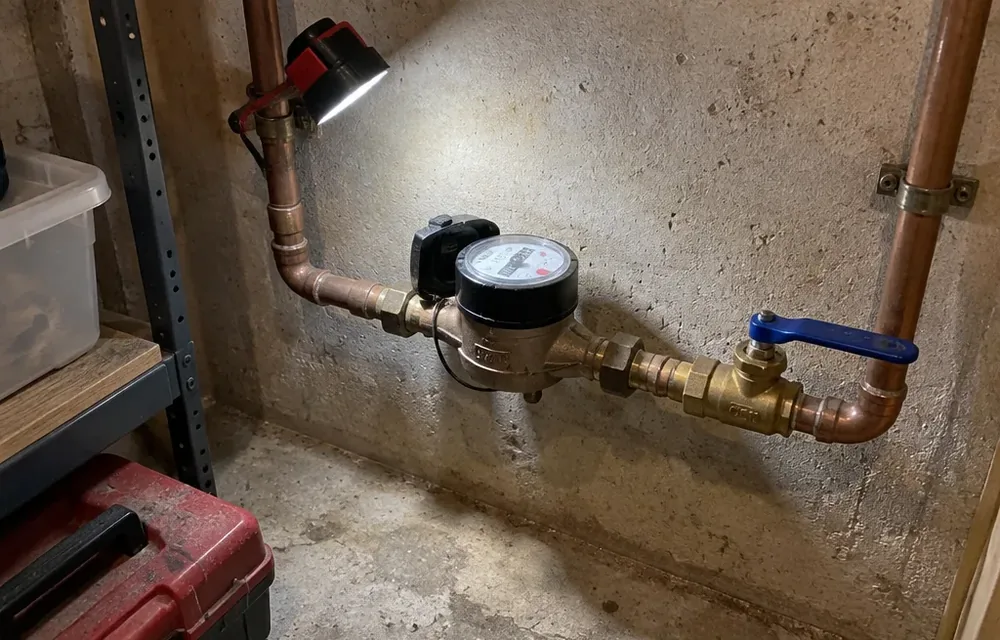
A water meter dial that keeps moving after every tap and appliance is off tells you supply water is still leaving the system through a break.
A burst pipe is a split pressure line that needs the water off
Short answer: a burst pipe is a pressurized supply line whose wall has parted so water escapes continuously until a valve is closed. A burst pipe differs from a drain leak because it does not wait for a fixture to run, and it differs from surface damp because the meter moves and the flow has force behind it. You should treat any steady spray, sheet flow across a floor, or fast-growing ceiling bulge as pressure water and get valves closed.
What you are seeing: copper, plastic, and older mixed-metal runs all carry street pressure to taps, toilets, and appliances, so a parted wall sends a strong stream rather than a slow drip. The opening can be a clean split along the tube, a pinhole that suddenly enlarges, or a joint that pulls apart under strain. Because the system stays charged, the loss continues behind walls and under floors even when no tap is open.
Why shutoff comes first: closing the nearest fixture valve isolates one run without draining the whole house, and closing the house main stops every branch when the local valve will not hold. Place buckets, lift soft goods, and keep power clear of standing water while valves are worked. Note which valve actually slows the flow, because that detail tells us where the break sits.
Cold, corrosion, and strain cause most bursts
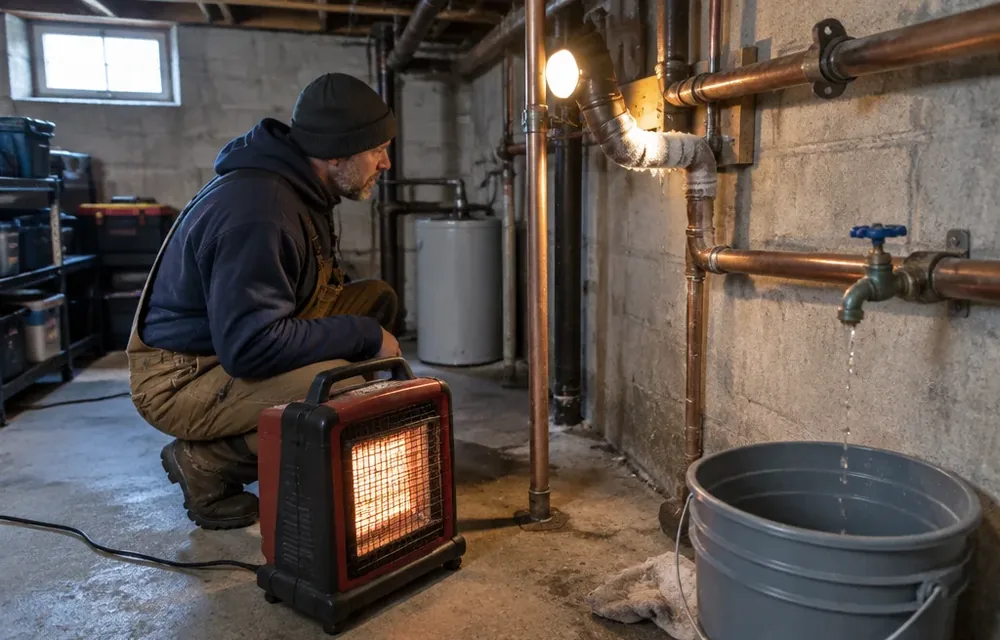
Short answer: most bursts come from ice expansion, thinned walls from corrosion and scale, or mechanical strain at joints and straps. Ice plugs raise pressure between the plug and a closed tap until the tube wall or a soldered hub gives way, which is why kitchen and bath runs on outside walls fail after a hard freeze. Corrosion thins older mixed-metal joints from the inside until normal street pressure finishes the job.
Cold-driven splits: supply routed through garage walls, bump-outs, crawl spaces, and rim bays chills far below room temperature when wind finds gaps around penetrations. Hoses left on exterior valves trap water in the stem and split the seat inside the wall, and night setback habits that cool the house let those cavities drop further. A line that survives one cold week can still part during the next thaw and refreeze when masonry stays cold longer than air.
Wear and strain splits: overtight straps, framing rubs, and saddle valves fitted for ice makers or humidifiers create weak points that hold for a long while and then part under ordinary use. Hard, mineral-bearing town water leaves scale that narrows the bore and pits the wall, and mixed-metal connections without proper separation corrode at the interface. Attic and basement runs that were added during remodels often lack support, so vibration and thermal movement work the same elbow until it opens.
Some leaks look like bursts but need a different fix
Short answer: drain leaks, fixture overflows, and surface damp can mimic a burst but call for drain, fixture, or drying work instead. A stain that appears only while a shower or washer runs usually comes from a drain joint, a loose trap, or failed grout rather than a pressure split. If the meter holds steady with fixtures off and the damp has no force behind it, pressure piping is less likely to be the source.
Drain and fixture look-alikes: a toilet base that wets during flushes points to a seal or flange path, while a vanity trap that drips after hand washing points to a slip joint rather than a supply split. A running toilet that wastes water through the bowl can raise use without any wall spray, and a washer hose leak can sheet across a floor with force that feels like a burst at first glance. Run one fixture at a time and watch, because drain paths only wet during use.
Surface and weather look-alikes: condensation on a cold tank or duct, melt from an ice dam finding a nail hole, and groundwater beading at a slab joint can all stain ceilings and walls without any pipe failure. A wet basement after rain that dries between storms points to entry from outside rather than a charged line. When waste or odor comes back through a low drain, ask about clogged drains and main-line blockage rather than a split supply.
Bursts show up in known Chelmsford-area spots
Short answer: bursts cluster in cold chases, older joints, and basement corners across the local housing stock. Capes and raised ranches around Chelmsford, older colonials in Westford and Lowell share the same weak points where supply crosses unheated space to reach a later addition. Knowing those paths helps you check the right bay first.
Where cold finds pipe: kitchen sinks on outside walls, baths tucked over garages, hose-bib stems through thin sheathing, and basement bath branches along cold foundation walls freeze first. Rim-joist bays near dryer vents and hose penetrations wash cold air directly over elbows, and knee walls in finished capes hide long runs with little insulation around them. Homes near river lowlands also carry damp basements where small seeps hide behind storage until a joint finally parts.
Where age shows first: streets with mature trees and mid-century subdivisions often mix copper with older branch material at additions, and those transition joints corrode from the inside on mineral-bearing town water. Slab corners, finished basement ceilings below baths, and laundry walls that pack heater, softener, and washer together hide slow weeps until baseboards swell. If your street has many capes with garage bumps or colonials with dormered baths, assume those cold runs deserve a look before deep winter.
A repair visit stops flow, finds the split, and rebuilds sound pipe
Short answer: a leak detection and burst pipe repair visit makes the home safe, pinpoints the failed inch, and replaces it with sound, supported joints. We confirm the meter behavior, isolate branches one by one, and use moisture readings plus careful listening so the opening lands on the break rather than the whole wall. You see what was found before patching is planned.
How the search stays small: we start at valves and the meter, then work toward the wettest material and the lowest sagging spot, because pressure water travels along framing before it drops. Fixture-by-fixture testing separates supply splits from drain paths, and a controlled pressure check on an isolated run confirms the failed section. Small inspection openings come before larger ones, and framing, wiring, and finishes are protected as the bay is opened.
How the fix lasts: the split length is removed back to clean, full-wall tube and refitted with correct couplings, support, and separation where metals meet. When several spots on one run show thin walls, a short re-route through a warmer chase often beats patching every few feet. We restore pressure slowly, watch joints under load, run nearby fixtures, and leave drying guidance so the cavity closes only when readings look normal. Where water reached the heater or boiler area, we also check those appliances before leaving.
Simple checks limit damage while you wait for help
Short answer: close valves in order, keep power clear of water, and protect finishes without opening walls. Work the fixture valve first, then the house main on the street side of the basement, then the feed to the water heater if the tank area is wet. Open a low tap briefly to relieve pressure once the main is closed, then leave valves as found so testing starts from a known state.
What you can do safely: lift rugs and move paper goods, place buckets under drips, and lay towels at door thresholds to slow spread across floors. Switch off power to wet rooms at the panel if outlets or cords are threatened, and keep clear of a boiler or heater standing in water. Take phone photos of the start point, the valve positions, and the widest spread, because those images guide the search. Do not cut walls, force stuck valves with pliers, or apply high heat to piping.
Damage risk if water keeps running: pressure water soaks drywall, swells baseboards and doors, lifts flooring, and wets insulation that then holds damp against framing. Finished basements suffer most because water finds carpet, storage, and wall cavities in one spread, and upper-floor splits can bow ceilings below before paint ever bubbles. Mold interest grows where damp cavities are closed too soon, which is why drying and meter checks matter as much as the new coupling. Steady heat and air movement help, but soaked soft goods and swollen sheet goods usually need removal rather than drying in place.
The service that fixes it
Related services
Related problems
Frequently asked questions
What should I do first when a pipe bursts?
Close the nearest fixture valve first, then the house main if water keeps coming, and move soft goods clear of the stream. Place buckets, keep power clear of standing water, and note which valve slows the flow. Do not open walls or force stuck valves. Then call us with the start point and valve behavior so the search begins at the right run.
How do I know the leak is a burst and not a drain problem?
A burst runs continuously with force and moves the meter even when no fixture is used, while drain leaks appear only during showers, flushes, or washer discharge. Listen for hissing in a quiet room and check whether damp grows overnight with water untouched. One-fixture timing points to drains, while steady spread points to pressure piping.
Can a frozen pipe burst without visible water at first?
Yes, ice can hold the bore shut until thaw, then pressure finds the split as the plug melts. Watch for frost or a swollen section during the freeze and for beading at joints as the house warms. Keep the affected tap cracked, warm the room gently, and keep the main accessible. If damp appears at thaw, keep pressure low and call us. See frozen pipes.
What happens during a burst pipe repair visit?
We confirm meter movement, isolate branches, and trace moisture to the failed inch with readings and listening before opening. The split length is cut back to sound tube and refitted with correct couplings and support. We then restore pressure slowly, run nearby fixtures, and set a drying plan. A leak detection and burst pipe repair visit keeps openings small and explains patching needs.
Seeing burst pipes?
Call and describe the symptom. A local specialist will tell you the sensible next step.