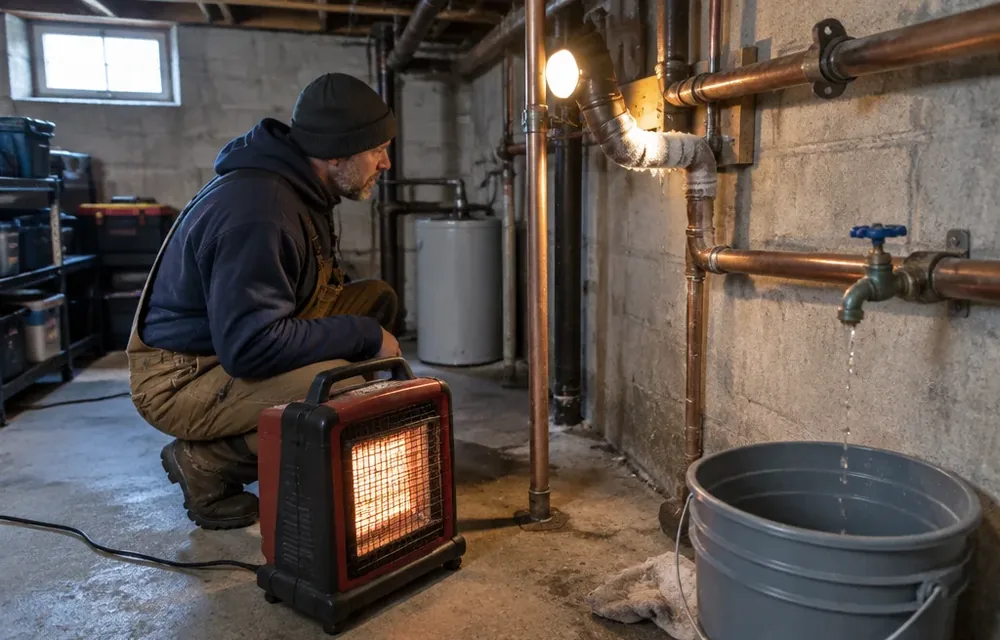
Signs
No flow at one cold tap group
A kitchen or bath on an outside wall that stops while other taps run normally often has a local ice plug in that branch.
Thread of water that will not grow
A tap that passes only a hair of flow with the valve fully open usually has ice gripping the bore near an elbow in a cold bay.
Frost or bulge on exposed tube
White frost, a swollen section, or a humming valve in a crawl space marks where ice holds hardest.
Damp that appears at warming
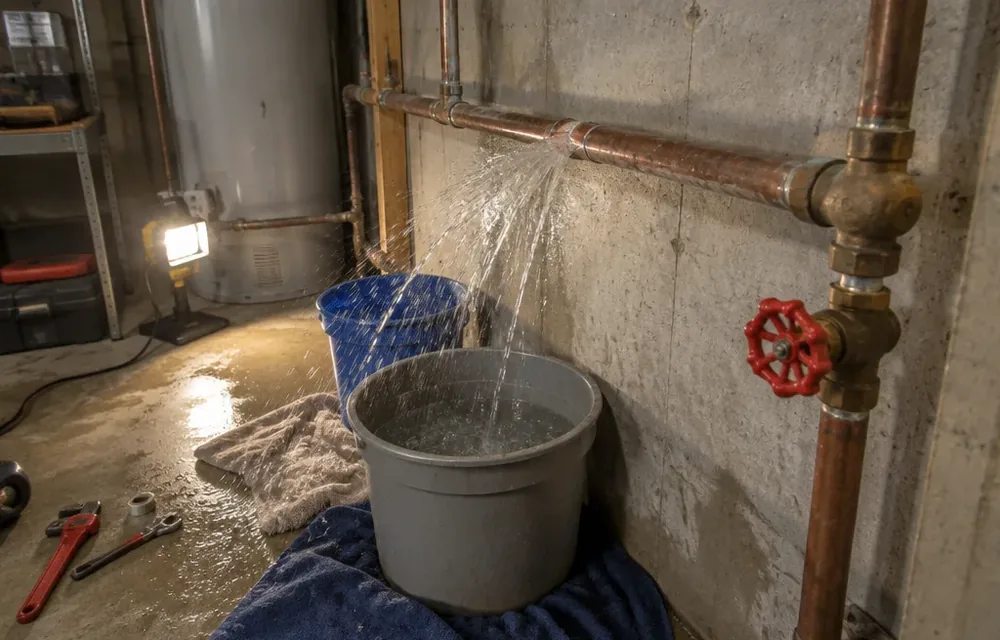
Beading at a joint as the house warms means ice parted the wall and pressure should stay low until the run is checked.
A frozen pipe is an ice plug that can hide a split
Short answer: a frozen pipe is ice filling the bore so water cannot pass, and the danger arrives as the plug melts. A frozen pipe itself rarely leaks while solid, while the thaw that follows can reveal a split where expansion parted the wall. That is why the tap stays cracked and pressure stays low until the full run is inspected.
What you are seeing: the blockage usually sits at the coldest elbow or penetration where wind washes over the tube, not at the tap itself. Upstream pressure builds between the plug and closed valves, so forcing valves or raising heat sharply can stress the same joint that ice already strained. A meter that holds steady with taps closed points to ice alone, while a turning meter points to a break.
Why relief matters: an open tap gives meltwater and air somewhere to go so pressure does not hammer the joint as ice loosens. Warm the room first with steady heat, then work from the tap back toward the cold zone with gentle warmth while watching for return flow. Closing the local valve and then the main becomes the move only when damp or hissing shows the wall has parted.
Wind wash, thin insulation, and hose traps cause most freezing
Short answer: most freezing comes from cold air washing over supply in unheated cavities, plus trapped water that cannot drain. Garage walls, bump-outs, knee walls, rim bays, and vented crawl spaces sit far below room temperature when gaps around penetrations stay open. Night setback habits that cool the house let those bays drop further even when living rooms feel fine.
Path-side causes: hose bibs left connected to hoses trap water in the stem and split the seat inside the wall, dryer vents and hose penetrations channel wind directly onto elbows, and basement baths added along cold foundation walls place long branches where masonry stays cold. Kitchen sinks on outside walls with thin insulation freeze first because the cabinet traps cold against the run.
Habit-side causes: disconnects missed in fall, cabinet doors kept shut over cold sinks during snaps, and heat cycled low overnight each raise risk. Mid-winter thaws followed by hard refreeze catch lines that survived the first cold week because groundwater and masonry release cold slowly. Additions plumbed without a warm chase inherit the same weak bay winter after winter until the route changes.
Some no-flow calls are not ice at all
Short answer: a closed valve, a clogged screen, or a town-side interruption can mimic ice while the branch tests above freezing. When every tap in the house stops together, a frozen service entry or street-side issue is more likely than one branch plug. Checking with a neighbor separates house trouble from street trouble without opening walls.
Valve and fixture look-alikes: a stop eased half closed after service, a whole-house filter overdue for change, and a softener stuck in a restricted cycle each thin flow without any ice. A slow tub drain that leaves standing water can feel like a frozen supply when the room itself runs cold. Read low water pressure when weakness spans warm and cold rooms alike.
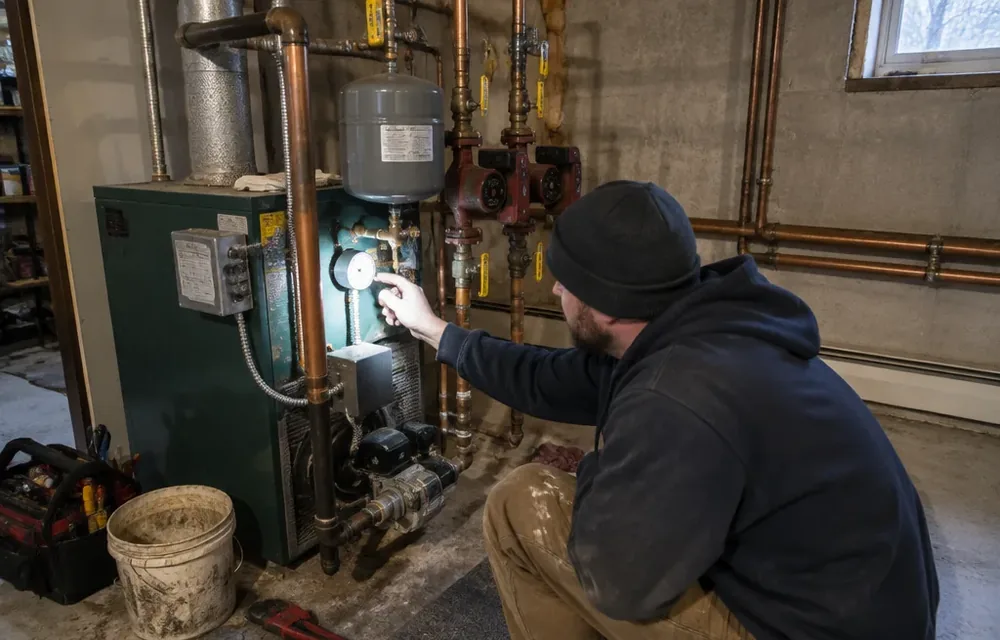
Break and heat look-alikes: damp with hissing and meter movement means the wall has parted and needs burst pipes care rather than more heat. A boiler zone that stays cold because of air can also leave rooms chilly while supply remains liquid. When heat is out and pipes sit at risk, the house needs warmth restored before thaw work starts.
Freezing follows familiar Chelmsford-area construction
Short answer: capes, raised ranches, and later additions freeze first in local cold snaps. Supply through garage walls and bump-outs around Chelmsford, crawl-space branches in capes near Westford and Groton and hose-bib stems through thin sheathing all chill well below room air.
Where cold wins: rim-joist bays near hose and vent penetrations wash elbows with outside air, knee walls hide long runs with little wrap, and vented crawls hold cold long after daytime highs recover. Exterior valves without interior shutoffs trap water where it cannot drain, and basement bath branches along bare foundation lose heat to masonry all night.
Where habits decide: streets with many capes and dormered baths show repeat freezes at the same elbow each winter until the route moves to warm space. Homes with night setback routines that cool living rooms invite those bays below the limit, and wind-exposed corners freeze while sheltered sides on the same house stay liquid. Disconnecting hoses in fall and keeping cabinet doors open during snaps matter most on these blocks.
A thaw visit melts gently and proves the run sound
Short answer: a frozen pipe prevention and thawing visit confirms ice, opens relief, thaws in sections, and inspects every joint before pressure returns. We check which taps fail, where the run travels, and whether the meter moves, so heat is never applied to a split that needs repair first. You watch flow return in stages.
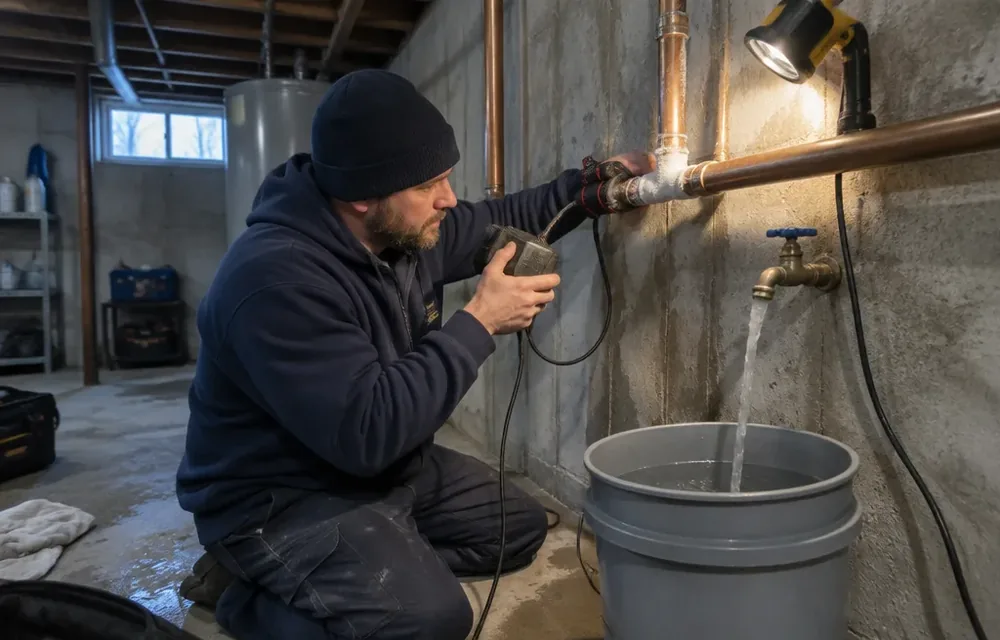
How thawing proceeds: the affected tap and a low tap are cracked so meltwater has a path, the room is warmed first with cabinets open, and gentle heat moves from the tap back toward the cold zone while the ice edge is felt. Exposed runs are dried and watched joint by joint as pressure is restored slowly, with light and meter checks at each elbow. No open flame and no high-heat gun enter joist bays, because scorch and burst cost more than patience.
How return freezing is stopped: the chase is insulated with sealed joints, rim and penetration drafts are closed, and hose-bib branches receive interior shutoffs with drain caps where the layout allows. Where the same elbow freezes each winter, a short re-route through a warm chase beats thicker wrap in a wind-washed bay. We leave thermostat and cabinet habits that keep the run above the limit through the next snap.
Careful homeowner steps help while harsh heat harms
Short answer: steady room heat, open cabinets, and a cracked tap help while flame and boiling water harm. Keep house heat even through the snap, open vanity and sink cabinets on outside walls, and let the affected tap pass a hair of flow. Warm the room rather than the pipe when the run is concealed.
What you can do safely: disconnect hoses where they can be reached without force, seal obvious room drafts with temporary towels at the bay door, and photograph frost or bulge areas for the visit. Note which taps fail and whether neighbors share the loss, because that pair of facts separates branch ice from street trouble. Keep the main path clear and keep buckets ready at the low corner for thaw.
Harm risk from force or delay: open flame, high-heat guns, and boiling water scorch wood, melt finishes, and burst the very joint they were meant to save. Forcing a stuck valve snaps stems and turns a contained plug into an open spray, and raising heat sharply and leaving lets a hidden split pour unnoticed as ice releases. Water left to refreeze enlarges the parting with each cycle, so gentle warmth with relief open protects more than strong heat applied blind while the house sits cold.
The service that fixes it
Related services
Related problems
Frequently asked questions
What should I do when one tap stops in a freeze?
Crack the affected tap slightly, warm the room with cabinet doors open, and keep house heat steady rather than cycling low. Do not force stuck valves or apply flame. If flow fails to return or any damp appears, keep pressure low and call us. Controlled thaw with a relief path protects joints while ice loosens.
How do I know ice has split the pipe?
A split usually shows as beading at a joint, a hiss inside the wall, or a meter that turns with taps closed once warming starts. No flow alone means ice still holds, while returning flow joined by dripping means the wall parted. Keep buckets ready at thaw and watch the ceiling below the run.
Can I thaw a pipe myself?
You can warm the room, open cabinets, and keep the tap cracked while waiting for flow. Direct heat on piping, especially flame and high-heat tools, risks fire and burst and belongs with controlled methods. When the run is concealed, the meter moves, or water appears, stop and call rather than opening walls.
How do I stop the same pipe freezing again?
Keep heat steady, open cabinets on outside-wall sinks during snaps, disconnect hoses in fall, and close rim and penetration drafts that wash air over elbows. Sealed insulation plus interior shutoffs for hose bibs covers many capes and additions. Where freezing returns at one elbow, ask about a re-route through warm space.
Seeing frozen pipes?
Call and describe the symptom. A local specialist will tell you the sensible next step.