Signs
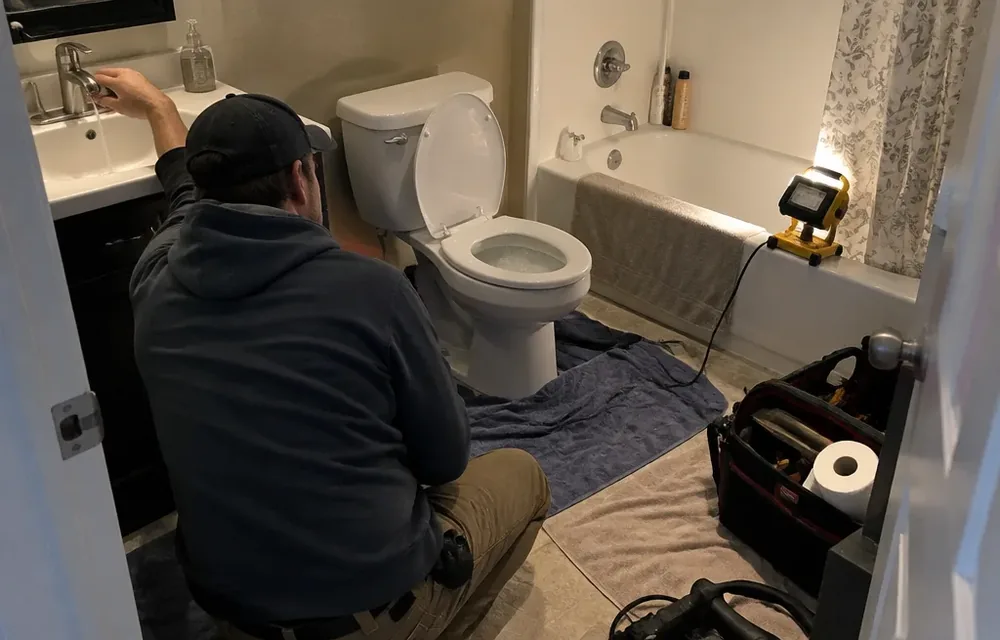
Toilet bubbles when a sink drains
A toilet that burps as a nearby lavatory empties often shares a branch or vent restriction that forces air through trap water.
Tub gurgles during laundry discharge
A tub that sounds off while the washer pumps points to a branch or main that cannot swallow the surge without pulling air.
Gurgle joined by slow emptying
Noise plus standing water or delayed flush means the bore itself is narrowed, not merely the vent path.
Whole-house chorus with odor
Several fixtures sounding together with drain odor suggests downstream pressure moving air past weak seals.
Gurgling is trapped air moving through trap water
Short answer: gurgling is air displaced by draining water that cannot vent normally, so it bubbles through the nearest trap. Gurgling drains are best read as a pressure signal, because the noisy fixture is often not the blocked one. The running fixture pushes, the bubbling fixture vents, and the restriction sits between them or downstream of both.
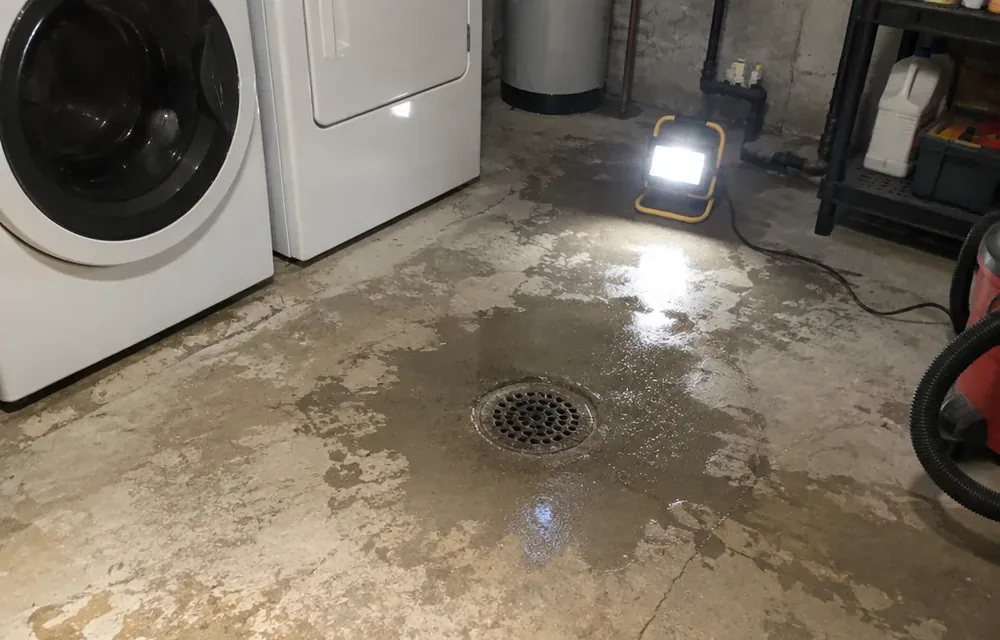
What you are hearing: a single glug after a basin empties can be normal venting through a shared path, while repeated bubbling during flow means the air column is truly fighting. Toilets show it as burps and rebounding bowls, tubs show it as chattering around the stopper, and floor drains show it as humming with odor. Waste returning low in the house means the signal has graduated from noise to backup.
Why pairing matters: write down the runner and the bubbler as a pair, such as washer and tub or sink and toilet, because that pair locates the shared branch. Note whether flushing alone triggers sound or only high-volume discharge does, since surge-only noise implicates capacity downstream. Photos of the fixture layout help us open at the branch or main that serves both.
Branch buildup, main roots, and vent caps cause most noise
Short answer: most gurgling comes from grease and soap lining branches, roots narrowing mains, and roof terminals blocked by debris. Branch linings slow one group so air shuttles between its fixtures, while main intrusion pressurizes several rooms at once. A vent capped by leaves adds suction that tugs traps with every discharge.
Drain-side causes: kitchen branches lined with cooled grease, bath groups matted with hair and soap, and laundry standpipes tied into older arms each narrow the path that surges must take. Clay and concrete exterior joints invite root hairs that comb paper and grow the restriction with each cycle. Low spots that hold water in a belly narrow the air space above the flow and gurgle long before backing up.
Vent-side causes: leaves, nests, and frost caps at the roof terminal, wet vents added during remodels that were never balanced, and missing or loose cleanout caps that let air short-circuit each change pressure behavior. A toilet with rim jets blocked by scale flushes weakly and pulls harder on nearby traps. Hard town water adds scale that roughens branch walls so air and water no longer glide past each other.
Some bubbling is not a drain blockage
Short answer: a dry trap, a siphoned shower seal, and a septic tank due for service can gurgle while the bore tests open. When fixtures empty at normal speed yet one trap sounds off, the seal or vent path deserves testing before cable work. Dye and level checks at the trap separate seal loss from wall buildup.
Seal and tank look-alikes: floor drains and spare showers that dried during still weeks admit air sounds without any plug, and a toilet base with a weak seal passes air while looking intact. A full tank in outlying areas backs the whole house the same way a main plug does, so pumping history matters where service is private. A storm drain holding organic debris can also push odor through windows that feels like indoor bubbling.
Fixture look-alikes: a disposal jam that vibrates the branch, a running toilet with a faulty fill that hisses, and a slow tub drain with hair at the stopper each add sound without main failure. When waste rises in a low shower or paper returns, treat the noise as main-line warning and pause water use rather than plunging harder.
Gurgling follows familiar Chelmsford-area layouts
Short answer: shared bath groups, long kitchen branches, and leaf-heavy laterals shape local gurgling. Wet-vented baths in capes around Chelmsford, kitchen branches through cool basements near Billerica and Tewksbury and root-prone joints under mature maples all tune the same sound.
Where branches sing: colonial baths where toilet, tub, and lavatory share one wet path gurgle as a group when that path linings narrow, and laundry surges find the weakest trap in the group. Kitchen sinks on long horizontals send grease that sets before the street, so the branch gurgles during dishwashing while baths stay quiet. Basement bars and laundry corners with flat trap arms siphon with each nearby discharge.
Where mains and vents join in: streets with mature canopy shed leaves that cap roof terminals each fall, and older jointed laterals admit roots that pressurize several rooms during high use. River-lowland damp keeps exterior joints active through spring, so whole-house chorus clusters in wet weeks. Homes with disposals taking daily starch and grounds build branch linings faster than neighbors on the same block.
A drain visit pairs fixtures and proves the path
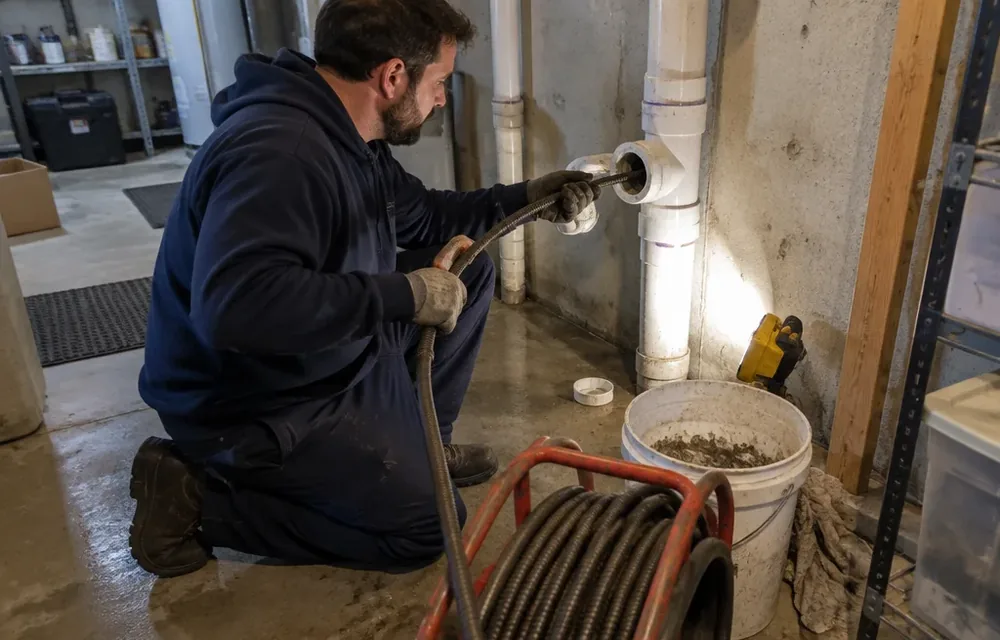
Short answer: a drain cleaning visit runs paired fixtures, reads vent response, and clears the proven restriction. We run taps in sequence, flush while watching low drains, and confirm whether trouble is branch, main, or vent-led before cable is fed. You hear which pair points where before work starts.
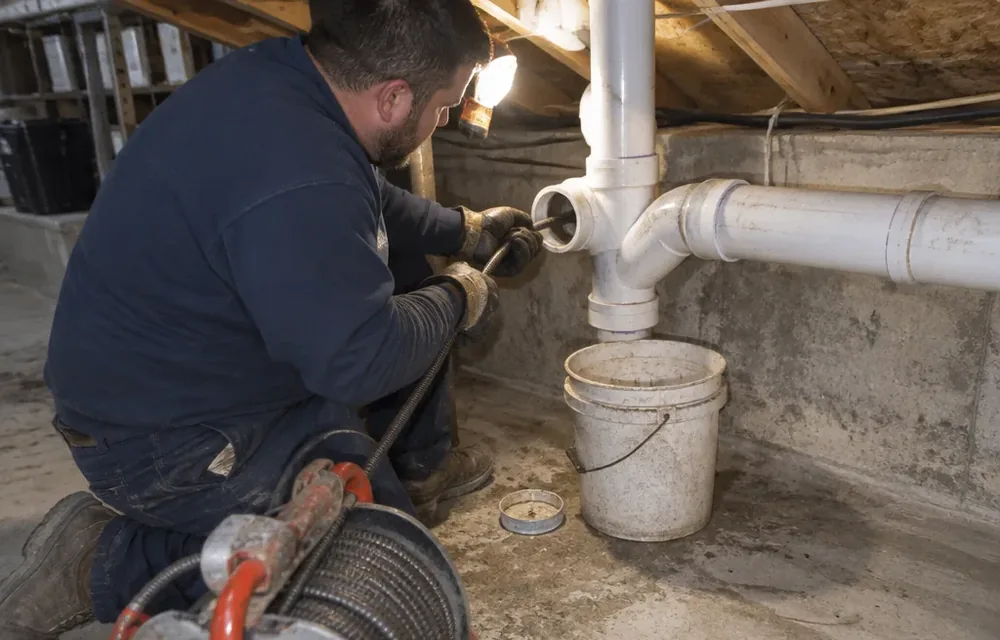
How testing proceeds: the best cleanout is opened where present so finishes stay protected, and cable plus head are matched to grease, soap, or root behavior. Debris brought back is shown with distance and material notes, and flow is retested with multiple fixtures together rather than one tap alone. Where the bore proves broken, bellied, or offset, camera proof and sewer line repair planning replace repeat clearing.
How vents are read: fixture response under controlled flow shows whether air still fights after the wall is clear, and cleanout caps, strainers, and toilet seals are checked as part of the same pass. Chemical openers stay out because they rarely move the lining and they endanger the next hands on the trap. Where odor rides the bubbles, trap refill plus seal checks join the same visit so air no longer seeks rooms.
Careful homeowner listening helps while harsh plunging harms
Short answer: map runner and bubbler pairs, ease strainers clean, and pause high-volume use when low drains threaten. Lift hair at stoppers, wipe grease from pans to the trash, and space laundry so surges do not stack. Stop and call us when several rooms join the chorus or waste appears low.
What you can do safely: run one fixture at a time and write down the exact pair that sings, keep cleanout and low-drain areas clear for access, and refill rarely used traps so seal loss does not confuse the test. Tell us plainly if a product was poured so the line can be handled without skin contact. Keep basement storage raised where low return has ever appeared.
Harm risk from force or delay: hard plunging on a main restriction can drive water into another fixture or loosen weak slip joints without clearing wall buildup. A branch lining left alone hardens and lengthens until more passes are needed, and a main restriction left to sing can graduate to backup low in the house that wets finished space and storage. Steady habits with strainers and grease control plus early mapping protect more than repeated harsh treatments while the chorus grows.
The service that fixes it
Related services
Related problems
Frequently asked questions
Why does my toilet gurgle when the sink drains?
Linked gurgling usually means the two fixtures share a branch or vent path narrowed by buildup or debris. Note whether flow also slows, because sound alone leans vent while sound plus delay leans bore. Running paired fixtures in sequence locates the shared section. We open at the branch that serves both rather than plunging one trap.
Does gurgling always mean a main-line blockage?
No, single-group gurgling often stays in the branch while whole-house chorus with slow flow points downstream. Washer-to-tub noise implicates capacity on that branch, while several rooms sounding together implicates the main. Low return settles the question toward the main, so pause water use when waste appears.
Can a blocked vent alone cause gurgling?
Yes, a roof terminal capped by leaves or nesting material lets discharge pull on traps so they bubble even though the bore is open. Sound without slow flow leans vent, while sound with standing water leans blockage. We read vent response after clearing to confirm whether seal and vent corrections join the plan.
What should I avoid doing when drains gurgle?
Avoid harsh chemicals that linger and endanger the next opening, and avoid hard plunging across several rooms that can spread water to another fixture. Map runner and bubbler pairs, space laundry loads, and keep low drains watched. When the chorus spreads or waste returns, ask for cable and camera testing rather than another bottle.
Seeing gurgling drains?
Call and describe the symptom. A local specialist will tell you the sensible next step.