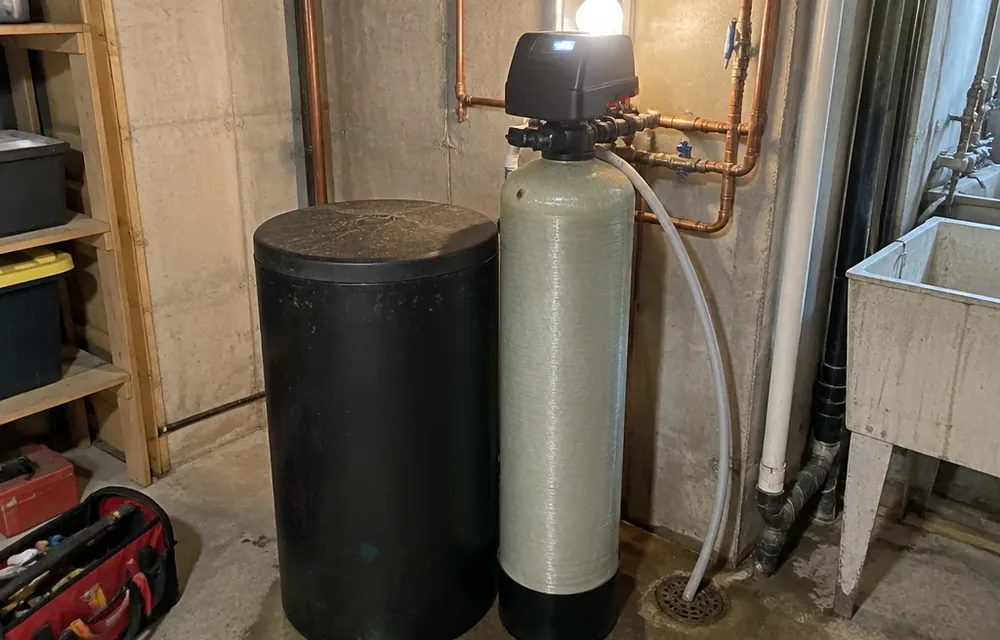
Signs
Spots and scale return
Filmy glasses, crust at faucets, and soap that stops lathering signal hardness slipping past a unit that once held it.
Salty or slick water swings
Alternating salty taste and harsh rinse points to rinse, setting, or valve timing trouble rather than source change.
Salt that never drops
A salt tank that stays full for weeks often hides a hard crust bridge above a hollow void that blocks brine makeup.
Drain that runs without pause
A softener drain that trickles around the clock signals a stuck valve or seal passing water to drain nonstop.
What water softener issues are
Direct answer: Water softener issues are hardness slipping through, salt and rinse imbalance, and valve or drain faults that waste water while softening poorly. A healthy unit trades hardness minerals for sodium or potassium through resin, then rinses and recharges on schedule. When settings drift, salt bridges, resin tires, or seals wear, hard water returns in spots and scale while the brine tank looks almost normal.
How softening drifts: Households grow, fixtures change, and source hardness shifts with seasons, but settings often stay at old defaults that no longer match use. Salt bridging leaves the controller thinking brine is ready while the resin starves. Resin beads that handled years of mineral load lose capacity gradually, so hardness returns first at high-flow showers and distant hot taps rather than everywhere at once.
Why drains and valves matter: The control valve moves the unit through service, backwash, brine draw, rinse, and refill with tight timing. A worn seal lets hard water bleed into soft lines or lets water run to drain between cycles. A kinked or frozen drain line stalls rinse and leaves salty water in the house lines. Note salt level, bypass handle position, and drain behavior, because that trio places most faults. See softener issue patterns and rusty water from minerals for the checks we run.
What causes softeners to stop softening
Direct answer: Softeners stop softening from salt bridging, wrong settings, tired resin, and mechanical faults combining over time. Bridged salt forms a hard shelf that looks full while brine below runs weak. Hardness and capacity settings set for past use undercharge the resin for current flow, so hardness breaks through during morning showers.
Resin and water factors: Chlorine and age wear resin beads that then fracture into fines and clog the valve and screens. Iron and manganese coat resin where source minerals run higher, blocking exchange sites that salt alone cannot free. Long idle periods let channeling carve paths through the bed where water bypasses treatment even while the unit cycles normally. Power interruptions that reset clocks stall regeneration timing without any visible alarm.
Plumbing setup factors: Bypass valves left half open after repairs blend hard water into soft lines at every tap. Undersized units on large homes with multiple baths exhaust midday and recover only overnight. Whole-house filters loaded past service starve the softener of flow and pressure, which shortens rinse and leaves salty residue. Outdoor spigots tied through the softener waste capacity on lawn water that never needed softening.
Look-alikes worth ruling out
Direct answer: Heater scale, filter loading, and source changes often look like softener failure and need different work. A scaled water heater sends cloudy hot water while cold stays soft, which points to tank sediment rather than resin. A loaded sediment filter drops pressure across the house and mimics softener blockage while the softener itself still exchanges normally.
Hot versus cold: Test hardness feel at cold and hot separately. Spots on cold glasses plus scale at cold faucets point to the softener or bypass, while harsh hot showers with soft cold point to heater sediment and anode activity. Salty cold water right after regeneration that clears with running points to rinse timing rather than failed resin. If outdoor taps run hard by design while indoor taps feel soft, the piping layout explains the split without any fault.
Setting versus failure: A unit knocked into bypass during a repair behaves exactly like dead resin until the handles return to service. A vacation mode left on, a clock reset by outage, and a meter cable knocked loose all pause regeneration silently. Check bypass position, clock time, and remaining capacity display before assuming the bed is spent. Compare low pressure from loaded filters and no hot water from scale for downstream tells.
Where softener issues come up locally
Direct answer: Softener issues cluster where town water carries steady mineral load, in larger households with morning peaks, and where units sit in cold corners. Mineral-heavy supply exhausts undersized beds before overnight recovery, so hardness breaks through during back-to-back showers. Cold garage and basement corners slow brine dissolving and stiffen drain lines that need free flow for rinse.
Mineral load streets: Homes served by regional supplies around Chelmsford and nearby blocks in Lowell see scale return first at shower glass and kettle heating surfaces when settings lag use. Kitchens with frequent dishwasher loads plus laundry on the same mornings push midday breakthrough. Salt use that once matched a smaller household falls behind as baths and guests grow.
Cold corners and long runs: Basement and garage installs through Billerica and nearby neighborhoods with long runs to distant baths show hardness first far from the unit. Drain lines run to laundry tubs and floor drains kink behind storage and stall rinse without visible leaks. Outdoor spigots left tied through softeners on garden streets waste bed capacity on beds and lawns that never needed soft water.
What a visit for softener trouble involves
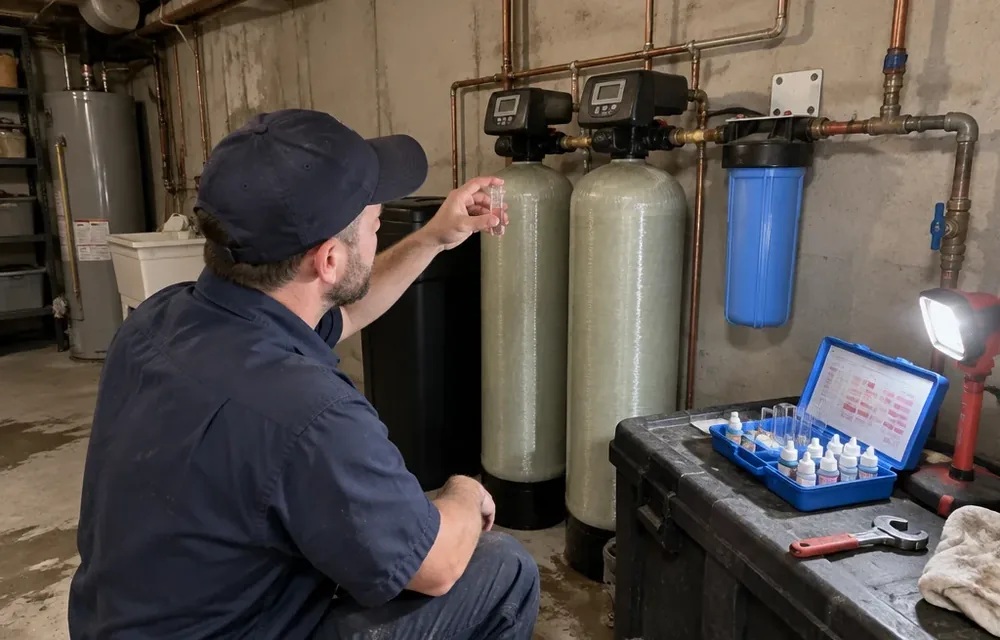
Direct answer: A visit proves bypass, salt, resin, and valve behavior in order without changing more than needed. We confirm bypass position and clock state, probe the salt tank for bridging, and check brine level and draw. We run a manual cycle while watching drain flow, listen to valve movement, and compare hardness feel at near and far taps on cold and hot.
How we test capacity: Flow and hardness patterns show whether settings or bed condition drive breakthrough. Pressure readings ahead of and past filters reveal loading that starves rinse. Drain timing confirms backwash and rinse complete rather than stalling mid-cycle. Resin sampling and valve inspection follow only where patterns support wear rather than settings. This work follows water treatment and filtration practice for mineral control, with water heater installation and repair where downstream tanks already carry heavy scale beds.
What you receive: You receive a plain read on settings versus bed versus valve, with salt, bypass, and drain state shown directly. We reset hardness and capacity to current household use where settings caused the slip and explain salt type and level habits that keep brine steady. Where resin or valve wear drives the return, we explain replacement scope against household peaks without pushing capacity the patterns do not support.
Homeowner checks and damage risk
Direct answer: Homeowners can check bypass, salt, power, and drains safely without opening the valve. Confirm bypass handles sit fully in service, break no salt crust with sharp tools, and check that the clock shows correct time after outages. Look at the drain line for kinks and freezing exposure, and note whether the drain trickles between cycles when it should rest.
Safe checks to try: Press a broom handle gently into the salt to feel for a hollow void under a hard bridge, then even out the salt without flooding the tank. Run cold taps in sequence from near to far to map where hardness returns first. Check filter gauges and service lights for loading that throttles rinse flow. Leave resin replacement, seal kits, and drain repiping to us, and keep cleaners and chemicals away from brine tanks where they can foul the bed.
Damage risk if hardness stays: Ongoing hardness scales heater elements and tank bottoms, narrows faucet cartridges, and spots glass and fixtures that then need harsh cleaning. Salty rinse from stalled cycles irritates skin and leaves laundry stiff despite extra detergent. Water running to drain nonstop from a stuck valve wastes steady volume that shows on the next bill. Early bypass and salt checks cost less than heater strain and valve waste, especially where spots return weekly despite normal salt looks.
The service that fixes it
Related services
Related problems
Frequently asked questions
Why does my salt tank stay full but water feels hard?
A hard salt bridge often spans above a hollow void, so the controller cannot make strong brine while the tank looks full. Probe gently for a crust shelf and check bypass position and clock state. Breakthrough at high-flow showers with bridged salt points to brine starvation rather than spent resin.
Why does softened water taste salty after regeneration?
Rinse timing or drain restriction often leaves brine in the lines, especially where filters throttle flow or drains kink. Run cold taps to clear the slug and check drain behavior during the next cycle. Repeated salty mornings deserve valve and drain testing rather than lower salt alone.
When does resin need replacing instead of resetting?
When settings match current use, salt and brine prove sound, yet hardness still breaks through early in each cycle. Fines clogging screens, iron-coated beads, and years of chlorine exposure all cut capacity that settings cannot restore. Pattern testing across near and far taps proves bed wear before opening the tank.
What should I note before calling about a softener?
Note salt level and bridging feel, bypass position, clock time, and whether the drain runs between cycles. Note which taps show hardness first and whether hot or cold leads. That record lets treatment help separate settings, salt, resin, and valve causes on arrival.
Seeing water softener issues?
Call and describe the symptom. A local specialist will tell you the sensible next step.