Signs
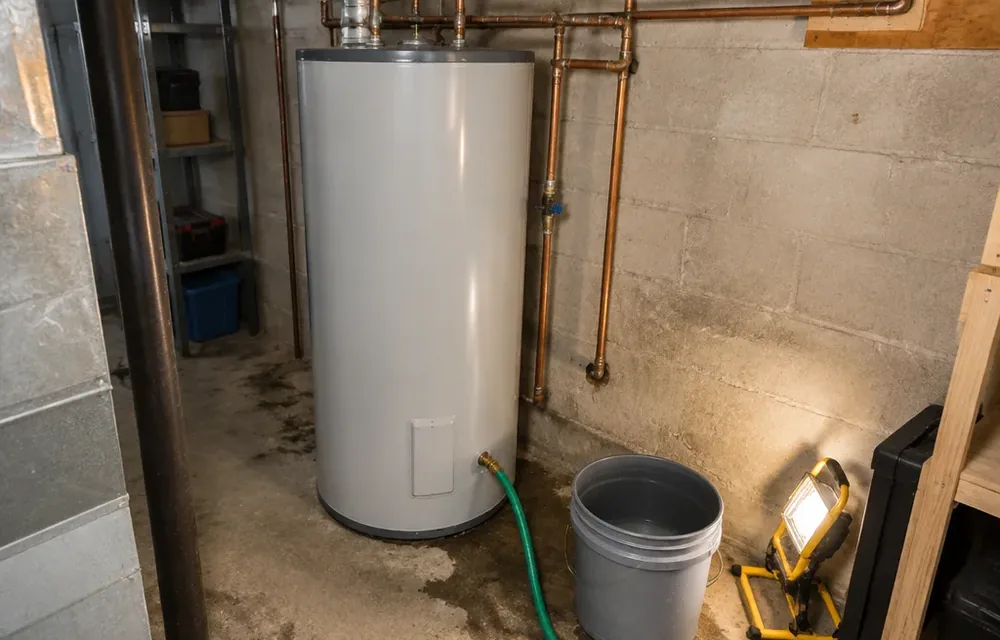
Rumbling or popping during heating
Steam bubbles forcing through sediment blanket the tank bottom and burst free, shaking the tank with each cycle.
Sizzling or hissing near the tank
Water dripping onto the burner or elements flashes to steam, marking a leak above hot surfaces that needs prompt eyes.
Ticking or knocking in nearby pipes
Copper runs expanding against tight straps tick as they heat, which traces to pipe support rather than the tank itself.
High-pitched whine on hot taps
Scale-narrowed valves or partially closed stops whistle under flow, pointing to restriction rather than tank failure.
What each heater sound means
Direct answer: Rumbling and popping mean sediment boiling, sizzling means water meeting heat where it should not, ticking means pipe movement, and whining means flow restriction. Matching the sound to its source decides whether the answer is flushing, repair, support work, or replacement planning. Note when the sound starts in the cycle, since sediment rumbles mid-heat while expansion ticks at the start and end.
Sediment sounds: Dissolved minerals settle into a blanket that traps water against the burner or elements, and each heating cycle boils that trapped layer with a rumble that grows season by season. Popping follows as larger pockets burst through thicker scale, and recovery shortens because heat crosses insulation instead of water. Tanks that rumble from year one on hard supply can quiet after flushing, while decade-old tanks with deep scale rarely recover full quiet. Compare no hot water patterns for the capacity side of the same buildup.
Pressure and leak sounds: Hissing at the relief valve marks pressure or temperature pushing past its limit, which needs safety attention rather than soundproofing. Sizzling at the base or burner door with damp nearby marks active leaking onto hot parts, and vent rumbling with odor marks drafting trouble that belongs to fuel safety first. Any sound joined by leaking, odor, or scorching moves the call to same-day priority through leak detection and burst pipe repair triage.
What causes noisy tanks to get louder
Direct answer: Noise grows as sediment deepens, anode protection depletes, inlet parts clog, and supports loosen with thermal cycling. Each heating cycle adds a little more scale where flushing never removes it, so the blanket thickens and the rumble strengthens on the same schedule. High-demand households reach loud sooner because their tanks cycle more hours per year.
Water quality effects: Mineral-heavy supply lays sediment fastest, and softener or treatment lapses let hardness rebound straight into the tank. Dip tubes that break or clog stir cold water into the hot layer and add knocking to the rumble, while inlet screens choked with grit whistle under fill flow. That quality link is why noisy tanks often arrive with stained fixtures and short dishwasher life, all tracing to water treatment notes left undone.
Mechanical wear effects: Relief valves with weakened springs weep and hiss, expansion tanks with lost charge pass pressure spikes into the plumbing with bangs at fixture shutoff, and straps driven tight against joists turn normal expansion into loud ticking. Thermostats set high boil harder through sediment and waste energy into noise. Reading gauge pressure, relief behavior, and expansion charge together separates tank wear from system pressure trouble before any part is chosen.
Look-alikes worth ruling out
Direct answer: Pipe expansion, water hammer, circulating pump hum, and boiler kettling each mimic heater noise while needing different work. Ticking that follows hot draws through walls is pipe movement, single bangs at fast-closing valves are hammer from pressure and arrestor failure, and humming near the boiler is circulator or control trouble rather than tank sediment. Locating the sound with draws on and off settles most confusion in minutes.
Heater versus boiler: Homes with both a water heater and a boiler can misattribute kettling from scaled boiler waterways to the tank, especially where both sit in one basement room. Boiler noise follows heating calls with gauge pressure climbing, while tank noise follows hot water draws with the boiler quiet. Standing between the units through one draw and one heat call separates them cleanly, and boiler no-heat notes describe the heating-side sounds.
Harmless versus warning: Light ticking at draw start, brief expansion creaks, and soft burner roar all sit within normal operation and need no work. Growing rumble, new hissing, relief discharge, base dampness, and vent odor all cross into warning territory that rewards prompt diagnosis. When in doubt, note age, sound type, and cycle timing, since that trio tells the visit whether flushing, repair, or replacement planning fits.
Where noisy heaters cluster locally
Direct answer: Noisy heaters cluster in high-occupancy homes that cycle tanks hard, in mineral-heavy streets where sediment accumulates fastest, and in finished-basement homes where tanks run past their prime above living space. Triple-deckers and multi-family blocks burn through anode protection years ahead of single-family tanks, while long hot runs to distant baths keep burners firing longer per draw. Tanks tucked behind finished walls hide early rumble until recovery audibly fails.
Housing and water mix: Town supply through the Lowell Regional Water Utility system carries the mineral load that builds sediment blankets fastest on older cast-fed streets, and laundry-heavy households add cycles that bake the layer harder. Homes near Lowell with stacked baths and near Billerica with family colonials show the earliest rumble, while Tewksbury capes with crawl-space runs add ticking from tight pipe supports to the mix. Well-water pockets with iron and manganese layer tanks faster still, which links noise to rusty water signs on those streets.
What to tell dispatch: Mention tank age and type, the exact sound among rumble, pop, hiss, tick, and whine, when it occurs in the cycle, and whether recovery has shortened or rust has appeared at hot taps. Note relief valve drips, base dampness, and recent treatment changes. Those facts decide whether the visit brings flush gear, safety parts, or replacement planning through water heater help channels.
What a visit for heater noise involves
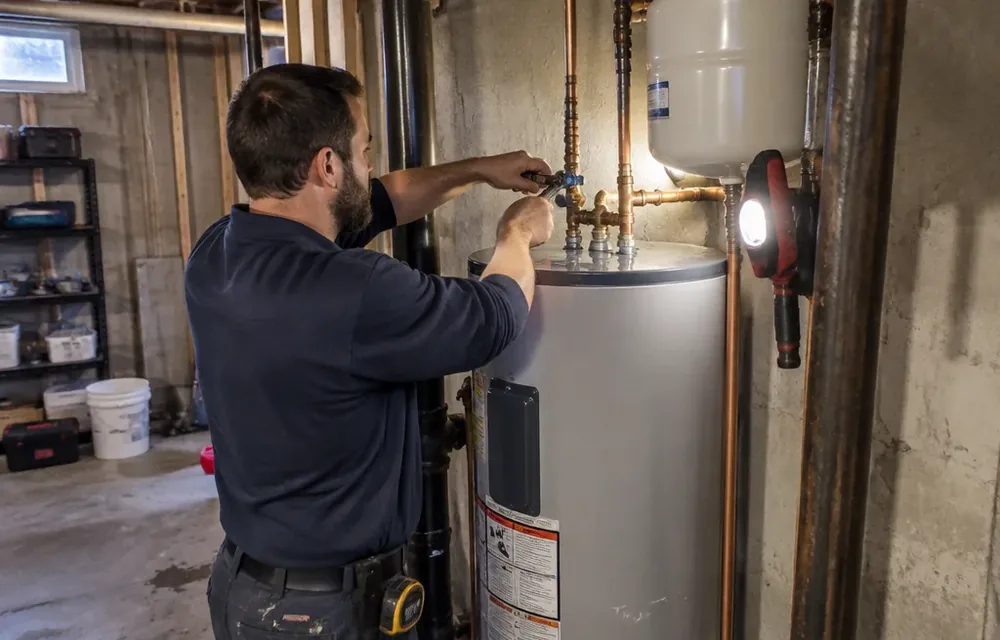
Direct answer: A visit maps the sound to sediment, pressure, leak, or movement with age and safety checks first. We run hot draws while listening at the tank, pipes, and boiler in turn, read system pressure and expansion charge, test the relief valve path, and check the base, burner area, and venting for dampness and odor. Flushing follows only where the tank is young enough and sound enough to benefit.
Flush versus repair: A young rumbling tank with intact anode and no leaks often quiets after a full flush with deliming where scale is heavy, while inlet screens and dip tubes get corrected at the same visit. Relief, expansion, thermostat, and support faults each take their own targeted repair with retesting under load. We show before and after behavior at the tap so the result is audible rather than promised, following water heater service methods.
Replacement timing: Tanks with deep rumbling past their prime, base dampness, recurring relief discharge, or rusty hot draws have sounding boards that flushing cannot restore, and planning replacement before failure beats mopping a burst tank through finished space. Sizing weighs household rhythm, recovery needs, and venting or electrical paths for the next unit. Where the tank sits over living space, timing follows emergency plumbing caution rather than watchful waiting.
The service that fixes it
Related services
Related problems
Frequently asked questions
Why does my water heater rumble and pop?
Rumbling and popping come from water boiling through settled sediment that blankets the tank bottom and traps heat. Each cycle bursts steam pockets through the layer with growing force as scale deepens. Young tanks often quiet after flushing, while aged tanks with deep scale and shortened recovery usually need replacement planning.
Is a hissing water heater dangerous?
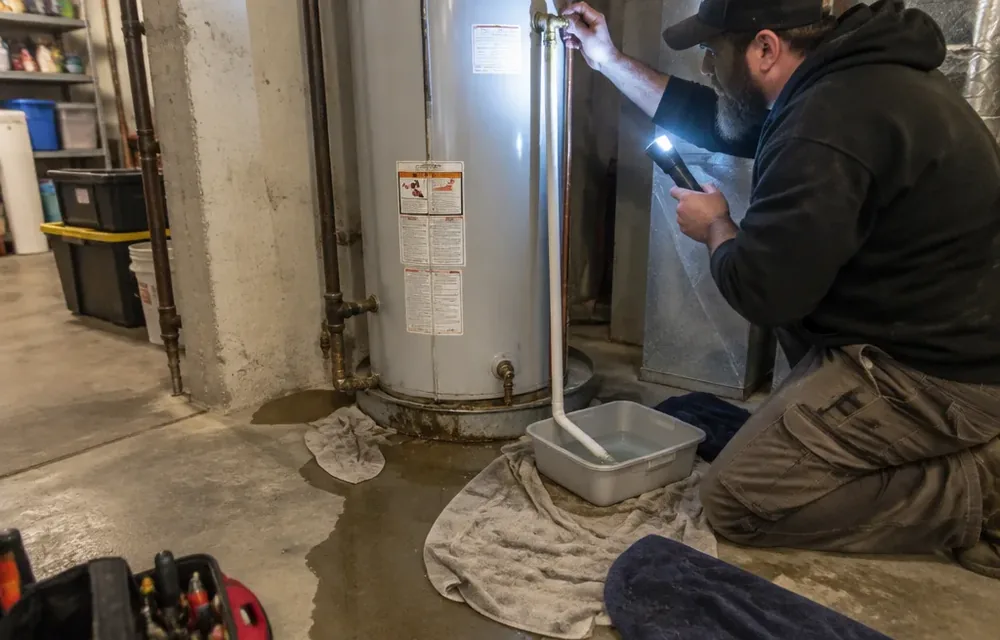
Hissing deserves prompt attention because it can mark relief valve discharge from excess pressure or temperature, or water dripping onto hot burner surfaces. Note any dampness, odor, or discharge at the relief drain and call the same day. Relief path and pressure checks come before any other diagnosis.
Why do my hot water pipes tick and knock?
Ticking usually traces to copper runs expanding against tight straps and framing as hot water passes, which is a support matter rather than tank failure. Single bangs at fast-closing valves instead mark water hammer from pressure and arrestor trouble. Both resolve with support and pressure corrections without touching the tank.
Will flushing stop the noise?
Flushing quiets young tanks where sediment is loose and the anode still protects the lining, especially with deliming where scale runs heavy. Tanks with deep baked scale, base dampness, or rusty draws rarely recover full quiet or capacity. Age, sound type, and recovery behavior together predict whether flushing pays.
Seeing water heater making noise?
Call and describe the symptom. A local specialist will tell you the sensible next step.